
Impact assessmentImpact Assessment Report
The Commission staff working document assessing the impacts of the Digital Fairness Act and the accompanying simplification Directive. Read the proposed Regulation.
Glossary
| Term or acronym | Meaning or definition |
| AI | Artificial intelligence |
| B2C | Business-to-Consumer |
| C2C | Consumer-to-Consumer |
| CCS | Consumer Conditions Scoreboard |
| CfE | Call for Evidence (carried out for this Impact Assessment) |
| CJEU | Court of Justice of the European Union |
| DFA | Digital Fairness Act |
| ECC | European Consumer Centre |
| FTC | Federal Trade Commission |
| IA | Impact Assessment |
| ICPEN | International Consumer Protection and Enforcement Network |
| IoT | Internet of Things |
| JRC | Joint Research Centre |
| NPV | Net Present Value |
| OPC | Open Public Consultation (carried out for this Impact Assessment) |
| SDG | Sustainable Development Goals |
| TFEU | Treaty on the Functioning of the European Union |
| VLOP | Very large online platform |
| VLOSE | Very large online search engine |
| VR | Virtual Reality |
Legislation and policy documents referenced in the report
| Short title / acronym | Full title |
| 2030 Consumer Agenda | Communication from the Commission to the European Parliament, the Council, the European Economic and Social Committee and the Committee of the Regions 2030 Consumer Agenda and action plan for consumers in the single market 'A new impulse for consumer protection, competitiveness and sustainable growth', 19.11.2025 (COM(2025) 848 final) |
| Artificial Intelligence Act (AI Act) | Regulation (EU) 2024/1689 of the European Parliament and of the Council of 13 June 2024 laying down harmonised rules on artificial intelligence and amending Regulations (EC) No 300/2008, (EU) No 167/2013, (EU) No 168/2013, (EU) 2018/858, (EU) 2018/1139 and (EU) 2019/2144 and Directives 2014/90/EU, (EU) 2016/797 and (EU) 2020/1828 (Artificial Intelligence Act) (OJ L, 2024/1689, 12.7.2024) |
| Audiovisual Media Services Directive (AVMSD) | Directive 2010/13/EU of the European Parliament and of the Council of 10 March 2010 on the coordination of certain provisions laid down by law, regulation or administrative action in Member States concerning the provision of audiovisual media services (Audiovisual Media Services Directive) (Codified version) (OJ L 95, 15.4.2010, p. 1) |
| Consumer Protection Cooperation Regulation (CPC Regulation) | Regulation (EU) 2017/2394 of the European Parliament and of the Council of 12 December 2017 on cooperation between national authorities responsible for the enforcement of consumer protection laws and repealing Regulation (EC) No 2006/2004 (OJ L 345, 27.12.2017, p. 1) |
| Consumer Rights Directive (CRD) | Directive 2011/83/EU of the European Parliament and of the Council of 25 October 2011 on consumer rights, amending Council Directive 93/13/EEC and Directive 1999/44/EC of the European Parliament and of the Council and repealing Council Directive 85/577/EEC and Directive 97/7/EC of the European Parliament and of the Council (OJ L 304, 22.11.2011, p. 64) |
| CRD Guidance | Commission notice - Guidance on the interpretation and application of Directive 2011/83/EU of the European Parliament and of the Council on consumer rights, (2021/C 525/01), (OJ C 525, 29.12.2021, pp. 1-85) |
| Digital Fairness Fitness Check (Fitness Check) | Fitness Check of EU consumer law on digital fairness SWD(2024) 230 final, 3.10.2024 |
| Digital Markets Act (DMA) | Regulation (EU) 2022/1925 of the European Parliament and of the Council of 14 September 2022 on contestable and fair markets in the digital sector and amending Directives (EU) 2019/1937 and (EU) 2020/1828 (Digital Markets Act), OJ L 265, 12.10.2022, pp. 1-66 |
| Digital Omnibus | Proposal for a Regulation of the European Parliament and of the Council amending Regulations (EU) 2016/679, (EU) 2018/1724, (EU) 2018/1725, (EU) 2023/2854 and Directives 2002/58/EC, (EU) 2022/2555 and (EU) 2022/2557 as regards the simplification of the digital legislative framework, and repealing Regulations (EU) 2018/1807, (EU) 2019/1150, (EU) 2022/868, and Directive (EU) 2019/1024 (Digital Omnibus) COM(2025) 837 final, 19.11.2025 |
| Digital Services Act (DSA) | Regulation (EU) 2022/2065 of the European Parliament and of the Council of 19 October 2022 on a Single Market for Digital Services and amending Directive 2000/31/EC (Digital Services Act), OJ L 277, 27.10.2022, pp. 1-102 |
| DSA Guidelines on the protection of minors (DSA Guidelines) | Guidelines on measures to ensure a high level of privacy, safety and security for minors online, pursuant to Article 28(4) of Regulation (EU) 2022/2065, OJ C, C/2025/5519, 10.10.2025 |
| EU KIDS ACT | Proposal for a Regulation of the European Parliament and of the Council EU KIDS ACT - 'EU Keeping Internet Digital Spaces Accountable and Trustworthy', COM(2026) 681 final, 17.9.2026 |
| General Data Protection Regulation (GDPR) | Regulation (EU) 2016/679 of the European Parliament and of the Council of 27 April 2016 on the protection of natural persons with regard to the processing of personal data and on the free movement of such data, and repealing Directive 95/46/EC (General Data Protection Regulation), OJ L 119, 4.5.2016, pp. 1–88 |
| Modernisation Directive | Directive (EU) 2019/2161 of the European Parliament and of the Council of 27 November 2019 amending Council Directive 93/13/EEC and Directives 98/6/EC, 2005/29/EC and 2011/83/EU of the European Parliament and of the Council as regards the better enforcement and modernisation of Union consumer protection rules, OJ L 328, 18.12.2019, pp. 7–28 |
| Political Advertising Regulation | Regulation (EU) 2024/900 of the European Parliament and of the Council of 13 March 2024 on the transparency and targeting of political advertising (Text with EEA relevance), OJ L, 2024/900, 20.3.2024 |
Price Indication Directive (PID) | Directive 98/6/EC of the European Parliament and of the Council of 16 February 1998 on consumer protection in the indication of the prices of products offered to consumers, OJ L 80, 18.3.1998, pp. 27–31 |
| Representative Actions Directive (RAD) | Directive (EU) 2020/1828 of the European Parliament and of the Council of 25 November 2020 on representative actions for the protection of the collective interests of consumers and repealing Directive 2009/22/EC, OJ L 409, 4.12.2020, pp. 1–27 |
| Unfair Commercial Practices Directive (UCPD) | Directive 2005/29/EC of the European Parliament and of the Council of 11 May 2005 concerning unfair business-to-consumer commercial practices in the internal market and amending Council Directive 84/450/EEC, Directives 97/7/EC, 98/27/EC and 2002/65/EC of the European Parliament and of the Council and Regulation (EC) No 2006/2004 of the European Parliament and of the Council (‘Unfair Commercial Practices Directive’), OJ L 149, 11.6.2005, pp. 22–39 |
| UCPD Guidance | Commission Notice – Guidance on the interpretation and application of Directive 2005/29/EC of the European Parliament and of the Council concerning unfair business-to-consumer commercial practices in the internal market, (2021/C 526/01), OJ C 526, 29.12.2021, pp. 1-129 |
1 Introduction: Political and legal context
The digital era has fundamentally transformed consumer experiences. It has enabled faster, more convenient and wider access to an ever-increasing range of goods and services. At the same time, it has given rise to new and more sophisticated ways of influencing consumers’ choices. Along with the indisputable benefits in choice and efficiency, the extensive use of digital technologies allows both old and new unfair commercial practices to affect consumers at scale, exacerbating risks to their economic interests, as well as to their mental and physical wellbeing. Young consumers, as ‘digital natives’, are particularly affected.
The 2024 Digital Fairness Fitness Check showed that the key horizontal EU consumer law directives remain both relevant and necessary to ensure a high level of consumer protection online and the effective functioning of the Digital Single Market. At the same time, it identified several harmful, evolving problematic practices that consumers face online, ranging from deceptive interface designs, to misleading online price marketing and subscription traps, to manipulative data-driven commercial practices. The Fitness Check also pointed to gaps and legal uncertainties in consumer protection legislation that significantly affect consumers and businesses alike.
The cases where problematic practices were found to coincide with identified deficiencies in the current consumer law framework have further been classified into six main types: dark patterns, spending- and attention-maximising features, unfair personalisation, problematic influencer marketing, unfair pricing practices and issues with digital contracts. This Impact Assessment (IA) considers how to respond to these cases in a targeted manner, building on the existing EU consumer law framework.
Political context
The Digital Single Market is a pivotal aspect of European integration. Its good functioning depends i.a. on measures aiming at a high level of health, safety, environmental and consumer protection for EU citizens (Article 114 TFEU). The Union’s largely harmonised consumer protection rules protect citizens and promote cross-border provision of goods and services. The Letta report on the future of the Single Market stressed that “enhancing consumer protection rules is crucial for building a Single Market that works for all. Strengthening these measures not only ensures fair access to goods and services across member states but also fosters a competitive environment that benefits both consumers and businesses”.1
Enhancing consumer protection rules in the digital space is a shared objective for the European Union institutions. The mission letter of President von der Leyen tasked Commissioner McGrath “to develop a ‘Digital Fairness Act’ to tackle unethical techniques and commercial practices related to dark patterns, marketing by social media influencers, the addictive design of digital products and online profiling, especially when consumer vulnerabilities are exploited for commercial purposes”. The initiative is also announced in the 2026 Commission Work Programme, the 2030 Consumer Agenda, and by President von der Leyen in her address on the State of the European Union in September 2026.
The European Parliament has welcomed the Fitness Check and called on the Commission to address issues including persuasive technologies used by online actors, such as targeted advertising, influencer advertising and dark patterns through the Digital Fairness Act (DFA).2 The Council in its Conclusions on the 2030 Consumer Agenda recognised “the need to address existing regulatory gaps, including with regard to enforcement and potential legal uncertainty, building on the findings of the Fitness Check of EU Consumer Law on Digital Fairness in order to further strengthen the protection of consumers in the digital environment (...)” and noted “the need to ensure coherence, synergy and complementarity between EU consumer protection rules (…) and the EU Digital Rulebook (…) in order to safeguard a high level of consumer protection and a level-playing field across the board in the digital environment”.
The protection of minors online is a transversal, shared priority. President von der Leyen highlighted the impacts of algorithms preying on children’s vulnerabilities in her 2025 address on the State of the European Union and established a Special Panel on child safety online, tasked with advising on the best EU-wide approach to protecting minors in digital environments, including the question of delaying access to social media for children. The co-chairs of the Special Panel published their report on 13 July 2026, providing their recommendations, and noting that the upcoming DFA and the revision of the CPC Regulation are a key opportunity to embed the protection of children and adolescents at the heart of EU consumer law.3 The European Parliament4 and the Council5 also strongly support further action on protection of minors online in the Digital Fairness Act.
In her 2026 address on the State of the European Union, President von der Leyen announced an EU KIDS ACT to provide for harmonised protection of minors on social media+ services, while indicating that the Digital Fairness Act would provide a wider framework, also covering addictive design harming adults. On 17 September 2026, the Commission adopted a Proposal of an EU KIDS ACT6, which follows the Special Panel’s recommendations and builds, among others on the consultations and the assessment performed in the context of the preparatory work for the DFA described in this report.
In line with the Competitiveness Compass, simplification and burden reduction is an overarching goal. Commissioner McGrath held an Implementation Dialogue on 15 July 2025 focusing on simplification in consumer law in the digital environment.7 It confirmed that burdens for businesses resulting from horizontal EU consumer law are limited (e.g. there are no reporting obligations), but there is scope for targeted simplifications. In the above-mentioned Conclusions, the Council welcomed the aim to simplify rules for businesses and stressed that undue new bureaucracy should be avoided.
Legal context
Relevant EU consumer law acquis
The EU consumer law acquis seeks to address information and power imbalances in both online and offline business-to-consumer (B2C) transactions. General EU consumer protection legislation is horizontal, technology-neutral and applies to all traders and market sectors, complementing consumer protection rules in EU sectorial legislation.8
The Unfair Commercial Practices Directive (UCPD) has the broadest scope, protecting consumers against unfair B2C commercial practices before, during and after a transaction. It provides full harmonisation, except in a few areas such as the rules on financial services and immovable property. The Consumer Rights Directive (CRD) sets out pre-contractual information requirements, provides a 14-day right of withdrawal from for distance and off-premises contracts and additional consumer rights. Both instruments acknowledge that age is one of the relevant characteristics in determining whether consumers are vulnerable. These directives are without prejudice to national rules on the formation (such as rules on legal capacity), validity and effects of contracts. In 2021, the Commission updated its UCPD and CRD guidance documents to clarify i.a. how these instruments apply to commercial practices online.
Targeted amendments were introduced to the UCPD and CRD through the Modernisation Directive, which entered into application in May 2022. These amendments also strengthened the rules concerning specific online practices, such as consumer reviews and search ranking transparency. The Commission reported on the implementation of these amendments in 2024,9 acknowledging that the evolution of digital consumer markets and new technologies pose challenges. The CRD was further amended in 202310 introducing i.a. a new requirement for traders to facilitate the exercise of the right of withdrawal from online contracts.
Relevance of consumer law for minors
Minors (under 18 years) are vulnerable consumers and protected by consumer law before, during and after any commercial transaction. Such protection does not depend on the minors’ capacity to conclude contracts. That capacity is a matter of national contract law, which typically determines it by reference to the minors’ age and, in some Member States, the nature and value of the transaction (e.g. everyday purchases made with pocket money). The UCPD prohibits any misleading or aggressive practice towards minors. This includes online advertising reaching minors, which can be a significant source of advertising revenue.11 In addition, the UCPD prohibits specifically ‘direct exhortation to children to buy advertised products or persuade their parents or other adults to buy advertised products for them’.
Other related EU acquis
Consumer law complements EU legislation addressing other aspects of the digital environment.
The General Data Protection Regulation (GDPR) lays down rules on protection of personal data and the free movement of such data. It provides that personal data can be used only in a lawful, fair and transparent manner. To strengthen individuals’ control, it also grants rights to individuals, such as a right to information, a right to access personal data and have them erased.
Furthermore, the evolution of the EU digital rulebook has significantly strengthened the regulation of digital markets and technologies:
- The Digital Services Act (DSA) regulates online intermediaries, including online platforms, setting rules for handling illegal content, transparency, recipient protection, and platform accountability. Very large online platforms (VLOPs) and very large online search engines (VLOSEs) must additionally assess systemic risks, implement mitigation measures, undergo independent audits, and report transparently to national Digital Services Coordinators and the Commission. The guidelines on the protection of minors under Article 28 DSA set out measures that the Commission considers online platforms accessible to minors should take to comply with their obligation to ensure a high level of privacy, safety and security for minors. The guidelines set the enforcement benchmark for Article 28(1) of the DSA.
- The Digital Markets Act (DMA) regulates the biggest digital platforms (gatekeepers), which are an important gateway for businesses to reach end users, with a view to ensuring contestability and fairness in digital markets.
- The Artificial Intelligence Act (AI Act) sets out risk-based rules for AI developers and deployers regarding specific uses of AI, with more stringent obligations concerning unacceptable and high-risk AI.
These instruments differ from horizontal consumer law in terms of both personal and material scope. They either focus only on certain actors in the digital environment (e.g. online intermediaries or gatekeepers), or on specific technologies such as artificial intelligence (AI), or serve different objectives (e.g. safeguarding the fundamental right to the protection of personal data). They nevertheless address certain consumer protection aspects, as part of the comprehensive regulatory response to the multifaceted sources of harm to consumer interests in digital markets. The DSA, in particular, pursues the protection of consumers as one of its aims (Article 1), but also applies in B2B situations. Indeed, the application and enforcement of the DSA is already providing tangible improvements in consumer protection.12 However, these instruments do not regulate B2C relations in a horizontal manner for all types of traders, and do not tackle all consumer protection problems identified in the Fitness Check. For example, the DSA regulates online intermediary services, particularly services provided by online platforms that store and disseminate information to the public at the request of a recipient of the intermediary service. In this context, it protects certain interests of consumers as well as other (e.g. business) recipients of intermediary services, and fundamental rights of citizens. At the same time, providers of online platforms are traders within the meaning of consumer law. The complementary application of the digital rulebook and consumer law instruments ensures comprehensive and effective consumer protection.13 It can contribute to efficient enforcement where authorities coordinate to apply the most suitable remedy.14 A more detailed description of the interplay of key digital rulebook instruments with consumer law is provided in Annex 9.
Ongoing related proposals
The Digital Omnibus proposals presented in November 2025 contain a set of targeted amendments geared at simplification and stimulating competitiveness. This includes amendments to the GDPR to bring under one legal instrument rules on collection of personal data from user devices. The amendments further address the fatigue generated by the cookie banners by allowing the user to give or refuse consent to processing via a single-click button. These rules play an important role to address tracking, profiling and targeting individuals which are key in personalised advertising.
The Audiovisual Media Services Directive (AVMSD) regulates, among others, certain audiovisual commercial communications, also when aimed specifically at minors, including by influencers that qualify as audiovisual media service providers. The planned review of AVMSD will also help clarify the complementarity between consumer law and the AVMSD with respect to influencer marketing. The relevant Commission services cooperated closely during the preparation of the respective impact assessments to ensure consistency and complementarity in the development of the respective policy options.
The revision of the Consumer Protection Cooperation (CPC) Regulation is closely linked to this initiative. It aims at strengthening the CPC enforcement mechanism of consumer laws, including vis-à-vis third country traders, possibly by centralising the enforcement powers regarding some of the most important cross-border infringements at the EU level and by improving cross-authority cooperation. To enable centralised direct enforcement, the Unfair Commercial Practices Directive could be transformed into a Regulation. The revised CPC mechanism will also cover the enforcement of most of the new substantive rules introduced under this initiative.
The proposal for an EU KIDS ACT15, published on 17 September, aims to protect minors online from a broad range of risks on risky services (“social media +’). It includes the following proposals: (i) a harmonised EU-wide minimum age for creating an account on online social media and video-sharing platform services offering risky features for minors below 15, (ii) clear requirements and criteria for the use of age assurance systems to underpin the access delay and the implementation of safety by design measures, (iii) harmonised safety by design requirements for providers of online social networking services, video-sharing platform services, online games, AI companions and general conversational chatbots, and of software application stores; (iv) an obligation for providers of very large online platforms that offer online social media or video-sharing services to notify an audited compliance plan describing compliance with the obligations of the EU KIDS ACT; and (v) a coherent and robust enforcement framework to ensure timely and efficient implementation.
1 Letta, E., Much more than a Market, April 2024, p. 91. ↑
2 European Parliament, Resolution of 8 May 2025 on the old challenges and new commercial practices in the internal market (2025/2542(RSP)). ↑
3 European Commission, ‘Child safety online – Protecting and empowering minors in a digital world – Report by the co-chairs of the Special Panel on Child Safety Online’ (2026). ↑
4 European Parliament, Resolution of 29 November 2025 on the protection of minors online (2025/2060(INI)). ↑
5 Council conclusions on the 2030 Consumer Agenda, 26 February 2026. ↑
6 Proposal for a Regulation of the European Parliament and of the Council EU KIDS ACT - 'EU Keeping Internet Digital Spaces Accountable and Trustworthy', COM(2026) 681 final, 17.9.2026, EUR-Lex - 52026PC0681 - EN - EUR-Lex. ↑
7 European Commission, Implementation dialogue on consumer protection in the digital environment with Commissioner Michael McGrath, 2025. ↑
8 For example, rules such as those in Directive (EU) 2018/1972 of the European Parliament and of the Council of 11 December 2018 establishing the European Electronic Communications Code (Recast), OJ L 321, 17.12.2018, pp. 36–214. ↑
9 European Commission, Report on the implementation of the Directive on the better enforcement and modernisation of Union consumer protection rules, COM(2024) 258 final. ↑
10 Directive (EU) 2023/2673 of the European Parliament and of the Council of 22 November 2023 amending Directive 2011/83/EU as regards financial services contracts concluded at a distance and repealing Directive 2002/65/EC, OJ L, 2023/2673, 28.11.2023. ↑
11 For example, based on a simulated revenue model, a substantial share of advertising revenue on three major social media platforms in the US in 2022 was estimated to be derived from minors, approximately 30-40% depending on the platform. See Raffoul, A. et al., ‘Social media platforms generate billions of dollars in revenue from U.S. youth: Findings from a simulated revenue model’ (2023). ↑
12 The Commission issued fines against AliExpress (€550 million) and Temu (€200 million) for breaching obligations under the DSA to diligently assess the risks of the dissemination of illegal, unsafe or counterfeit products through its services. Proceedings under the DSA are ongoing against Meta’s Facebook and Instagram, as well as TikTok for their addictive design. This page contains an overview of all Commission-level enforcement actions under the DSA: Supervision of the designated very large online platforms and search engines under DSA | Shaping Europe’s digital future. ↑
13 Complementary application of the DSA and consumer law is demonstrated, for example, by the parallel Commission and CPC network actions regarding online marketplaces Temu and Shein. In these proceedings, the CPC network is addressing consumer protection issues such as fake discounts, pressure selling, forced gamification, missing and misleading information on consumers' legal rights, fake reviews and hidden contact details. ↑
14 See e.g. Reyna, A., ‘Interdisciplinary enforcement in competition and data protection law’ (2025). ↑
15 Proposal for a Regulation of the European Parliament and of the Council EU KIDS ACT - 'EU Keeping Internet Digital Spaces Accountable and Trustworthy', COM(2026) 681 final, 17.9.2026, EUR-Lex - 52026PC0681 - EN - EUR-Lex. ↑
2 Problem definition
2.1 What are the problems?
The Fitness Check identified several problematic practices which are not effectively addressed by the existing consumer law Directives. Further data collected through the supporting study (the ‘DFA study’), as explained below, reinforces that conclusion. The consultation activities confirmed the increasing prevalence and harmfulness of the problematic practices identified in the Fitness Check, while also highlighting further issues.
Figure 1: Problem Tree
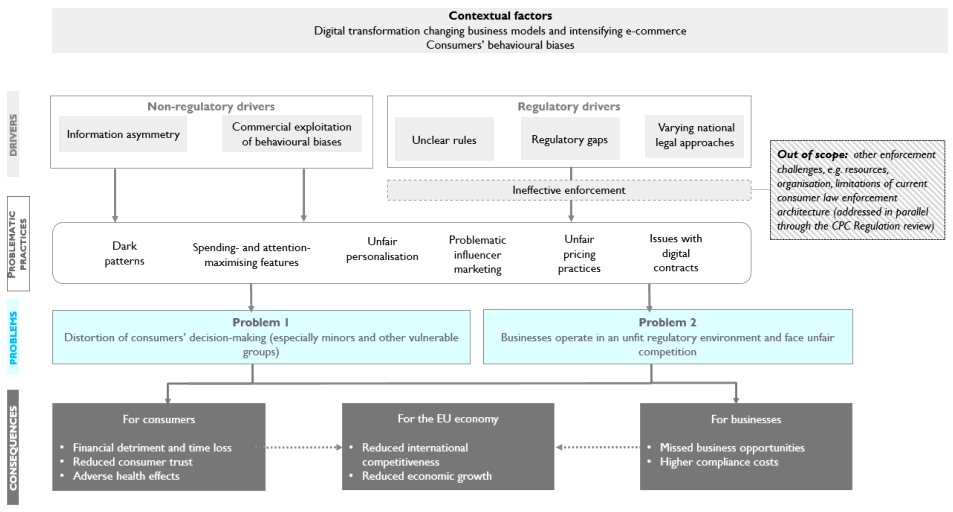
The problem tree depicts the identified problems, as manifested through six main types of problematic practices, the underlying drivers, and the resulting consequences. This section examines the prevalence of the problematic practices (2.1.1), explains the two overarching problems deriving from them (2.1.2, 2.1.3), and analyses the problem drivers (2.1.4).
2.1.1 Description of problematic practices and their prevalence
This sub-section defines the relevant problematic practices and reports on their prevalence. Where large-scale observational data was not available or was only available for certain sectors, the assessment of prevalence is complemented with observational evidence on the spread of practices across sectors and qualitative survey data. See also Annex 12 for a summary of cited evidence on the prevalence and negative consequences of dark patterns, attention-maximising features and unfair personalisation practices.
1) Dark patterns are digital interface design features that can influence consumers to take decisions they might have not taken otherwise. Examples include giving more prominence to choices that benefit the trader (‘false hierarchy’), using countdown timers and scarcity claims to create urgency, using emotional language to shame consumers for a particular choice (‘confirm-shaming’), pressuring consumers to make a certain choice through repeated requests (‘nagging’), sneaking additional items into consumers’ online shopping baskets, forcing consumers to click through unnecessary steps to dissuade them from implementing a decision (‘click fatigue’) and using misleading visual presentation or language to confuse consumers about the available options or the consequences of their choice. While not all interface design features that are labelled as ‘dark patterns’ in academic literature are inherently harmful to consumers, dark patterns are harmful when they undermine consumers’ interests to benefit business interests.16 Such practices can lead i.a. to financial detriment, for example due to purchasing unwanted products or spending more than intended on purchases, time loss, and psychological harm.17
Studies documenting the use of dark patterns consistently report high rates of prevalence – over 80% – on popular e-commerce websites, online marketplaces and in mobile apps, including mobile apps used by children. A 2022 mystery shopping exercise conducted for the Commission found that 97% of popular websites and apps deploy at least one dark pattern such as false hierarchy, nagging, urgency and scarcity claims, and confirm-shaming.18 A 2024 study by a national consumer organisation focusing on the most popular online platforms in France found dark patterns on all of the 20 analysed online marketplaces and accommodation booking platforms; the identified dark patterns included false hierarchy, urgency and scarcity claims, nagging, confirm-shaming and click fatigue.19 Two academic studies on popular apps for children found that dark patters were present in 80%20 and 100% of the analysed apps.21 Similarly, 70% (7421 of 10560) of respondents to the consumer survey conducted for the DFA study ( ‘DFA consumer survey’) reported having encountered at least one dark pattern at least a few times a year, and 61% (1210 out of 1991) of respondents to the minors’ survey conducted for the DFA study (‘DFA minors’ survey’) reported having been exposed to dark patterns. 86% (18 out of 21) of respondents to the consumer associations survey conducted for the DFA study (‘DFA consumer associations survey’) reported dark patterns as highly to extremely prevalent in the sectors they monitor.
2) Spending- and attention-maximising features are mutually reinforcing elements in the design of digital products that lead consumers to spend more money and time than intended.
Spending-maximising features include items with uncertainty-based rewards (e.g. loot boxes), pay-to-win and pay-to-progress gameplay mechanics (which offer users a competitive advantage or allow them to bypass challenges, inducing them to spend more), and in-app currencies that obscure the real-world cost of virtual items.
Spending-maximising features are used in various types of websites and applications, most prominently and widely in the video gaming industry. Mobile games and especially free-to-play or freemium games are the ones most often played in the EU22 and are often monetised through advertising or in-app purchases,23 which include spending-maximising features. Spending-maximising features such as loot boxes, play-to-progress/play-to-win mechanisms and in-app/in-game currencies are concentrated in the apps with the largest user bases, and they are associated with the strongest revenue generation, especially among smaller apps.24 In a representative survey published by the European Commission, 16% of video game players reported excessive in-game advertising or monetisation pressures.25 The International Consumer Protection and Enforcement Network (ICPEN)26 found in a recent sweep that loot boxes were present in 46% of the screened games and 78% of these games used virtual currencies. An academic audit found that 58% of the 100 top-grossing games on the Google Play store, 59% of the 100 top-grossing iPhone games and 36% of the top 50 most-played games on the Steam store contained loot boxes.27 Spending-maximising features are being used in other sectors, such as e-commerce.28 A recent CPC network enforcement action addressed i.a. misleading ‘spin-the-wheel’ features on a major online marketplace.29 Gamification as a design technique is used also in other sectors, such as social media and dating apps.30 79% (5120 out of 6482) of respondents to the DFA consumer survey and 68% (1347 out of 1991) of respondents to the DFA minors’ survey reported having experienced features such as uncertainty-based rewards, pay-to-win or pay-to-progress mechanisms, and virtual currencies, in the past 12 months.
Respondents to the DFA consumer associations survey considered that spending-maximising features are widespread in the sectors they monitor, reporting high to extremely high prevalence of features such as virtual currencies (90% or 19 out of 21 respondents in the video games sector – 57% or 12 in other sectors), uncertainty-based rewards and pay-to-win/pay-to-progress mechanisms (both 81% or 17 in the video games sector).
Attention-maximising features (also referred to as ‘addictive design features’, ‘attention-capture deceptive design’ or ‘engagement-prolonging design’) include features such as infinite scroll, autoplay, pull-to-refresh, incentives for continued engagement (e.g. badges, rewards), penalties for disengagement, ephemeral content (e.g. ‘stories’), social-validation metrics (e.g. ‘likes’), or highly personalised content recommendations. In some instances their potential to cause negative effects may depend on context, such as the type of digital product in which they are implemented31 or the type of user that is exposed to such practices.32 However, certain features are harmful irrespective of the context, e.g. those that are also deceptive, such as fake notifications. There are also growing concerns about consumers’ prolonged engagement with chatbots and AI companions through features such as continuation prompts as highlighted also by the European Parliament.33 76% (8065 out of 10560) of the respondents to the DFA consumer survey confirmed having encountered attention-maximising features online in the past 12 months. Consumer organisations surveyed for the DFA study reported very high prevalence rates for features such as notifications encouraging re-engagement (81%, 17 out of 21), infinite scroll, autoplay and social validation mechanisms such as likes (all 76%, 16). Attention-maximising features are used in sectors such as social media, streaming, video gaming and e-commerce.34 Mobile apps, including, for example, fintech and trading apps35 or dating apps,36 also implement such features. A 2025 investigation by a German consumer organisation found that attention-maximising features were used in the mobile apps of all of the 18 analysed online marketplaces and social media platforms. Infinite scroll, autoplay and pervasive notifications were amongst the documented features.37 An academic audit published in 2026 examined 17 VLOPs and found that all of the analysed platforms used one or more attention-maximising feature. The identified features included highly personalised content recommendations, rewards for continued engagement, social validation metrics, autoplay and infinite scroll. Social media platforms were found to use twice as many attention-maximising features as other VLOPs.38
3) Unfair personalisation refers to personalised advertising or pricing that targets consumers in a way that creates or is designed to create detrimental outcomes for the consumer. It can affect all consumers, and in particular vulnerable groups of consumers, such as minors, persons with disabilities, marginalised groups facing racial or ethnic discrimination,39 or exploit situations of consumer vulnerability, such as personal problems, financial challenges or negative mental states. While personalisation is not inherently unfair, its expanding use in areas such as advertising increases the risks from problematic practices. A recent study estimated that 85% of digital display ads is personalised.40 Price personalisation based on personal characteristics of individual consumers, including the exploitation of vulnerabilities, is technically possible, but the evidence on its frequency of occurrence in practice is still emerging.41 Enforcement action by consumer authorities and studies by consumer organisations have found evidence of price personalisation in the e-commerce, dating app, airline and accommodation booking sectors.42
The nature of unfair personalisation makes it difficult to measure its prevalence, as personalisation itself influences the accuracy of web measurement studies.43 Studies and enforcement actions nevertheless indicate that it is used in many sectors. Researchers assessing approximately 40,000 ads with ad disclosure pages from 804 children’s websites found that, on average, targeting was enabled for 68% of the analysed ads that were accessed from the EU.44 In investigations by digital rights organisations, a major data marketplace was found in 2023 to contain 650.000 audience segments that could be used to target advertising, in the US and Europe, including some that would allow conclusions about medical conditions and sexual orientation.45 In the DFA consumer survey, 74% of respondents (7853 out of 10560) reported having experienced unfair personalisation practices online in the past 12 months.
4) Problematic influencer marketing. Influencers have gained significant prominence in recent years. The global influencer marketing market size has more than tripled in 2020-2025.46 A 2023 CPC network sweep47 and recent academic studies48 found that around 75% - 95% of influencers may not be disclosing the commercial nature of advertising content. 76% (7454 out of 9764) of respondents to the DFA consumer survey reported having seen influencer content that made them question whether it was an ad or a genuine viewpoint. In the DFA minors’ survey, 60% (1194 out of 1991) of children reported encountering content for which they were unsure whether it was commercial.
Moreover, some influencers promote harmful products. This is particularly concerning when influencers have followers among young consumers, as the promotion of such products could alter their perception of the risks posed by such products.49 Around one in five influencers included in the 2023 CPC sweep were found to promote unhealthy or hazardous products, such as high-risk financial services including crypto trading, unhealthy food and beverages, medical or aesthetic treatments or gambling.50 65% (3879 out of 5934) of respondents to the DFA consumer survey indicated that they have encountered influencers promoting unsuitable goods and services. Respondents to the DFA consumer associations survey rated problems related to influencer marketing as highly to extremely widespread in the sectors they monitor (67%; 14 out of 21). This is consistent with past findings by consumer organisations.51
5) Unfair pricing practices distort the ability of consumers to compare options and make informed decisions, causing them to pay more than intended. 73% (7754 out of 10560) of respondents to the DFA consumer survey experienced at least one of the following practices: drip pricing, problematic dynamic pricing and/or misleading price comparisons.
Drip pricing entails a deceptively low base price advertised at the beginning of the purchase process, while mandatory and unavoidable additional costs, such as service fees, are disclosed and added only at later stages. In past CPC network sweeps,52 10% to 39% of the screened traders in the e-commerce sector were found to engage in drip pricing. 81% (17 out of 21) of respondents to the DFA consumer associations survey reported that drip pricing is highly to extremely prevalent in the sectors they monitor. According to the research by a consumer association into 50 ticketing websites for cultural and sporting events, 92% applied management fees, typically added only at checkout.53
Dynamic pricing refers to changing the price of a product in a highly flexible and quick manner in response to market demands and conditions. This is a common practice in several industries such as travel, hospitality, tourism, retail, electricity, entertainment and sport.54 While dynamic pricing is not inherently unfair, unpredictable and opaque pricing techniques may mislead consumers.55 For example, in a dynamic pricing context, the selling of items, such as event tickets, the price of which is dynamically increasing due to the trader’s actions or automated or algorithmic processes, often give an impression of affordability but do not reflect what most consumers would actually pay.56 In cases of particularly strong demand, such as tickets for popular events, consumers may have to wait in virtual queues for their chance to buy without knowing how the prices are changing. Ticket price increase whilst consumers were waiting in virtual queue received strong publicity in 2024 in the context of popular music concerts, with numerous consumer complaints about the excessive price increases during the booking process and subsequent investigations by the authorities in the UK and Ireland.57 Issues regarding dynamic pricing, particularly for event ticketing, has been raised and discussed by Members of Parliament and other stakeholders during a range of recent seminars.58 In its latest annual competition-policy resolution of July 2026, Parliament called on the Commission and the Member States “to consider all regulatory options, including the prohibition of dynamic pricing at live sports and cultural events in the Digital Fairness Act, with a view to protecting consumers and upholding the social and public value of sport and culture”.59
Price comparisons can mislead consumers when they convey false impressions of a specific price advantage (e.g. “30% off”) whilst the reference price used in the comparisons is a mere estimate (notably the manufacturer’s Recommended Retail Price) and not an actual price charged previously by the trader or by competitors in the market. According to a recent report by a national consumer association,60 online sellers offer a lot more price comparisons than price reductions (85% vs 15%), using a variety of opaque references. A 2025 sweep by the CPC network found that 34% of traders used price comparisons, and most did not clearly explain the reference price used.61
An additional issue highlighted by respondents62 to the DFA open public consultation (‘OPC’) concerns tickets for popular entertainment and culture events quickly selling out and then being resold on the secondary market above their original price by traders.63 Several Member States have restricted ticket resale, including prohibition of resale above face-value (see Annex 7). Ticket resale may also be prohibited by contractual terms of the event organisers or primary sellers. A stakeholder64 estimated Europe’s unauthorised ticket resale market to exceed 2.5 billion annually. A report65 commissioned by the Dutch Ministry of Education, Culture and Science indicates that, in the Netherlands in 2023, 8.2 % of event tickets were resold of which 12.4% at higher price, with the average price mark-up of 65.8% and maximum of 266%.
6) Issues with digital contracts. Amidst exponential growth of the digital subscription economy and ‘freemium’ business models, several issues have arisen with the conclusion and cancellation of subscription contracts in digital markets. An ICPEN sweep completed in 2024 found that 81% of traders used interface design that prevented consumers from deactivating the auto-renewal of a subscription and 70% failed to provide clear directions on how or when to cancel. Most of the traders that provided cancellation information made the cancellation process much more difficult than enrolling in a subscription.66 A 2024 study by a Swedish consumer organisation found that all 20 analysed digital entertainment and news services used dark patterns in the subscription cancellation process.67 Respondents to the DFA consumer associations survey reported that such problematic features are highly to extremely prevalent in the sectors they monitor (e.g. difficult cancellation (81%, 17 out of 21), automatic extensions of contracts and automatic conversions of free trials into paid contracts (86%, 18) or no access to a human interlocutor (71%, 15)). In the DFA consumer survey, 82% (5148 out of 6287) of respondents experienced at least one such practice.
In addition to traditional contracting methods, automated contracts are becoming steadily more popular, thus adding to the challenges mentioned above. According to recent data, approximately 0.7–1.5% of EU enterprises, roughly 235 000 to 475 000 companies, currently make use of AI solutions for contracting.68 On the consumer side, the uptake is also increasing. A recent study by a national business association indicates that 31% of French consumers who buy on the internet use generative AI.69 When using automated contracting, consumers give up some of the control that they otherwise exercise when concluding their online contracts ‘manually’ by checking the offers on websites or apps with their own eyes. Moreover, automation tools could lack transparency about their key features. A key concern expressed by consumers using AI is commercial neutrality of the AI tool used.
16 Timms, R. ‘All ‘Dark patterns’ Are ‘Hostile patterns’: A Hostility Framework for Understanding Problematic Digital Interfaces’ (2025). ↑
17 Santos, C. et al., ‘No harm no foul: how harms caused by dark patterns are conceptualised and tackled under EU data protection, consumer and competition laws’ (2025). ↑
18 European Commission, Behavioural study on unfair commercial practices in the digital environment: Dark patterns and manipulative personalisation (2022). ↑
19 UFC-Que Choisir, ‘Dark patterns sur les sites d’e-commerce - L’UFC-Que Choisir appelle les autorités à sanctionner les interfaces trompeuses’, 20 June 2024. ↑
20 Radesky, J. et al., ‘Prevalence and Characteristics of Manipulative Design in Mobile Applications Used by Children’ (2022) found dark patterns such as confirm-shaming, urgency claims, click fatigue and false hierarchy. ↑
21 Krahl, H. et al., ‘Playful but Persuasive: Deceptive Designs and Advertising Strategies in Popular Mobile Apps for Children’ (2025) found dark patterns such as scarcity and urgency claims, nagging, confirm-shaming and click fatigue. ↑
22 62% of games played in the EU are mobile games and 50% indicated playing free or freemium games. European Commission: Directorate-General for Communications Networks, Content and Technology, Study on audiences, consumer behaviour and preferences relating to the consumption of media content (2025). ↑
23 According to the report ‘All about Video Games – European Key Facts 2024’ of Video Games Europe, app revenue from in-app purchases and paid for apps accounted for 43% of industry revenues in 2024. ↑
24 Duch-Brown, N. and Lemaire, S., ‘Overview of monetisation strategies in Gaming. Evidence from apps Worldwide’ (2026). ↑
25 Directorate-General for Communications Networks, Content and Technology, The European Media Industry Outlook, 2025. ↑
26 ICPEN, ‘Mobile and Online Gaming Sweep’, 30 June 2025. ↑
27 Zendle, D. et al., ‘The prevalence of loot boxes in mobile and desktop games’ (2020). ↑
28 For instance, AliExpress uses virtual currencies – coins – for payments on its website: How To Use Coins on AliExpress 2025? - AliExpress Blog. ↑
29 CPC Network coordinated action regarding Temu, November 2024. ↑
30 See e.g.: Wiesböck, L. et al., ‘ADDICT - Addictive Design in Digital Consumer Technologies’ (2026) and Nader, K., ‘The gamification of dating online’ (2025). ↑
31 Monge Roffarello, A. et al., ‘Defining and Identifying Attention Capture Deceptive Designs in Digital Interfaces’ (2023). ↑
32 Gray, C., ‘The Dark Patterns Knowledge Stack: Exploring New Ways to Negotiate Context, Law, and Design’ (2026). ↑
33 See footnote 4. See also Shen, M. K. et al., ‘The AI Genie Phenomenon and Three Types of AI Chatbot Addiction: Escapist Roleplays, Pseudosocial Companions, and Epistemic Rabbit Holes’ (2026) and De Freitas, J. et al., ‘Emotional Manipulation by AI Companions’ (2025). ↑
34 Flayelle, M. et al., ‘A taxonomy of technology design features that promote potentially addictive online behaviours’ (2023). ↑
35 Langvardt K. and Tierney J. F., ‘On “Confetti Regulation”: The Wrong Way to Regulate Gamified Investing’ (2022). ↑
36 Taimur A., ‘Manipulative Matchmaking - A Legal and Ethical Assessment of Addictive AI Design in Dating Apps’ (2025). ↑
37 Verbraucherzentrale Bundesverband, ‘From Amazon to Tiktok to Temu: Manipulative designs remain a problem’ (2025). ↑
38 Chen, Y. et al., ‘The Engagement-Prolonging Designs Teens Encounter on Very Large Online Platforms’ (2026). ↑
39 European Union Agency for Fundamental Rights, Being Black in the EU Experiences of people of African descent, LGBTIQ equality at a crossroads – Progress and challenges (2023). ↑
40 IM Consulting Group, ‘A personal touch: Personalised advertising provides a €100 billion boost to EU competitiveness’, 21 May 2025. ↑
41 Verbraucherzentrale Brandenburg, ‘Individualisierte Preisdifferenzierung Im Deutschen Online-Handel’ (2018); European Commission, ‘Tinder commits to provide consumers with clear information about personalised prices’ (2024); A study for the European Parliament notes that “There is no conclusive empirical evidence how widespread first-degree personalised pricing is in online markets”: European Parliament, Personalised Pricing (2022). The FTC concluded that “Price targeting tools, including [personalisation tools], can potentially lower the cost of setting and changing prices, enabling companies to customize prices for more combinations of goods, locations, times, and sales channels”: FTC, ‘FTC Surveillance Pricing 6(b) Study: Research Summaries A Staff Perspective’, January 2025. ↑
42 BEUC, ‘Each consumer a separate market? BEUC position paper on personalised pricing’ (2023); Authority for Consumers and Markets, ‘Following ACM actions, Wish bans fake discounts and blocks personalized pricing’, 26 July 2025; CPC Network dialogue with Tinder, March 2024. ↑
43 Jueckstock, J. et al., ‘Towards Realistic and Reproducible Web Crawl Measurements’ (2021). ↑
44 Moti, Z. et al., ‘Targeted and Troublesome: Tracking and Advertising on Children’s Websites’ (2024). ↑
45 See e.g.: Keegan, J. and Eastwood, J., ‘From “Heavy Purchasers” of Pregnancy Tests to the Depression-Prone: We Found 650,000 Ways Advertisers Label You’, The Markup, 8 June 2023. ↑
46 ‘Influencer marketing market size worldwide from 2015 to 2025’, Statista, November 2025. ↑
47 European Commission, ‘2023 – sweep on influencers’. ↑
48 Bertaglia, T. et al., ‘Influencer self-disclosure practices on Instagram: A multi-country longitudinal study’ (2025); Gui, H. et al., ‘Across Platforms and Languages: Dutch Influencers and Legal Disclosures on Instagram, YouTube and TikTok’ (2025). ↑
49 Pitt, H. et al, ‘Young people’s views about the use of celebrities and social media influencers in gambling marketing’ (2024). ↑
50 Investigation of the Commission and consumer authorities finds that online influencers rarely disclose commercial content. ↑
51 See e.g. BEUC’s reports: ‘From Influence to responsibility. Time to regulate influencers’ (2023); ‘Connected, but unfairly treated. Consumer survey results on the fairness of the online environment’ (2023). ↑
52 European Commission, ‘2025 – Sweep on prices’; European Commission, ‘2018 - sweep on price transparency and drip pricing’. ↑
53 OCU, ‘OCU exige acción inmediata contra los abusos en los gastos de gestión de entradas online’, 22 July 2024. ↑
54 Kopalle, P. K. et al., ‘Dynamic pricing: Definition, implications for managers, and future research directions’ (2023). ↑
55 Which?, ‘By Fair Means or Foul? Consumer Attitudes towards Dynamic Pricing’ (2025). ↑
56 Euroconsumers, in its response to the Digital Fairness Act consultation, recommend prohibiting the use of dynamic pricing for live entertainment events where market failure prevents a fair and well-functioning dynamic pricing system. ↑
57 The UK CMA concluded that Oasis concert tickets were being sold at 2 different prices under a ‘tiered pricing’ system whereby prices increased as soon as the cheaper tickets were sold out. ↑
58 ‘Towards fair pricing – Regulating dynamic pricing in the digital fairness act’, 18 November 2025; ‘Fair ticketing and dynamic pricing in the EU: towards the Digital Fairness Act’, 15 July 2026. ↑
59 European Parliament resolution of 7 July 2026 on competition policy – annual report 2025 (2025/2134(INI)). ↑
60 Que Choisir, ‘Prix barrés sur les sites d’e-commerce - Près de 9 sur 10 sont des fausses promotions’, 9 July 2025. ↑
61 European Commission, ‘2025 – Sweep on prices’. ↑
62 Problems with ticket resale were addressed, for example, in the contributions by BEUC, German consumer association vzbv, and the Czech consumer association dTest. ↑
63 C2C resale is outside the scope of EU consumer law. ↑
64 Submission by The Face-value European Alliance for Ticketing (FEAT) to the DFA Call for Evidence. ↑
65 SEO, ‘Koop en Doorverkoop: Onderzoek naar Toegangskaarten voor Sport- en Culturele Evenementen’ (2023). ↑
66 ICPEN, ‘Dark Patterns in Subscription Services Sweep’, 2 July 2024. ↑
67 Sveriges Konsumenter, ‘Are you sure you want to leave us?’ (2024). ↑
68 Study on Contracts in the Digital Economy for the European Commission, not yet published. ↑
69 FEVAD, ‘Les Français sont de plus en plus nombreux a adopter l’IA pour acheter sur internet’, 11 February 2026. ↑
Clarification regarding the categorisation of problematic practices
Several features covered under the problematic practices under paragraphs 2-6 above could also be categorised as dark patterns as they are often deployed through online interface design. However, to facilitate the targeting of the initiative, a distinction is made in this Impact Assessment between dark patterns and other problematic practices based on the context in which the practice is used and the mechanism through which it can harm consumers, thereby avoiding overlaps in the analysis between the various types of problematic practices. The term ‘dark patterns’ is attributed a narrow meaning, referring to a category of harmful practices deployed through digital interface design that are either specifically used in e-commerce, or are context-agnostic design strategies that can be deployed in a variety of online interaction flows to the detriment of consumers. While some unfair pricing practices, such as drip pricing and misleading price comparisons, could constitute dark patterns (drip pricing was categorised as such in the Fitness Check), these practices concern primarily the misleading presentation of price information. While difficult online contract cancellation processes often involve dark patterns, in this Impact Assessment practices concerning subscription conclusion and cancellation are addressed together under the heading of ‘issues with digital contracts’, as they appear in the same context, and mutually reinforce each other. While there is academic literature in the field of Human-Computer Interaction that considers attention-maximising features as dark patterns,70 this analysis considers them as distinct types of problematic practices, acknowledging that harms linked to attention-maximising features tend to accumulate over the course of a consumers’ use of a digital product,71 while harms linked to dark patterns typically arise from a concrete interaction between a consumer and a trader’s interface. Further, not all attention-maximising features are deployed through interface design. For example, highly personalised content recommendations concern the design of recommender systems. Similarly, although dark patterns could be personalised, and highly personalised content recommendations as an attention-maximising feature also entail personalisation, these practices are distinct from those addressed as unfair personalisation practices in this Impact Assessment. The latter category only covers personalised advertising and pricing practices.
70 See e.g. Beltrán, M. ‘Defining, Classifying and Identifying Addictive Patterns in Digital Products’ (2025). ↑
71 See e.g. Gairola, R. et al., ‘"Social Media Killed Our Generation": Teenagers' Felt Experiences of Harm on Social Media’ (2026). ↑
2.1.2 Problem 1: Distortion of consumers’ decision-making
As a result of the problematic practices described in section 2.1.1, consumers’ decision-making in the digital environment is distorted, leading them to take decisions that go against their interests. While consumers can also encounter practices that are designed to influence their behaviour in offline environments, the speed, scale and potency of digital solutions for targeting consumers significantly aggravate these risks. Online shoppers are over 60% more likely to experience problems with their purchases, compared to those shopping offline.72 Based on 2025-2026 Eurostat data, 95% of EU citizens aged 16-74 are online and most of them (78%) are also making purchases online. Among minors, nearly all (99%) use the internet, and more than two-thirds (69%) made purchases in the last year.
Consequently, nearly every consumer in the EU is potentially affected. Over two thirds of consumers responding to the DFA consumer survey have reported encountering each type of problematic practice in the previous 12 months.73 The DFA study estimated that as a result in 2026, consumers suffer a substantial financial detriment, of at least EUR 10.3 billion per year – up from EUR 7.9 billion per year estimated in the Fitness Check.74
The problematic practices causing financial detriment also lead to two other types of consumer detriment that are not included in the aforementioned estimate. They entail time losses and impact consumers’ mental health and well-being, both directly (e.g. prolonged use of digital products implementing spending- and attention maximising features is linked to depression and sleeping disorders)75 and indirectly (e.g. through increased cognitive burden).76 Vulnerable consumers, especially minors, are particularly at risk of suffering detriment, including to their health.77
Respondents to the DFA consumer survey that encountered dark patterns indicated that they bought something they did not need (13%, 785 out of 6113), or that they subsequently regretted (12%, 735 out of 6113). These shares were higher in the youngest age bracket (15-29 years), 17% (213 out of 1238) and 18% (225 out of 1238), respectively. This leads to a financial detriment of at least EUR 2.71 billion per year according to the DFA study. Behavioural experiments provide extensive evidence that dark patterns increase the likelihood that consumers will make transactional decisions that are unaligned with their preferences or intentions.78 Studies indicate that adult consumers are generally susceptible to the influence of dark patterns,79 with some evidence suggesting that older consumers and individuals with lower education levels may be more vulnerable.80 Similarly, a majority (52%, 11 out of 21 ) of the consumer organisations surveyed for the DFA study considered that older people are more affected by dark patterns. A recent academic study found that only 32% of children aged 10-11 were able to recognise dark patterns, suggesting that they may be especially vulnerable.81
There is also ample evidence of financial and time loss suffered by consumers because of attention-maximising features. In the digital economy, attention is regarded as a scarce and valuable resource82 monetised by traders. Attention-maximising features can lead to consumers spending more time than they would choose to on digital products, and to regret that. This is due to features such as infinite scroll and autoplay which encourage longer sessions, or notifications that encourage starting a new user session.83 83% of respondents to a survey conducted by BEUC reported spending more time on social media than intended at least sometimes.84 The more time consumers spend online, the greater the generated revenues, for example due to consumers purchasing more advertised products and sharing more personal data.85 Most respondents older than 15 to the DFA consumer survey (72%, 4850 out of 6731) indicated negative impacts, including: spending more time than intended (40%, 2689 out of 6731), feeling anxious or guilty about the time or money spent (20%, 1323 out of 6731) or spending more money than intended (14%, 949 out of 6731). The DFA study estimated the financial detriment due to attention-maximising features at EUR 2.08 billion per year. Prolonged use of digital products has been linked to compulsive usage patterns and negative effects on well-being, such as depression, anxiety and low self-esteem.86 Studies also suggest that the risk of experiencing negative effects linked to use of platforms that deploy attention-maximising features is higher for children, young adults and adults with pre-existing well-being issues.87 While the evidence base on the effects of extended use of digital products on user well-being is largely correlational, there is substantially more evidence for the potential negative association between social media and mental health than there is regarding its positive effects.88 86% (1168 out of 1354) of children responding to the DFA minors’ survey indicated problems, most often spending more time than intended (40%, 539 out of 1354), being unable to stop scrolling or watching videos (29%, 396 out of 1354), being worried about missing out (28%, 377 out of 1354), spending less time with family or friends (24%, 320 out of 1354) and feeling upset (20%, 269 out of 1354). The WHO estimated that the rates of problematic social media use amongst adolescents rose from 7% in 2018 to 11% in 2022.89 According to a 2026 Eurobarometer survey, 40% of EU adolescents aged 13-18 years think they spend too much time on screens, and nearly one in three report feeling stressed, sad or socially excluded because of social media.90
Developing enforcement and case law on harmfulness of addictive design
Under the DSA, the European Commission recently issued preliminary findings on a case concerning a major social media platform, preliminarily finding it in breach of the DSA due to its addictive design.91 Specifically, the Commission found that features such as infinite scroll, autoplay, push notifications, and the highly personalised recommender system were not adequately assessed and mitigated for risks to user well-being. At this stage, the Commission considers that the platform needs to change the design of its service e.g. by disabling addictive features such as “infinite scroll”. The platform now has the possibility to exercise its right to defence.
In the US, similar concerns are being pursued through litigation. In California, a jury found two major online platforms liable for harm caused by the defective design of social media and video sharing apps with “addictive design” features such as infinite scroll, autoplay, and push notifications, that harm children, awarding USD 6 million (EUR 5.3 million) in damages.92 A New Mexico jury ruled in March 2026 that one of these online platforms wilfully violated consumer law, ordering the company to pay USD 375 million (EUR 330 million).93 More recently, in August 2026, a settlement has been announced between Meta and 29 U.S states claiming that Meta has intentionally hooked children on its platforms with features such as infinite scrolling, frequent notifications and algorithmic recommendations, while misleading users about the platforms’ potential harms.94
Regarding spending-maximising features, a study conducted in 202095 confirmed that there is a significant correlation between problem gambling and loot box expenditure, meaning that people with more gambling-related issues tend to spend more on loot boxes. A 2022 study on German gamers aged 16 and above reported that approximately 31% of gamers indicated that they had spent more than they had intended on at least one occasion. 72% of respondents reported having the impression they could only progress in games by making in-game purchases.96 Research also points to the fact that the use of virtual currency increases the consumers’ willingness-to-pay compared to using real currency.97 Risks from spending-maximising features are also particularly high for children and young people.98 The World Health Organisation estimates that 12% of adolescents are at risk of problematic gaming.99 A behavioural experiment showed that loot boxes and complex virtual currencies substantially increase spending by children by approximately 17% and even further when coupled with time pressure elements.100 According to a 2024 report on behalf of Video Games Europe, among parents who reported that their children spend money on in-game extras (18% of the total surveyed), the average spend was EUR 31 per month.101 Considered together with the average pocket money received by teenagers (for instance, in Germany the recommended monthly amount for 10-18-year-olds lies between EUR 15 - EUR 70)102, spending in video games represents a very high proportion of minors’ income. By extending this data to EU 27, the overall annual spending of minors on in-game extras could be estimated at EUR 2.6 billion per year. UK communications regulator Ofcom similarly found that, among children aged 8-17, 41% of those who spend money in games admit overspending, with one in five using someone else’s money without permission.103 Based on the DFA study estimates, the financial detriment suffered by consumers as a result of spending-maximising features is at least EUR 1.08 billion per year.
The 2025 Consumer Conditions Scoreboard (CCS) found that almost all consumers who buy online are concerned about personalised advertising (93%).104 Less than one in five consumers (19%) considered it fair that people are targeted with ads and content that are based on information about their lives, weaknesses and vulnerabilities in a survey conducted by BEUC.105 Respondents to a 2021 OECD questionnaire deemed price personalisation unfair on average; perceived unfairness was higher for price increases than discounts, and personalisation based on a subject’s search history was perceived fairer compared to other types of personalisation, such as based on socio-economic status or dependence on the purchased good.106
Out of 6 554 respondents to the DFA consumer survey who had experienced unfair personalisation practices and were selected for follow-up questions,107 59% (3 875) felt that information about them was used to influence them unfairly through personalised ads and 27% (1 757) felt that their personal data was used to charge them a higher price. In the DFA minors’ survey, 20% of respondents (194 out of 975) said they bought something they did not really need due to personalised advertising or pricing. Research findings by consumer associations and the US Federal Trade Commission (FTC) also point to potential impacts of unfair personalised pricing on consumers, such as welfare loss, discrimination, harm to privacy and autonomy in decision making.108 The total baseline annual financial detriment due to unfair personalisation practices is estimated at EUR 2.25 billion in the DFA study.
When it comes to influencer marketing, consumers experience difficulties recognising influencers’ commercial advertising.109 53% of consumer report buying products recommended by influencers.110 Children are especially vulnerable to influencer marketing, as their digital literacy is not yet fully developed111 and are less critical toward sponsored content.112 They are also more susceptible to influencer marketing of harmful products. For example, a randomised trial found that children aged 9 to 11 who viewed influencers promoting unhealthy snacks were more likely to increase consumption of such foods and their overall calorie intake.113 In the DFA minors’ survey, children reported feeling pushed when encountering undisclosed influencer marketing (22%, 260 out of 1197), as well as being lied to (31%, 370 out of 1197) and upset, annoyed, worried or bad about themselves (16%, 195 out of 1197). More than half of them (53%, 101 out of 195) stated these situations had a big impact on their well-being. 16% (186 out of 1197) reported buying something they did not need.
71% (15 out of 21) of respondents to the DFA consumer associations’ survey considered unfair pricing practices a severe consumer protection issue. Misleading reference pricing can lead consumers to paying higher prices and purchasing more than they would if they had understood the offer.114 A behavioural experiment115 showed that attractive “x% off” discount claims and crossed-out reference prices are strong drivers for consumer choice: 57.5% of consumers chose more expensive products showing a larger % discount rather than a cheaper comparable alternative product marketed with a smaller discount. Research by a consumer association116 showed that management fees added only at checkout increase the final cost by an average of 11%. A 2021 experiment117 showed that consumers are 14% more likely to buy a ticket when drip pricing is used compared to when fees are disclosed upfront and spend approximately 21% more. A 2016 academic study identified over 500 sellers likely using dynamic pricing on an online marketplace, with some changing prices tens or even hundreds of times per day.118 The DFA study estimated that the yearly financial detriment suffered by consumers as a result of unfair pricing practices is at least EUR 2.17 billion.
Respondents to the DFA consumer survey who experienced issues with digital contracts, reported spending more time than intended (34%, 2147 out of 6287) or paying for unwanted contracts (19%, 1196 out of 6287). A 2017 study by the European Consumer Centre (ECC) Sweden estimated the average cost of an unwanted subscription at around EUR 116.119 A 2021 UK government study estimated that UK consumers may be spending as much as GBP 1.8 billion (EUR 2.1 billion) yearly on unwanted subscriptions.120 In the US, the FTC ordered a major online marketplace in 2025 to pay USD 1.5 billion (EUR 1.32 billion) in refunds to consumers harmed by deceptive subscription enrolment and cancellation practices.121 81% (17 out of 21) of the respondents to the DFA consumer association survey considered that issues with digital contracts present important consumer protection concerns. In the earlier consumer survey for the Fitness Check, 15% of respondents indicated that they had been charged for a purchase they did not intend to make when using a virtual assistant.
72 European Commission, Consumer Conditions Scoreboard 2025, p. 3. ↑
73 The prevalence for each type of problematic practice is reported in the previous section. ↑
74 Based on the consumer survey carried out for the DFA study, recent Eurostat figures and other secondary evidence, the annual financial consumer detriment due to the practices covered is estimated at EUR 10.3 billion in 2026. This amount does not include financial detriment due to problematic influencer marketing and digital contract practices. This is the overall value of financial detriment, irrespective of whether redress mechanisms have been activated or not. The EUR 7.9 billion estimate in the Fitness Check concerns the post-redress financial detriment estimate in 2022. This is the net financial harm that remains after consumers have tried to resolve the problem. Moreover, the Fitness Check covered fewer problematic practices than the current DFA study. To ensure some degree of comparability, both the Fitness Check amount and the EUR 10.3 billion 2026 baseline consumer detriment only cover financial detriment. Hence, the EUR 10.3 billion does not include any (monetised) time detriment or negative impacts on (mental) health that are also non-negligible. ↑
75 Haidt, J. et al., ‘Social media is harming adolescents at a scale large enough to cause changes at the population level’ (2026); WHO, ‘Addressing the digital determinants of youth mental health and well-being: policy brief’ (2025). ↑
76 Santos, C. et al. (see footnote 17). ↑
77 See e.g. Sharpe, B. T. et al., ‘Dopamine-Scrolling: A Modern Public Health Challenge Requiring Urgent Attention’ (2025); Bhargava, V. R. et al., ‘Ethics of the Attention Economy: The Problem of Social Media Addiction’ (2021). ↑
78 See e.g. Luguri, J. and Strahilevitz, L. J., ‘Shining a Light on Dark Patterns’ (2021); European Commission, Behavioural study on unfair commercial practices in the digital environment: Dark patterns and manipulative personalisation (2022). ↑
79 For example, Zac, A. et al., ‘Dark patterns and consumer vulnerability’ (2025). ↑
80 See footnote 78. ↑
81 Schäfer, R. et al., ‘Growing Up With Dark Patterns: How Children Perceive Malicious User Interface Designs’ (2024). ↑
82 Terranova, T., ‘Attention, Economy and the Brain’ (2012); Marković, S. et al., ‘Mastering the Attention Economy: Strategies for Competing on Digital Platforms’ (2024). ↑
83 Monge Roffarello, A. et al. (see footnote 31). ↑
84 BEUC, ‘Connected, but unfairly treated. Consumer survey results on the fairness of the online environment’(see footnote 51). ↑
85 Narayanan, A. et al., ‘Dark patterns: past, present, and future’ (2020). See also the 2024 decision against TikTok by the Italian Competition Authority. ↑
86 See, for example: Almourad, M. B. et al., ‘Defining digital addiction: Key features from the literature’ (2020); Hendrikse, C. and Limniou, M., ‘The Use of Instagram and TikTok in Relation to Problematic Use and Well-Being’ (2024); Andreassen, C. S. et al, ‘The relationship between addictive use of social media and video games and symptoms of psychiatric disorders: A large-scale cross-sectional study’ (2016); Keles, B. et al, ‘A systematic review: the influence of social media on depression, anxiety and psychological distress in adolescents’ (2020); Joint Research Centre, ‘Addictive Online Design’ (2026, forthcoming). ↑
87 Castillo-Guarda, R. et al., ‘Social comparison and maladaptive emotion regulation are associated with poorer mental health in social media users’ (2026); Van der Wal et al., ‘Diverse platforms, diverse effects: Evidence from a 100-day study on social media and adolescent mental health’ (2026). ↑
88 European Commission, ‘Child safety online – Protecting and empowering minors in a digital world – Report by the co-chairs of the Special Panel on Child Safety Online’ (2026). ↑
89 WHO, ‘Teens, screens and mental health’ (2024). ↑
90 European Commission, Impact of excessive screen time and social media on young people’s mental health, June 2026. ↑
91 European Commission, ‘Commission preliminarily finds TikTok's addictive design in breach of the Digital Services Act’, 6 February 2026. ↑
92 NPR, ‘Jury finds Meta and Google negligent in social media harms trial’, 25 March 2026. ↑
93 New Mexico Department of Justice, ‘New Mexico Department of Justice Wins Landmark Verdict Against Meta’, 24 March 2026. ↑
94 NPR, Meta, states agree to $17 billion settlement in child safety trial : NPR, 26 August 2026. ↑
95 Close, J. et al., ‘Secondary analysis of loot box data: Are high-spending “whales” wealthy gamers or problem gamblers?’ (2022). ↑
96 VZBV, ‘Loot boxes entice gamers to repeatedly spend money’ (2023) ↑
97 Toccafondi, N. et al., ‘Virtual Currencies in Online Gaming Increase the Willingness to Pay for Loot Boxes: An Experimental Analysis’ (2025). ↑
98 Mills, S. et al., ‘Children and Young People’s Experiences and Understandings of Gambling-Style Systems in Digital Games: Loot Boxes, Popular Culture, and Changing Childhoods’ (2024); Wardle, H. et al., ‘Loot Boxes, Gambling, and Problem Gambling Among Young People: Results from a Cross-Sectional Online Survey’ (2021); Kristiansen, S. et al., ‘Loot box engagement and problem gambling among adolescent gamers: Findings from a national survey’ (2020). ↑
99 WHO, ‘Teens, screens and mental health’ (2024) (see footnote 89). ↑
100 Behavioural experiment with 10–15-year-olds on video games Verian for the Commission, not yet published. ↑
101 Ipsos for Video Games Europe, ‘Children’s in-game spending’, June 2024 (Adults 18+ with children in household (GB, FR, DE, SP, IT) 2024: 4,032). ↑
102 Deutsches Jugendinstitut, 'Taschengeld' (2025). ↑
103 Ofcom and Beano Brain, ‘Children’s online spending and potential financial harm: Quantitative research’ (June 2025). ↑
104 European Commission, Consumer Conditions Scoreboard 2025. ↑
105 BEUC, ‘Connected, but unfairly treated. Consumer survey results on the fairness of the online environment’ (see footnote 51). ↑
106 OECD, ‘The Effects of Online Disclosure about Personalised Pricing on Consumers – Results from a Lab Experiment in Ireland and Chile’ (2021). ↑
107 Due to the high number of respondents in the first question, the follow-up questions were posed to a reduced number of consumers. ↑
108 BEUC, ‘Each consumer a separate market? BEUC position paper on personalised pricing’ (2023); FTC, ‘Issue Spotlight: The Rise of Surveillance Pricing’ (2025). ↑
109 See, for example, Danish Competition and Consumer Authority, ‘Competitive Markets and Consumer Welfare’ (2021). Diaferia, E., Cachia, R., ‘Persuasion Mechanisms in Influencer Marketing’ (forthcoming). ↑
110 BEUC, ‘From influence to responsibility’ (2023). ↑
111 De Veirman, M. et al., ‘What Is Influencer Marketing and How Does It Target Children? A Review and Direction for Future Research’ (2019). ↑
112 Boerman, S.C. and van Reijmersdal, E. A., ‘Disclosing Influencer Marketing on YouTube to Children: The Moderating Role of Para-Social Relationship’ (2020). ↑
113 Coates, A. E. et al., ‘Social Media Influencer Marketing and Children’s Food Intake: A Randomized Trial’ (2019). See also Packer, J. et al., ‘The Impact on Dietary Outcomes of Celebrities and Influencers in Marketing Unhealthy Foods to Children: A Systematic Review and Meta-Analysis’ (2022). ↑
114 Competition and Markets Authority, ‘Evidence review of Online Choice Architecture and consumer and competition harm’, 5 April 2022. ↑
115 European Commission, Behavioural experiment on price reductions and comparisons (2026), figure 6. ↑
116 OCU, ‘OCU exige acción inmediata contra los abusos en los gastos de gestión de entradas online’, 22 July 2024. ↑
117 Blake, T. et al., ‘Price salience and product choice’ (2021). ↑
118 Chen, L. et al., ‘An Empirical Analysis of Algorithmic Pricing on Amazon Marketplace’ (2016). ↑
119 ECC Sweden, ‘EU Study into Public Experiences of Subscription Traps in Six Countries in 2017’. ↑
120 Department for Business, Energy, and Industrial Strategy, ‘Reforming Competition and Consumer Policy: Driving growth and delivering competitive markets that work for consumers’, July 2021. ↑
121 FTC, ‘FTC Secures Historic $2.5 Billion Settlement Against Amazon’, 25 September 2025. ↑
2.1.3 Problem 2: Businesses operate in an unfit regulatory environment and face unfair competition
In recent years, the adoption of key legislation under the EU digital rulebook, such as the DMA and DSA, has marked real progress in harmonising the legal framework governing digital markets. However, challenges for businesses operating online remain. Diverging national interpretations of current EU consumer law directives and diverging regulatory approaches in national legislation result in fragmentation in some areas of the Digital Single Market, which affects traders’ ability to do business cross-border and increases their costs. Such regulatory fragmentation can hamper innovation and discourage cross-border investment in the EU Digital Single Market.122 For example, in the absence of specific EU rules on automated contracting, national courts in a Member State have found early automated contracting tools non-compliant with the CRD in the past, and the provision of these tools was eventually discontinued.123 All of the businesses and business associations responding to the targeted stakeholder survey for the Fitness Check stated that they face moderate to high costs due to differences in national legislation and implementation related to practices in the digital environment when trading cross-border. More than half of businesses (672 out of 1287) responding to the business survey conducted for the DFA study (‘DFA business survey’) agreed that ambiguous or inconsistent legal provisions at EU or national level increase their business risks. Business stakeholders responding to the DFA Call for Evidence (CfE) indicate that diverging national requirements, such as different requirements with respect to cancellation procedures, pose significant obstacles to the Digital Single Market and that further harmonisation would limit the number of country-specific changes to digital products.124 The need for a less fragmented legal environment was also emphasised by participants at the Implementation Dialogue on consumer protection in the digital environment on 15 July 2025, with some calling directly for further harmonisation.125
Market fragmentation also distorts competition, creating advantages for businesses trading in more lenient jurisdictions. Almost 60% of respondents to the DFA business survey (745) agreed that certain market actors benefit from regulatory loopholes or exemptions, creating unequal conditions in the internal market. For example, problematic practices linked to digital contracts can impede consumers switching services,126 enabling businesses that implement such practices to retain their current pool of consumers without competing over price or quality,127 while placing businesses operating in Member States that have introduced specific measures to protect consumers from such practices at a competitive disadvantage.
Non-compliance with current rules distorts competition further,128 as non-compliant businesses circumvent applicable legal requirements, avoid associated costs and expand their market share more quickly, thereby placing compliant companies at a competitive disadvantage. Levels of compliance with EU consumer law directives in digital markets remain low, suggesting that non-compliance is profitable. This is evidenced by the results of various sweeps undertaken by public authorities129 as well as by the increasing rate of consumer complaints, with the ECC Network registering a rise in e-commerce related questions that were escalated to formal complaints from 17.7% in 2020 to 23.5% in 2025.130 Position papers by SME associations express concerns about the use of manipulative practices that both harm consumers and distort competition, particularly for compliant SMEs.131 As stressed by business organisations interviewed for the DFA study, EU-based businesses also face unfair competition from traders based outside the EU. According to an industry association, some non-EU-based market players have doubled or even tripled their online market share in a very short time, partly due to aggressive marketing practices, misleading and manipulating consumers and not respecting EU consumer protection rules.132 A 2026 study by a German industry association estimated that German online retailers lose EUR 2.5 billion in direct revenue to third country online marketplaces, which have been found not to comply with EU laws in the past. Overall, the study estimates the loss to German industry due to activities of these companies at EUR 4.8 billion.133 The use of problematic practices could also prevent consumers from switching to compliant service providers, including EU-based. For example, attention-maximising features can create barriers to entry by fostering compulsive dependence on a service provider to the exclusion of new market entrants, while simultaneously enabling businesses to maximise personal data collection and further increase engagement through increasingly fine-tuned content.134 A 2025 study by a German consumer organisation found that all of the 18 screened online marketplaces and social media platforms used attention-maximising features.135 A recent academic audit of 17 VLOPs similarly found that all of the analysed platforms used attention-maximising features.136 The majority of the platforms analysed in these studies are owned by companies established outside of the EU.
Non-compliance is likely to persist as infringers do not face penalties. Interviews conducted for the DFA study revealed that enforcement against unfair commercial practices under consumer law is often perceived as ineffective, and stakeholders highlighted that investigations often take years, allowing market actors who disregard rules to expand more rapidly and capture additional market share. While the length and effectiveness of enforcement proceedings is influenced by various factors that are partially beyond the scope of this assessment and examined under the parallel revision of the CPC Regulation, the ‘enforceability’ of the substantive legal framework plays a key role. There is a lack of clarity about how the principle-based general provisions in consumer law should be applied in concrete cases, which may have a chilling effect on enforcement, as identified in the Fitness Check.
Moreover, the extensive use of the above-mentioned problematic practices contributes to a reduction in consumer trust. According to the 2025 CCS, after increasing in recent years, consumer trust in traders respecting their rights has fallen back to its 2018 level.137 Low consumer trust can lead to missed business opportunities: consumers may become disengaged and distrustful of all companies in market configurations where treating consumers unfairly is a common strategy, harming honest businesses.138
122 European Parliament, ‘Identification of hurdles that companies, especially innovative start-ups, face in the EU justifying the need for a 28th Regime, In-depth analysis Requested by the EP JURI Committee’, July 2025. ↑
123 Verbraucherzentrale, ‘Amazon Dash Button: Gericht sieht massive Gesetzes-Verstöße’, 27 October 2025. ↑
124 Submissions to the DFA Call for Evidence. ↑
125 European Commission, ‘Implementation dialogue on consumer protection in the digital environment with Commissioner Michael McGrath’. ↑
126 OECD, ‘Dark Commercial Patterns’ (2022), p. 26. ↑
127 Competition and Markets Authority, ‘Evidence review of Online Choice Architecture and consumer and competition harm’ (see footnote 114). ↑
128 As also concluded by the French Cour de Cassation, Chambre commerciale, 21 janvier 2014, 12-25.443; Soulier Bunch, ‘Can non-compliance with applicable regulations lead to a distortion of competition?’ (2014). ↑
129 European Commission, Sweeps. ↑
130 European Commission, Consumer Conditions Scoreboard 2025. 2025 figure taken from the ECC Net Case Handling Tool. ↑
131 European DIGITAL SME Alliance, ‘Digital Fairness Act – Call for Evidence initial response’; SMEUnited, ‘Digital Fairness Act – Position Paper’, 28 October 2025. ↑
132 Eurocommerce, ‘#Compliance4All – Retailers call for a level playing field’. ↑
133 Handelsverband Deutschland, ‘Temu und Shein – Impact auf die deutsche Wirtschaft’. ↑
134 Day, G. and Stemler, A., ‘Are Dark Patterns Anticompetitive?’ (2020). ↑
135 Verbraucherzentrale Bundesverband, ‘From Amazon to Tiktok to Temu: Manipulative designs remain a problem’ (see footnote 37). ↑
136 Chen, Y. et al., ‘The Engagement-Prolonging Designs Teens Encounter on Very Large Online Platforms’ (see footnote 38). ↑
137 European Commission, ‘Key consumer data – 2025 Consumer scoreboard’. ↑
138 Siciliani, P. et al., Consumer Theories of Harm: An Economic Approach to Consumer Law Enforcement and Policy Making, Bloomsbury Publishing, 2019. ↑
2.2 What are the problem drivers?
There are two types of drivers – non-regulatory and regulatory – which contribute to the identified problems. Table 1 summarises the action of the drivers for each problematic practice.
Table 1: Action of the drivers per problematic practice
| Problematic practice | Information asymmetry | Commercial exploitation of behavioural biases | Unclear rules | Regulatory gaps | Varying national legal approaches |
| Dark patterns | X | X | X | ||
| Spending- and attention-maximising features | X | X | X | X | X |
| Unfair personalisation | X | X | X | X | |
| Problematic influencer marketing | X | X | X | X | X |
| Unfair pricing practices | X | X | X | X | X |
| Issues with digital contracts | X | X | X | X | X |
2.2.1 Non-regulatory drivers: Information asymmetry and commercial exploitation of behavioural biases
There is a power and information imbalance between traders and consumers, which consumer law aims to address. This imbalance is exacerbated in the digital environment, where traders increasingly leverage insights about consumers’ behavioural biases to structure information and design online interfaces in ways that make it more likely that consumers make choices that align with traders’ rather than consumers’ interests. This is often supported by data collection about consumer behaviour that allows traders not only to target behavioural biases that are common to everyone, but also to identify and target individual consumers’ vulnerabilities. Traders can operationalise this knowledge to consumers’ detriment without their awareness, understanding or control.139 As all of the identified problematic practices exploit the knowledge gap between traders and consumers with respect to the latter’s behavioural vulnerabilities, they all capitalise on information asymmetry, as shown in Table 1.
Dark patterns may be used to withhold relevant information or to facilitate the provision of untruthful information (for example, scarcity messages may be false or vague), as well as capitalise on a wide range of behavioural biases. Spending and attention-maximising features trigger compulsive behaviour, leverage the lack of transparency regarding uncertainty-based rewards, or obscure the real value of digital transactions, prolonging consumers’ engagement and increasing their spending.140 Personalised advertisements and prices can exploit information asymmetry to target different types of vulnerable consumers, including children. Traders also exploit their understanding of behavioural biases (such as present bias or the default effect) when asking consumers whether they consent to the processing of their personal data.141 Influencers are often perceived as more reliable and authentic than traditional advertisers, due to consumers’ behavioural tendency to form parasocial relationships with them. The non-disclosure of the commercial nature of influencer marketing or the promotion of harmful products to minors exploit the trust consumers place in influencers.142 Drip pricing and misleading price comparisons exploit information asymmetry through artificial partitioning of the pricing process and the use of reference prices that are difficult or impossible to verify, and rely on the anchoring bias, as well as the cognitive load required for the consumer to add up and compare multiple figures.143 Dynamic pricing can make consumers feel pressured into making quick decisions by concerns that prices will rise quickly, particularly when they are unaware of how the price might change.144 Auto-renewing digital subscriptions, conversions of free trials and difficult cancelation processes tend to co-occur145 and rely on consumers’ inertia and status quo bias, i.e. the tendency to stick with existing service providers and default settings even when a better option is available.146 The increasing use of chatbots147 in customer support often makes it more difficult for consumers to resolve problems and more likely that consumers abandon the process due to the introduction of additional friction, complexity, and effort.148 Annex 11 further explains the interaction between the problematic practices and the two types of non-regulatory drivers.
139 See e.g. Helberger, N. et al., ‘EU Consumer Protection 2.0 – Structural asymmetries in digital consumer market’ (2021). ↑
140 Esposito, F., and Ferreira, T. M. C., ‘Addictive Design as an Unfair Commercial Practice: The Case of Hyper-Engaging Dark Patterns’ (2024); Jayemanne, D. et al., ‘Loot Boxes and Digital Gaming: A Rapid Evidence Assessment’, April 2021; Toccafondi, N. et al., ‘Virtual Currencies in Online Gaming Increase the Willingness to Pay for Loot Boxes: An Experimental Analysis’ (2025). ↑
141 European Parliament, ‘Online advertising: the impact of targeted advertising on advertisers, market access and consumer choice’ (2021). ↑
142 European Parliament, ‘Regulating influencer marketing in the European Union’ (2025) and ‘The impact of influencers on advertising and consumer protection in the Single Market’ (2022). ↑
143 Ahmetoglu, G. et al., ‘Pricing practices: A critical review of their effects on consumer perceptions and behaviour’ (2014). ↑
144 Competition and Markets Authority, ‘Policy paper – Update: dynamic pricing’ (2025). ↑
145 Mathur, A. et al., ‘Dark Patterns at Scale: Findings from a Crawl of 11K Shopping Websites’ (2019). ↑
146 Kovač, M. and Vandenberghe, A., Regulation of Automatic Renewal Clauses: A Behavioural Law and Economics Approach (2015). ↑
147 Transparency Market Research, ‘Chatbot Market’; Zoom Blog, ‘65+ chatbot statistics for customer service teams in 2025’ (2026). ↑
148 Fitness Check report, p. 200; Autoriteit Persoonsgegevens, ‘AP and ACM: chatbots should not fully replace humans in customer service’ (2025). ↑
2.2.2 Regulatory drivers: Unclear rules, regulatory gaps and varying legal approaches
Unclear rules: EU consumer law can capture new practices independently of the technology used due to its general principle-based rules, such as the UCPD provisions on unfair commercial practices. However, certain rules are not sufficiently specific creating a risk of involuntary non-compliance for traders, or facilitating non-compliance. Legal uncertainty also arises around the interplay between UCPD and other instruments, such as the DSA and the AVMSD. With respect to dark patterns, the lack of legal certainty about the fairness or unfairness of specific types of dark patterns under the UCPD undermines the effectiveness of its application. Representatives of various stakeholder groups (academics, national authorities, consumer organisations, individual businesses) noted in DFA study interviews the need for further clarity about the interaction between the DSA and the UCPD and for explicit references to dark patterns in consumer law.149 Regarding attention-maximising features, there is still legal uncertainty about the scope of the concept of a consumer’s ‘transactional decision’, defined in Article 2(k) UCPD, despite the UCPD Guidance setting out the Commission’s interpretation that consumers’ decisions to continue using a service, such as scrolling, are included in this concept. There is also uncertainty if such features should also be considered aggressive commercial practices (Articles 8-9 UCPD). With respect to spending-maximising features, a large share of stakeholders in the Fitness Check public consultation also highlighted the need for more transparency with regard to the real price of virtual items and the probabilities of winning specific rewards from virtual items with a randomisation element. Concerning unfair personalisation, the UCPD Guidance explains that the ‘vulnerable consumer’ concept defined in Article 5(3) UCPD, when applied in the digital context, should include context-dependent vulnerabilities, but stakeholders question whether this is sufficient to ensure legal certainty and call for codification. 150 Regarding influencers, legal uncertainty stems from the lack of explicit references to influencers and their obligations in the UCPD. The delineation between the application of the UCPD rules to influencers as traders, and of the AVMSD as audiovisual media service providers, is also not always sufficiently clear, as indicated by stakeholders in the DFA study interviews. Unfair pricing practices are subject to the general requirements of Articles 6-7 UCPD and Articles 6 and 8 CRD, which do not address concretely problems with drip pricing, transparency of dynamic pricing, and misleading price comparisons, as highlighted by public authorities and business organisations in DFA study interviews. Regarding digital contracts, while barriers to contract termination can be unfair under the UCPD – for example, they could constitute aggressive commercial practices under Articles 8-9– the Directive does not provide specific guidance on how to design compliant digital contract cancellation processes.
Regulatory gaps: Several of the identified problematic practices are not addressed directly by full harmonisation provisions under the UCPD and the CRD, leaving gaps in the horizontal safety-net applying to all traders. For example, regarding unfair personalisation, while the DSA prohibits presenting advertising based on profiling to minors (Article 28(2)) and using special categories of personal data as defined under the GDPR (Article 26(3)), these provisions address specifically online platforms that do not qualify as small or microenterprises, unless they are designated as VLOPs. There are currently no specific provisions addressing personalisation practices based on consumers’ vulnerabilities. Regarding problematic influencer marketing, consumer and civil society organisations interviewed in the DFA study underlined the need for stricter restrictions for influencers’ promotion of harmful products to minors. Further, the responsibility of other actors in the influencer marketing chain, such as brands, is not as such regulated by the UCPD. The AVMSD prohibits certain commercial communication also when directed at minors, however only for influencers qualifying as audio-visual media services providers and not specifically in view of protecting the economic interests of consumers. Regarding unfair pricing practices, current rules do not impose any price regulation or caps, and the resale prices of event tickets are only restricted by national rules of some Member States. Concerning issues with digital contracts, the CRD does not address post-contractual information concerning conversions of free trials into paid subscriptions or extension of subscriptions, nor how the consumers should express consent to conversions or renewals. Beyond the right of withdrawal (which applies only once when contract involves an initial free trial151), the termination of subscriptions is not covered by the CRD either. Furthermore, the current rules in the CRD are not fit to deal with automated contracting where consumers and traders engage in machine-to-machine contracts.152
Varying legal approaches at national level: unclear rules and gaps are coupled with increasing legal fragmentation as Member States react to problematic practices. Varying legal approaches lead to uneven levels of protection for consumers and create unequal conditions for businesses in the Single Market. For example, Belgium, Germany, Spain and Poland have already adopted or are considering regulation of certain spending-maximising features, i.e. loot boxes, in their gambling laws or to ensure the health and safety of minors. Under consumer law, France, Belgium, Finland, or Ireland have adopted legislation or guidelines on influencer marketing, with varying approaches. Regarding pricing practices, ticket resale is restricted by national rules in some Member States (Belgium, Denmark, France, Italy and Ireland), and such measures have been proposed also in Spain. Concerning digital contracts, Member States such as the Netherlands, Germany, Belgium, France and Italy have adopted specific rules on automated renewal clauses and subscription termination, differing on aspects such as the technical solutions and deadlines prescribed. Annex 7 provides a more detailed overview of national approaches covering the problematic practices identified in this report.
149 This issue is also highlighted in European Commission, Report on the application of Article 33 of Regulation (EU) 2022/2065 and the interaction of that Regulation with other legal acts COM(2025) 708 final. ↑
150 Fitness Check report, p. 53. Overall, the vulnerable consumer benchmark has been under-used in practice: Duivenvoorde, B., ‘Redesigning the UCPD for the Age of Personalised Marketing’ (2023). ↑
151 Case C-565/22, Verein für Konsumenteninformation v Sofatutor GmbH, 5 October 2023. ↑
152 Busch, C., ‘Enabling Innovation and Protecting Consumers in the Agentic Economy: Why the Digital Fairness Act Should Regulate Agentic AI’ (2025). ↑
2.3 How likely is the problem to persist?
If no action is taken to address the identified problems, these are likely to increase due to the proliferation and sophistication of manipulative practices and the expansion of digital markets.
Technological acceleration: The Joint Research Centre (JRC) identifies accelerating technological change and hyperconnectivity as key megatrends shaping digital markets, alongside related developments such as increasing datafication and data-driven decision-making.153 The tools available to traders to unfairly influence consumer decision making are likely to become increasingly affordable, sophisticated, and therefore mainstream. AI-based tools have and will continue to significantly shift the balance further.154 A number of potentially negative effects might be mitigated by the future enforcement of the AI Act. However, already today 85% of companies responding to a survey by a major industry organisation reported using AI in marketing.155 The integration of AI and behavioural analytics into digital contracting processes enable traders to design interfaces optimised for retention rather than consumer welfare. These systems are increasingly capable of personalising offers, defaults, and renewal prompts to exploit known behavioural biases such as inertia, loss aversion, and present bias. Importantly, the harmful cycle would be self-reinforcing: as leading traders demonstrate success in boosting profits via maximal user engagement, their competitors – including smaller players – face pressure to adopt similar tactics, or more innovative ones, or risk falling behind.156 This in turn would deepen trust erosion and harm overall welfare.
Expansion of digital markets: As the digital commerce sector in Europe expands, even if the prevalence of problematic practices does not increase, the overall consumer detriment will grow. The B2C eCommerce turnover in Europe is expected to grow from EUR 840 billion in 2024 to EUR 920 billion by 2031.157 Internet access is nearly universal in many regions and the percentage of European consumers shopping online is steadily increasing, having gone from 73% in 2020 to 78% in 2025.158 Advertising revenues constitute a central component of many online business models. The digital advertising market in Europe reached EUR 118.9 billion in 2024, having nearly doubled since 2020. 159 The global social media market is set to grow through 2030. The short‑form video advertising sector alone could reach EUR 331.4 billion by 2029. Social commerce in Europe is scaling towards EUR 707 billion and social network advertising may reach EUR 401 billion by 2029, accounting for nearly half of digital ad spending.160 The global gamification market was valued at between EUR 22.3 billion and EUR 25.0 billion in 2025, and is expected to grow over the next few years, with estimates ranging from EUR 79.4 billion in 2030 to more than EUR 152.6 billion by 2033,161 with Europe representing about 11.1% of the total market.162 Overall, in-game transactions are expected to remain the main source of revenues for the video games industry (currently 76%).163 In parallel, the European subscription economy is expected to grow from approx. EUR 114.0 billion in 2025 to approx. EUR 363.2 billion by 2035, showing a compound annual growth rate of 12.3%.164 Using a conservative prediction, the number of businesses adopting AI contracting tools will increase by 10% to 20% over the next decade, reaching approximately 260 000 to 570 000 enterprises EU-wide.165 On the consumer side, these developments are likely to increase the exposure of consumers to problematic practices.
Evolution of the regulatory framework: As the current consumer law framework is unfit to fully address the current challenges, the issues will persist. Legal uncertainties and gaps will remain, and Member States are likely to continue attempts to solve these issues by enacting national rules as demonstrated in section 2.2.2, which will lead to more fragmentation. The ongoing implementation of the DSA and the AI Act as regards addictive design and protection of minors (as interpreted by the guidelines) will help improve some consumer protection issues on online platforms and in AI-enabled digital products and services. However, the focus of the digital rulebook on only certain actors and practices will not be sufficient to protect consumers against all the identified practices comprehensively across the board. This becomes more apparent considering indications that business models could be evolving to avoid certain requirements under the digital rulebook. During a recent hearing at the European Parliament, for example, a representative of a major online marketplace indicated that they plan to start selling products directly to consumers, which could result in them no longer qualifying as an online intermediary under the DSA.166 In that case, such actors would need to be subject to equivalent obligations under consumer law.
As regards the protection of minors, the co-chairs of the Special Panel also recommended combining recommendations for a minimum age of 13 for accessing “social media plus”, with recommendations for safety-by-design requirements for minors above that age. In parallel, several Member States have called for and/or advanced in their national legislative processes with respect to such social media delay.167 The European Parliament has suggested a harmonised EU digital minimum age of 16 for access to social media, video-sharing platforms and AI companions, while allowing 13 to 16-year-olds access with parental consent.168 In April 2026, the Commission issued a Recommendation urging Member States to accelerate the rollout of the EU age verification app, aiming to make it available to citizens by the end of 2026.169 The Australian experience has pointed to benefits from such an approach, but also to practical challenges around enforcement, user circumvention, and platform compliance.170 The proposal for an EU KIDS ACT responded to the recommendations of the co-chairs of the Special Panel, building inter alia on this Impact Assessment, inter alia by setting out safety-by-design requirements for minors in certain risky services (social networks, video-sharing platforms, software application stores, online games, AI companions and conversational chatbots). Other digital services and products accessible to minors – such as e-commerce websites, as well as other problematic practices – such as problematic influencer marketing, or spending-maximising features used in video games – are outside the scope of the KIDS ACT. Therefore, the need to accompany such solutions with structural protection against problematic digital commercial practices – both for adults and for minors in certain circumstances - remains.
Societal changes: While the number of ‘digital natives’, i.e. consumers who did not experience an ‘analogue’ childhood, will grow, this is unlikely to address the impairment of consumer decisions. Consumers who are aware of dark patterns do not take better decisions171 and the effects of spending- and attention-maximising features are more severe in younger age groups.172 The JRC foresight analysis also identifies ageing societies as a major structural development by 2040.173 The share of population aged 60 or over in 2050 is expected to increase by more than 30% in Europe. An ageing population will likely result in a higher number of vulnerable consumers in digital markets in the next 10 years.174
153 Joint Research Centre, ‘Megatrends Assessment Tool: An Exploratory Workshop’ (2023). ↑
154 Eurostat, ‘Use of artificial intelligence in enterprises’, December 2025. ↑
155 IAB Europe, ‘The Impact of AI on Digital Advertising Report’, September 2025. ↑
156 Office of Fair Trading, ‘Consumer Behavioural Biases in Competition: A Survey – Final Report’ (2011). ↑
157 Mordor Intelligence, ‘Europe E-Commerce Market Size & Share Analysis – Growth Trends and Forecast (2026-2031)’. ↑
158 Eurostat, ‘E-commerce statistics for individuals’, February 2026. ↑
159 IAB Europe, ADEX Benchmark report 2024 and ADEX Benchmark report 2020. ↑
160 ‘Consumer Software, Internet and Social Sector Trends’, EY Discover, August 2025. ↑
161 CrustLab, ‘Inside the Gamification Market in 2026: Growth, Players, and Future Potential’ (2025); Statistics of the European Central Bank. ↑
162 Video Games Europe, ‘All about Video Games – European Key Facts 2024’. ↑
163 Ibid; European Commission, ‘The 2025 European Media Industry Outlook report’, September 2025. ↑
164 Future Market Insights, ‘Subscription Economy Market Size and Share Forecast Outlook 2025 to 2035’, 23 September 2025. ↑
165 Study on Contracts in the Digital Economy for the European Commission, not yet published. ↑
166 IMCO Committee hearing of 16 April 2026. ↑
167 La Moncloa, ‘Spain and 10 EU countries call for mandatory age verification for minors to access social media sites’, 18 June 2025. ↑
168 European Parliament, Resolution of 29 November 2025 on the protection of minors online (2025/2060(INI)). ↑
169 European Commission, ‘Commission urges fast rollout of age verification app’, 29 April 2026. ↑
170 Bursztyn, L. et al., ‘Why Bans Fail: Tipping Points and Australia’s Social Media Ban’ (2026). ↑
171 Bongard-Blanchy, K. et al., ‘“I am Definitely Manipulated, Even When I am Aware of it. It’s Ridiculous!” - Dark Patterns from the End-User Perspective’ (2021). ↑
172 Haidt, J. et al. (see footnote 75) and Mills, S. et al. (see footnote 98). ↑
173 Joint Research Centre ‘Foresight scenarios on the global standing of the European Union in 2040’ (2023), p. 19. ↑
174 Tedeschi, B. G., ‘Rethinking the ‘Average-Vulnerable’ Dichotomy: The Case for Emphasizing Elderly Vulnerability in the UCPD’ (2025). ↑
3 Why should the EU act?
3.1 Legal basis
Article 114 of the TFEU provides for the approximation of laws and commits the EU to a high level of consumer protection, to ensure the functioning of the internal market as foreseen by Article 26 TFEU. Article 169 TFEU and the Charter of Fundamental Rights (Article 38) recall the aim of a high level of consumer protection, with Article 169 TFEU referring specifically to protecting the health, safety and economic interests of consumers.
3.2 Subsidiarity: Necessity of EU action
The issues described above are intrinsically cross-border and systemic, arising from digital markets that operate across the EU. In areas fully harmonised by the UCPD, Member States are unable to act unilaterally to resolve legal uncertainty at EU level, which increases the risk of divergent interpretations resulting in different levels of consumer protection and increasing business risks. Where Member States act to address issues not yet fully harmonised at EU level, they also tend to adopt divergent approaches, creating obstacles to cross-border business activities and fragmenting the internal market. Nearly half of respondents to the DFA business survey (48%; 592 out of 1 232) agreed or strongly agreed that the absence of harmonised EU rules restricts scalability across Member States,175 and over half (i.e. 52%; 645 out of 1 235) confirmed that differences in national implementation of EU law hinder cross-border trade.176 No statistical difference could be identified between Member States. The EU must thus ensure a high level of consumer protection, also by not harmonising at the lowest protection level.
175 Excluding all respondents that answered “don’t know” (i.e. 4.3%; 55), further 30% (i.e. 368) were neutral while 22% disagreed or strongly disagreed (i.e. 272). ↑
176 Excluding all respondents that answered “don’t know” (i.e. 4.0%; 52), further 29% (i.e. 353) were neutral while 19% (237) disagreed or strongly disagreed. ↑
3.3 Subsidiarity: Added value of EU action
There is a strong value-added of action at EU level. Nearly all EU citizens and a significant proportion of EU businesses are affected by the identified problems. Many consumer problems in the digital environment originate from practices of businesses that operate across national borders. Action at EU rather than national level would therefore create significant effects of scale. The results of the targeted surveys conducted for the Fitness Check revealed a consensus about the EU added value of the harmonised rules in the digital area of traders and consumers across the EU.177 Fully harmonised EU rules will also contribute to more effective and less costly enforcement due to synergies in the actions of national enforcers, and, if the proposal for the reform of the Consumer Protection Cooperation is also adopted, due to centralised enforcement at EU level in specific cases. More effective enforcement would also reduce the opportunities for third country infringers to compete unfairly.
The DFA OPC showed strong support for upgrading EU consumer legislation, especially from consumers, consumer associations, academia, NGOs, and consumer protection authorities. Around 70% of respondents supported new EU binding rules in areas such as dark patterns, spending- and attention-maximising features, unfair personalisation and influencers.178 Businesses overall favoured non-regulatory solutions and placed emphasis on better enforcement of existing legislation. SMEs responding to the OPC consistently showed higher rates of support for new EU binding rules with respect to all problematic practices than large companies and business associations.
177 Fitness Check report, p. 78. ↑
178 European Commission, Public consultation on the Digital Fairness Act: Factual summary report Ares(2025)11434262. ↑
4 Objectives: What is to be achieved?
4.1 General objectives
To respond to the problems identified, the two overarching objectives of the initiative are:
- to provide a high level of protection for consumers, including minors and other vulnerable consumers, in the digital environment, while
- ensuring that consumers and businesses can fully benefit from a better functioning of the internal market.
These objectives reflect the Commission’s priorities for consumer protection as set out in the 2030 Consumer Agenda. They are consistent with the overarching Commission priorities of promoting competitiveness, sustainable prosperity and social fairness,179 as well as the focus on simplification and regulatory burden reduction.
179 Priorities 2024-2029 - European Commission. ↑
4.2 Specific objectives
To address the problem drivers, the initiative aims to meet the following specific objectives:
- Specific objective 1 (“SO1”) is to reduce the detriment that consumers, including minors and other vulnerable groups, suffer as a result of problematic digital practices.
- Specific objective 2 (“SO2”) is to improve traders’ compliance with consumer protection rules in the digital markets.
- Specific objective 3 (SO3) is to facilitate businesses’ cross-border activities.
Only the collective pursuit of the specific objectives can ensure the achievement of both general objectives, as they are interdependent and mutually supportive. For example, measures contributing to facilitating businesses’ cross-border activities (“SO3”) should also enhance clarity as to the applicable rules, facilitating traders’ compliance (“SO2”) and thereby contribute to reducing consumer detriment (SO1).
The Sustainable Development Goals (SDGs) relevant for this initiative are Good health and well-being (SDG 3), Reduced inequalities (SDG 10) and Responsible consumption (SDG 12).
5 What are the available policy options?
5.1 What is the baseline from which options are assessed?
Under a do-nothing scenario, consumer detriment is expected to increase significantly because of the identified problematic practices. The DFA study estimates that the yearly financial detriment for consumers, in the absence of EU action, will increase from an estimated EUR 10.3 billion in 2026 to up to 16.7 billion in 2035.180 This is without considering any detriment due to monetised time loss for consumers or negative (mental) health impacts.
Advances in AI will make it easier to implement dark patterns that are increasingly effective, personalised and harder to detect for both consumers and enforcement authorities.181 The use of Large Language Models (LLMs) for e-commerce website design will amplify the spread of these practices.182 As more consumers use products featuring non-graphical and immersive interfaces (e.g. voice interfaces in IoT devices and VR headsets),183 dark patterns relying on various vectors of sensory manipulation (visual, auditory, haptic) across a variety of interaction contexts are likely to emerge.184 Given that the DSA does not apply to dark patterns falling under the scope of the UCPD (i.e. B2C commercial practices), enforcement action under the DSA alone cannot address these developments. Some of these negative effects could be mitigated by the future enforcement of the AI Act, but only insofar as B2C dark patterns cause significant harm as defined in the AI Act. Nearly all (20 out of 21) consumer associations surveyed for the DFA study expect that the prevalence of dark patterns will increase.
As the “attention economy” expands, treating user screen time as a commodity to monetise via advertising, businesses have a structural incentive to prolong engagement through spending- and attention-maximising features, which will be increasingly present not only on social networks and games, but also across e-commerce, various types of apps, and VR mediums.185 Businesses will be able to leverage more data, making such practices potentially more individualised.186 Short-form and ephemeral content is getting more widespread and more tailored with increased AI capacities.187 In-app purchases are expected to rapidly spread with the growing integration of shopping features into social media platforms (“social commerce”). The design of in-game monetisation systems is becoming more sophisticated and is expected to increase in complexity and opacity,188 making it harder for consumers, especially minors, to keep track of their spending.189 While the DSA guidelines on the protection of minors and systemic risk assessments for very large platforms are expected to help address issues with spending- and attention-maximising features in specific cases concerning online platforms, legal gaps remain and not all traders are covered. The threshold for manipulative or exploitative designs causing “significant harm” in the AI Act remains high and it is not clear to what extent it could include time loss or increased spending. Consequently, without further EU intervention, consumer detriment caused by spending- and attention-maximising features is expected to grow. In the DFA study, nearly all (20 out of 21) surveyed consumer organisations and most national authorities (7 out of 12) expected that the prevalence of these features will increase. Most of the business associations had no opinion on this matter.
Advertising and price personalisation is set to become increasingly sophisticated and pervasive as digital technologies and data analytics advance.190 Consumer and business associations disagree on whether this will lead to an increase in unfair personalisation in the next ten years (96%, or 20 out of 21, vs 14%, or 5 out of 35, in the respective surveys for the DFA study). More nuanced and subtle personalisation techniques, in combination with an expected growth of the digital advertising market, could increase the incentives for unfair practices in the absence of harmonised regulation and effective enforcement. The opacity and complexity of algorithmic decision-making make it increasingly difficult for consumers to detect or challenge unfair practices, while the cross-border nature of digital commerce complicates enforcement and oversight. The DSA provisions prohibiting advertising based on profiling towards minors and presenting advertising based on profiling using specific categories of data under the GDPR, are expected to have a positive effect on consumer protection but the DSA provisions do not apply to small and micro-sized online platforms, unless they are designated as VLOPs. The DMA rules on the use of consumer data for advertising purposes apply only to gatekeepers. Therefore, even with a strict enforcement of these rules, the identified problems are likely to grow regarding other traders over the next years without regulatory intervention. The Digital Omnibus proposals, once adopted and applied, could give consumers better control over setting their privacy preferences and facilitate the development of technical solutions by traders.
With the continued growth in the social media market, more consumers will be exposed to problematic influencer marketing.191 Social commerce creates incentives for brands and advertisers to rely on influencers, including “nano” influencers that are able to reach niche audiences due to increasingly powerful recommender systems, 192 with data pointing to a strong tendency of brands to prioritise collaborations with nano-influencers.193 The use of generative AI for content creation will make it easier to produce content and will increase the use of virtual influencers, including child-like virtual influencers. As children tend to form parasocial relationships with fictional characters, the risks for them will likely increase.194 The DSA obliges online platforms to provide users, including influencers, with tools to declare commercial communication; however, such obligations are not directed at influencers themselves. The AVMSD revision will clarify rules applicable to influencers as audiovisual media service providers but is not aimed at addressing specifically misleading and unfair practices in influencer marketing. There are also gaps in protection with respect to promotions of products that may harm the interests of minors as consumers. Consequently, detriment for consumers from problematic influencer marketing is expected to grow.
As the number of consumers shopping online increases, exposure to unfair pricing practices in the digital market is also bound to increase over the next few years in the absence of EU intervention. Enforcement authorities highlight a persistent lack of price transparency, especially in dynamic pricing.195 The use of AI-driven dynamic pricing relying on a wide range of parameters is likely to exacerbate the lack of pricing transparency.196
Subscription-based and automatically renewing digital services are expected to continue to grow in a wide range of sectors including, inter alia, streaming, cloud storage, software and online media.197 The uptake of automated contracting is also expected to increase, although consumers remain hesitant to give up control.198 While certain studies199 indicate that building consumer trust will be crucial to increase consumer uptake of agentic AI, others estimate that AI adoption will reach consumer mass market level already in 2026.200 According to foresight studies by UK regulators, hyper-personalisation and adaptive behaviour within agentic commerce may heighten the risk of dark patterns and of discriminatory outcomes due to price personalisation.201 Under the AI Act, typical consumer automation tools (e.g. virtual assistants) are likely to be qualified as low-risk AI systems, leaving them subject only to transparency obligations and voluntary codes of conduct. Consumer organisations (90%, 19 out of 21) and national authorities (58%, 7 out of 12) responding to the targeted survey for the DFA study, expected problematic practices related to digital contracts to increase in the next 10 years. 26% (9 out of 35) of the consulted business associations expected a decrease. While this highlights different perceptions, subscription models are likely to continue incorporating retention-oriented design, automatic renewals, and challenging cancellation journeys, aided by algorithmic optimisation and heterogeneous national rules. This, in turn, will continue to create consumer detriment. The DMA prevents gatekeepers from imposing disproportionate conditions for terminating the provision of a core platform service designated as a gatekeeper under the DMA.
Mitigating factors
Within its scope, the ongoing implementation and enforcement of the EU digital rulebook is already having positive effects for the protection of consumers, including minors, notably with respect to problematic practices of online intermediaries, as outlined above. With respect to the practices of VLOPs, the Commission is actively started enforcing the DSA with ongoing proceedings with a focus on protection of minors and mitigation of systemic risks, which include addictive design and recommender systems, in cases concerning i.a. several social media, pornographic platforms and online marketplaces.202 There are also ongoing DSA cases at the national level.203 Under the DMA, in 2025, following a dialogue with the Commission, a major operating system provider has improved choice screens where users can choose their preferred web browser.204 The application of the prohibitions laid down in the AI Act, as from 2 February 2025, and their enforcement, as from 2 August 2026, is also expected to deliver similar positive effects for the protection of consumers and other individuals against the harmful manipulative, deceptive and exploitative effects of AI systems.
Recent changes to the consumer law enforcement landscape, such as the adoption of the Representative Actions Directive, and greater availability of IT/AI tools to detect unfair practices can also be expected to have a positive impact. A reformed Consumer Protection Cooperation Regulation with enforcement powers at the EU level is expected to more effectively deter businesses from deploying unfair digital commercial practices. However, the success of the CPC Regulation review depends on the quality of substantive rules to tackle the consumer problems online, as does the development of IT/AI tools to detect unfair practices.
Furthermore, in follow up to the recommendations of the co-chairs of the Special Panel on child safety online, the Commission presented a proposal for an EU KIDS ACT which sets out harmonised rules for a safe and empowering online environment for minors specifically with regard to certain risky services (social networks, video-sharing platforms, software application stores, online games, operating systems, AI companions and conversational chatbots). It does not tackle problematic commercial practices faced by minors using other services, nor by adults. Therefore, horizontal consumer law remains a necessary piece of the overall response.
Overall, the increasing availability of tools for companies to skew the balance between traders and consumers without blatantly violating the general rules contained in consumer law, combined with the identified deficiencies in the current consumer law framework, is expected to lead to an increase in consumer detriment, including financial and time lost, adverse mental health effects and reduced consumer trust. Moreover, regulatory gaps, unclear rules and the associated varying legal approaches at national level will increase the complexity of the legal environment, resulting in higher costs for cross-border traders, as well as unfair competition and missed opportunities for law-abiding businesses. In the absence of regulatory intervention at EU level, European businesses - particularly SMEs and cross-border traders - would also face significant competitive disadvantages compared to non-EU traders. This would stifle innovation among law-abiding EU businesses, who must compete against traders that gain market share through deceptive practices rather than fair competition, and discourage investment in EU digital start-ups, as investors may see the regulatory environment as unpredictable and high-risk. This would ultimately hinder the growth of fair, consumer-friendly business models, as unethical competitors undermine them with exploitative practices.
180 Amounts updated in line with the Fitness Check methodology, adjusted for inflation, current average annual detriment per consumer and per problematic practice, estimated share of population online and estimated shares of population participating in e-commerce transactions. There is an overlap between the 2024 and 2026 figures, but they are not directly comparable as they measure different aspects and differ in data used. For more details, please see Annex 4, Part III, Section 1. ↑
181 Leiser, M. et al., ‘Dark Patterns, Enforcement, and the Emerging Digital Design Acquis: Manipulation beneath the Interface’ (2024). ↑
182 Krauß, V. et al., ‘"Create a Fear of Missing Out" - ChatGPT Implements Unsolicited Deceptive Designs in Generated Websites Without Warning’ (2025). ↑
183 Eurostat, ‘Digitalisation in Europe – 2024 edition – Internet of Things’ and ‘Digitalisation in Europe – 2025 edition – Internet of Things’; European Commission, ‘European Commission launches European Partnership for Virtual Worlds’, 11 December 2025. ↑
184 Kowalczyk, M. et al., ‘Understanding Dark Patterns in Home IoT Devices’ (2023). ↑
185 Hadan, H. et al., ‘Computer-based Deceptive Game Design in Commercial Virtual Reality Games: A Preliminary Investigation’ (2024). ↑
186 DFA study interviews with public authorities. ↑
187 Møller, A. G. et al., ‘The impact of generative AI on social media: an experimental study’ (2026); Deloitte, ‘TMT Predictions 2025: Bridging the gaps’ (2024). ↑
188 ICPEN, ‘Mobile and Online Gaming Sweep Public Report’ (2025). ↑
189 CyberSafely Foundation, ‘In-App Purchases and Loot Boxes: Helping Families Navigate Digital Money’ (2025). ↑
190 McKinsey & Company, ‘Unlocking the next frontier of personalized marketing’ (2025). ↑
191 European Parliamentary Research Service, ‘Regulating influencer marketing in the European Union’ (2025). ↑
192 McKinsey & Company, ‘Social Commerce: The Future of How Consumers Interact with Brands’ (2022). ↑
193 Kasumovic, D., ‘The State of Marketing Report’, Influencer Marketing Hub, 19 September 2024. ↑
194 Hudders, L., ‘Capturing Attention: Understanding the Dynamics of Interactive Advertising to Engage Generation Alpha’ (2025). ↑
195 DFA study interviews. ↑
196 Kang, S. Y., ‘AI-Driven Dynamic Pricing: Erosion of Consumer Welfare, Invisible Hand, and Rise of Platform Quasi-Taxation’ (2025). ↑
197 Future Market Insights, ‘Subscription Economy Market Size and Share Forecast Outlook 2025 to 2035’, 23 September 2025; Statistics of the European Central Bank. ↑
198 McKinsey & Company, ‘Europe’s agentic commerce moment: Decision influence is here; execution is coming’ (2026). ↑
199 BNP Paribas, ‘The rise of agentic AI in retail: how is it redefining the future?’ (2026). ↑
200 IEEE, ‘IEEE Global Survey Forecasts Agentic AI Adoption Will Reach Consumer Mass Market Level in 2026, as AI Innovation Continues at Lightning Speed’ (2025). ↑
201 DRCF, ‘The future of Agentic AI’ (2026); Competition and Markets Authority, ‘Agentic AI and consumers’ (2026). ↑
202 DSA proceedings ongoing i.a. towards TikTok and Meta (on addictive design, age assurance and their recommender systems), towards a number of pornographic platforms (on age verification), Snapchat (age assurance, unsafe account setting, sale of illegal products and grooming) and X (Grok’s AI generated nudes). ↑
203 For example, the Dutch Digital Service Coordinator’s investigation against Roblox. ↑
204 European Commission, ‘Commission closes investigation into Apple's user choice obligations and issues preliminary findings on rules for alternative apps under the Digital Markets Act’ (2025). ↑
5.2 Description of the policy options
A ‘two-stage approach’ was adopted for the design of the policy options. At a first stage, individual policy measures were designed and refined based on a dynamic process. The design of the policy measures was informed by an assessment of the problems and their underlying drivers, as well as a review of regulatory approaches and existing practices in Member States and other jurisdictions. The measures were designed taking into account a broad range of possible non-regulatory and regulatory interventions. Some measures were considered during an initial assessment but not included further based on expert analysis and desk research that pointed to their limitations. See Section 5.3 for more information. In total, 61 measures were screened in terms of effectiveness, feasibility and coherence. Of those, 51 measures were retained for further assessment. The formulation of the measures considered inputs from extensive engagement with stakeholders, including consumer and business associations, legal practitioners and public authorities, through consultations, the Implementation Dialogue and targeted exchanges. These inputs helped identify where the current framework falls short in practice and to calibrate the measures so that they directly address the key problem drivers while remaining proportionate, pragmatic and future-proof, taking into account the dynamic nature of digital markets. A more detailed description of all the measures considered is provided in Annex 8 Section 1. The intervention logic is presented in Annex 10.
At a second stage, the 51 measures retained after the initial screening were grouped into options.
The report presents six distinct sets of policy options, designed to address each of the six types of problematic practices identified. Within each of the 6 sets of policy options, the retained measures have been grouped in 3 to 4 options. Measures included in each option have been selected to ensure complementarity, so that each policy option responds to all the problem drivers identified in section 2. Options vary as to the level of prescriptiveness and the focus of the potential regulatory intervention:
- Options 1 focus primarily on measures clarifying existing consumer law, increasing transparency and simplification. They also propose, where relevant, non-regulatory measures.
- Options 2 focus primarily on measures levelling the playing field for traders and empowering consumers – for example, by proposing to extend certain obligations or rights that currently apply only to some traders (e.g. online platforms), or only in some Member States, to all traders/consumers.
- Options 3 focus on new measures enhancing consumer protection, by restricting or prohibiting specific problematic practices, including with respect to minors.
- Options 4, where relevant, focus on additional measures to enhance consumer protection – for example, by introducing more stringent interventions such as bans.
The section also analyses, in addition to the six sets of policy options:
- 4 potential horizontal measures which, if retained, would work in conjunction with any of the policy options, aimed at improving their practical application and/or ensuring a future-proof regulatory response.
- 4 additional simplification measures relating to the application of existing provisions of EU consumer law instruments in the digital environment, identified as a result of the Fitness Check and Implementation Dialogue.
Policy options A to address B2C dark patterns
B2C dark patterns directly connected with the promotion, sale and supply of products to consumers generally already constitute unfair commercial practices under the general principles-based rules of EU consumer law. Policy options in this area are designed to make this clearer, while factoring in that specific prohibitions are easier to comply with and enforce and that new types of dark patterns are constantly being developed.
Option A1 would clarify that dark patterns are prohibited in a general manner as unfair commercial practices and would simplify the applicable legal framework by removing an overlap with Article 16e CRD (which addresses dark patterns specifically in distance contracts for financial services). Option A2 would add a list of specific dark patterns that are prohibited in all circumstances (e.g. false scarcity claims, presenting choices in a leading manner, pressuring the consumer to make a certain choice through repeated requests), facilitating compliance and enforcement. Option A3 would ensure that the list can be adjusted periodically to account for the highly dynamic nature of digital markets and new evidence on harmful online interface design practices that emerges in the future.
Policy options B to address spending- and attention-maximising features
Policy options to address these practices are designed with the aim of offering consumers greater transparency and control, acknowledging the risk these features pose to consumers’ financial interests and wellbeing, and offering extra protection with specific prohibitions of features that are especially detrimental for minors.
Option B1 would promote self-regulation and codes of conduct, such as PEGI. It would also clarify: (i) that the concept of "transactional decision" includes actions resulting in prolonged use of a product, reflecting the interpretation in the UCPD guidelines; (ii) that the existing price transparency rules apply also when the provider of the digital service offers consumers in-app purchases against payment via virtual currency used in that product; and (iii) the transparency requirements on probabilities of winning for paid-for virtual items with uncertainty-based rewards (e.g. odds of winning for loot boxes). Option B2 would additionally grant all consumers more control over virtual items with uncertainty-based rewards, and entail stronger protections for minors, aligned with the DSA guidelines. With respect to the latter, it would require that, for minors, spending-maximising features (such as pay-to-win) or attention-maximising features (such as infinite scroll) are turned off by default, with the possibility to turn them on with parental consent. Video games would have to undergo and display age rating. Option B3 would additionally provide all consumers with greater control in relation to attention-maximising features. For minors, some spending- and attention-maximising features (e.g. loot boxes or pay-to-progress) would be prohibited, while remaining spending -and attention-maximising features (e.g. virtual currencies, infinite scroll) would be turned off by default. Option B4 would follow option B3 but for minors it would prohibit all spending- and attention-maximising features (instead of prohibiting only some of them). In addition, it would provide consumers with the possibility to adjust the parameters of recommender systems with regard to all types of traders.
Policy options C to address unfair personalisation practices
Policy options to address unfair personalisation practices are designed considering the high level of protection already granted under instruments such as the GDPR and the DSA. They focus on specific situations of increased vulnerability where risks for consumers, and minors in particular, are especially acute.
Option C1 would not introduce any new legal obligations beyond what is already established by existing legislation, such as the DSA, the AI Act and the GDPR, but promote self-regulation and technical standards to support traders in complying with current rules. Option C2 would extend to all types of traders the prohibitions to present advertising based on profiling to minors or to consumers based on special categories of personal data as defined under the GDPR, which already apply to online platforms under the DSA. Option C3 would additionally prohibit personalisation practices (advertising and pricing) exploiting consumer vulnerabilities, such as their financial situation, independently of the use of special categories of personal data as defined under the GDPR, and personalised pricing for minors. Option C4 would additionally oblige all traders to introduce specific interface design elements to facilitate the individual rights in relation to personalisation of advertising already foreseen under the GDPR (e.g. right to withdraw consent or right to object to direct marketing).
Policy options D to address problematic influencer marketing
Policy options to address problematic influencer marketing are designed to concretise and adapt the general consumer law requirements on professional diligence and salient disclosure of commercial content to the specificities of influencer marketing. In addition, given the special link influencers establish with their audience and in consideration of children’s vulnerabilities, specific measures are proposed on the promotion of harmful products towards minors.
Option D1 would introduce a definition of influencer marketing and codify relevant case law and the Commission’s interpretation in the UCPD guidelines on the obligation of influencers to disclose advertising clearly and prominently. It would simplify some consumer law requirements for influencers by exempting them from the obligation to disclose their geographical address when they do not engage in direct selling of products to consumers, and support self-regulatory measures facilitating compliance of influencers with the applicable EU law. Option D2 would build on option D1 and require other actors in the influencer marketing chain, such as brands and advertising agencies, to (contractually) ensure that the legal obligations under EU law are complied with, providing additional safeguards to the traditional B2C focus of EU consumer protection legislation. Option D3 would additionally prohibit influencer marketing of certain harmful products towards minors, such as high-risk financial products, sports betting, national lotteries, other gambling products or foods and beverages containing nutrients and substances with a nutritional or physiological effect, in particular fat, trans-fatty acids, salt or sodium and sugars. In full alignment with the AVMSD, and considering its ongoing review, further cross-reference could be made to the harmful products in its scope. Indeed, the AVMSD regulates for all media service providers (including influencers that qualify as such) audiovisual commercial communications of certain products such as tobacco (total advertising ban), alcohol (restrictions and prohibition to target minors) and unhealthy food and beverages (by means of co- and self- regulation), and also contains a general prohibition for audiovisual commercial communications causing physical, mental or moral detriment to minors.
Policy options E to address unfair pricing practices
Policy options to address unfair pricing practices are designed to distinguish between unfair pricing practices which should be prohibited in all circumstances, and practices where the risk for consumers arises due to the lack of transparency before or during the purchasing process, preventing or hindering informed decision making.
Option E1 would introduce transparency requirements in situations of dynamic pricing whilst consumers are waiting in a virtual “queue” for their chance to buy - requiring real time display of the evolution of the price and the maximum purchase price. Option E2 would in addition ban in all circumstances drip pricing. It would also require, in a dynamic pricing context, disclosing how many items are available to consumers at the advertised price. It would also prohibit specific techniques in price comparisons that mislead the consumer, such as displaying a specific percentage discount (e.g. 30% off) or absolute amount discount (e.g. EUR 30 off) and presenting the reference price in crossed-out form, that give consumers the impression of a specific price advantage whereas the comparison is based on a mere estimate or recommendation, such as the ‘Recommended Retail Price’ and not an actual price charged previously by the trader or by competitors in the market. Option E3 would further prohibit the resale of event tickets by businesses for profit, with the aim of reducing the risk of inflated prices in the secondary ticket market.
Policy options F to address issues with digital contracts
Policy options to address issues with digital contracts are designed to respond to the most common issues faced today by consumers in connection with digitally concluded contracts, including subscriptions, taking also into account the expected progressive take-up of automated contracting solutions.
Under option F1, consumers would be provided with increased transparency, receiving a reminder before the conversion of a paid subscription period starts following a free trial, and before the automatic renewal of a paid subscription. Option F2 would provide consumers with increased control, requiring in addition their active acceptance before the paid subscription period starts after a free trial. Consumers would also have the possibility to terminate an automatically extended subscription any time with short notice, paying pro rata for the actual duration.205 Traders would have to provide an easy cancellation facility for contracts that can be concluded through an online interface, as is already the case in some Member States. If the trader uses online tools, consumers would have the right to request, after a contract has been concluded, access to a human interlocutor in customer services, e.g. for the purpose of complaint handling or obtaining additional information related to the concluded contract206. Option F3 would additionally enable consumers to set parameters of automated systems they would use for contracting, including whether they need to actively accept a transaction before it is concluded by the automated tool on their behalf. For this, the automated contracting system should provide to the consumer certain minimum information, including the description of the object of the contract, the price and the details on the contracting party. To facilitate the take-up of automated contracting solutions, this option would also foresee reduced information requirements for contracts concluded fully by automated means on both the trader’s and the consumer’s side. To be noted that the obligation for traders to provide contract confirmation on a durable medium in a human-readable format for distance contracts would remain. Option F4 would build on option F3 but require the additional active acceptance of the consumer before a paid subscription is automatically renewed instead of only a sending a reminder.
Horizontal measures
The envisaged horizontal measures are intended to formalise and update existing general concepts in horizontal consumer law, thereby facilitating the application of consumer law provisions in the digital environment, including any new measures resulting from this initiative. They were selected based on the consultation activities and evolving academic literature. These measures are independent from one another.
Measure H1 would adapt the definitions of “average consumer” and/or “vulnerable consumer” to account for the specificities of the digital environment.
Measure H2 concerns the burden of proof in technologically complex cases. Under a variant H2a the burden of proof would be eased. Under a variant H2b it would be fully reversed.
Measure H3 would introduce a general fairness-by-design obligation. The obligation would remain principle-based, adapting the existing principle of professional diligence to the specificities of the digital environment.
Measure H4 would introduce age assurance (age estimation or age verification) obligations for traders. Generally, the specific measures proposed to protect minors would apply when a product is directed at minors or where traders are aware with reasonable certainty that the recipient of their products is a minor. Measure H4 would, in addition, impose a mandatory age assurance requirement on traders.
Simplification measures
Measure S1 would clarify that traders no longer need to provide consumers with the mandatory pre-contractual information about the right of withdrawal when they offer immediate access to online digital content (e.g. downloads, streaming, in-app purchases), which consumers explicitly request, acknowledging the loss of their right of withdrawal.
Measure S2 would reduce the information requirements for repeat contracts with the same trader, that are related to and enhance the consumer’s existing service provided by that trader (notably, in-app purchases). Traders would be allowed to provide lighter information, that is specific to the concrete in-app purchase (such as main characteristics and price) but will not be required to repeat full pre-contractual information that is of static nature (such as trader’s contact details and consumer’s legal rights related to the contract).
Measure S3 would replace the consumer’s current 14-day right of withdrawal from digital media subscriptions (such as audio or video streaming services), which entails the consumer’s obligation to pay the supplier a market value compensation for the services consumed before the withdrawal, by a consumer’s right to cancel the contract during the first month, subject to paying the full subscription fee for that full month.
Measure S4 would exempt all food (including drink) products from the current provisions on price reduction announcements which require the indication of the 30-day lowest price as reference. The measure will contribute to reducing the existing regulatory fragmentation in this sector that has emerged due to the different manners in which Member States have used the regulatory option regarding perishable goods. Accordingly, the fairness of price reductions concerning food would be solely assessed on a case-by-case basis under the general rules on unfair commercial practices.
205 These measures would apply to any traders and be without prejudice to Article 6(13) DMA. ↑
206 Considering that this measure will apply in contractual relations between traders and consumers, it is not meant to apply to single points of contact established under Art. 11 DSA. ↑
5.3 Measures discarded at an early stage
The following ten measures, initially considered when formulating policy options for the DFA, were discarded at an early stage, taking into account key views expressed by stakeholders during consultation activities, as well as political and legal considerations (Annex 8, section 1, describes the discarded measures with regard to each problematic practices).
As regards dark patterns, spending- and attention-maximising features, influencer marketing and unfair pricing practices, in the OPC businesses and businesses associations suggested guidelines to clarify existing rules. However, the interpretation of the existing principle-based rules in these areas is already provided in the existing Commission guidance documents. They have proved insufficient, as shown by the persisting disagreements over their interpretation and different national rules emerging in some of these areas, and their limited use in enforcement.
With regard to spending- and attention-maximising features, the following measures were considered, beyond those contained in policy options B above:
- Turning off attention-maximising features by default for all consumers. The measure was supported by 58% of those supporting EU actions in the OPC, mainly from consumers, consumer associations and consumer protection authorities. During interviews, several stakeholders indicated that this could lead to frustration or unintended loss of service features, but also that this could have a strong negative impact on businesses.
- Prohibiting spending-maximising features, such as pay-to-progress and/or pay-to-win features and virtual currencies, for all consumers. While a prohibition of paid-for in game/in-app currencies for minors had received certain support in the OPC,207 there have not been strong calls for such a measure concerning all consumers, among others because such measures would require many game providers to overhaul their core monetisation and technical architecture.208
These two measures were discarded as the expected disruptive effect on business models and consumer experience was considered excessive, especially compared to more proportionate alternatives being considered, e.g. the requirement that all consumers can turn off attention-maximising features and the obligation to turn off certain attention-maximising features for minors.
- Obliging all traders to provide an in-app facility to limit the duration of the use and spending and integrating dashboards displaying the duration or amount spent.
The measures were found disproportionate regarding their efficiency in reducing consumer detriment and the costs implied for traders in general. Some stakeholders argued that implementing real-time dashboards across all games would have entailed significant technical challenges, particularly for older titles or those operating across multiple platforms. The creation of an additional layer of regulation risks increasing compliance burdens for businesses without necessarily improving consumer protection. In addition, possible overlaps with already existing tools in most relevant products were pointed out by some stakeholders209. With regard to unfair personalisation, the following measures were considered, beyond those contained in policy options C above:
- Introducing a facility allowing consumers to opt-in to any personalised marketing and offers, with non-personalised marketing and offers prescribed as the default.
The measure was proposed by some consumer organisations; however, it was assessed as being disproportionate because its implementation is expected to have a disproportionate disruptive effect on business models and consumer experience. It would also overlap with the rules on processing of personal data for such purposes under the GDPR.
- Giving more control over personalised pricing to consumers (e.g. by introducing a possibility to opt-out from all personalised pricing) or fully prohibiting personalised pricing.
These received substantial support from consumer associations and consumers in the OPC.210 However, the evidence of widespread harm because of personalised prices is not substantial at this time. While the risk exists that more available data and more powerful data analytics may in the future lead to more unfair price personalisation, the same factors may also lead to easier comparability of prices. Moreover, some stakeholders pointed out in interviews that requiring opt-in/opt-out solutions would create significant costs for innovation and negatively affect revenues and competitiveness, making it harder for companies to offer diverse business models. Therefore, unless vulnerable consumers or those with a higher level of credulity, such as minors, are targeted, these interventions on personalised pricing have been discarded.
While redressing information imbalances is an aim of consumer law (see 2.1), additional consumer information obligations were not considered to address unfair personalisation in light of the experience with so-called “cookie banners” in the area of data protection. Behavioural experiments confirm that additional information is not sufficiently effective in steering consumer choice in this area.211 In case of automated personalised pricing, traders are already obliged to inform consumers (Article 6(1)(ea) CRD.
Regarding issues with contracts, a measure was considered which would allow consumers using automated contracting tools to reverse the actions of the automated system or object to them before they become legally bound to a transaction. However, this measure was assessed as being potentially partially overlapping with the right to set parameters of the automated systems requiring consumer’s consent to any transaction proposed by the tool. It was also considered likely to increase uncertainty on the status of transactions concluded by automated means, discouraging the take up of such solutions. Moreover, as consumers already have a 14-day right of withdrawal, its added-value was considered low.
Under horizontal measures, a fairness by design obligation which would include testing, documentation and/or reporting duties, recommended by some digital rights and consumer organisations, was discarded as it would create disproportionate burdens for traders, particularly SMEs, and would imply the establishment of comprehensive capacities for supervision by enforcement authorities, as highlighted by stakeholders in the DFA study interviews. Based on similar considerations of proportionality, the DSA exempts certain small and microenterprises from some obligations in Section 5.212 A principle-based option, without testing, documentation and/or reporting obligations, was retained for this Impact Assessment.
207 45% of respondents to the OPC who believe EU action is needed in relation to problematic features in digital products, such as video games (652 out of 1461), selected “other” actions they support. Some of those respondents were in favour of restrictions for in-game currencies, pay-to-win mechanisms, and access to in-game purchases for minors. ↑
208 Ibid. ↑
209 See e.g. the submission of TikTok to the OPC or to the CfE of Video Games Federation Netherlands. ↑
210 More control over personalised pricing: consumer associations (9 of 15) and about half of consumers that supported new EC measures (591 of 1224) in the OPC; prohibition of personalised pricing: about half of consumer associations that supported new EC measures (7 of 15) and a majority of consumers support the measure (1069 of 1224). ↑
211 European Commission, Behavioural study on unfair commercial practices in the digital environment: Dark patterns and manipulative personalisation (2022). ↑
212 European Commission, Commission Staff Working Document – Impact Assessment Accompanying the document Proposal for a Regulation of the European Parliament and of the Council on a Single Market for Digital Services (Digital Services Act) and amending Directive 2000/31/EC, SWD(2020) 348 final. ↑
6 What are the impacts of the policy options and how do the options compare
The assessment in this section is based on evidence from the OPC, the CfE, an Implementation Dialogue on consumer protection in the digital environment, the DFA study, the survey conducted through the EU Children’s Participation Platform, and additional research by the JRC. If not otherwise specified, the consumer detriment estimates are based on the DFA consumer survey and the costs and revenue estimates for businesses are based on the DFA business survey, with the usual limitations and uncertainties associated to this type of data. These include, in particular, uncertainty regarding the future prevalence and intensity of harmful practices, technological developments (e.g. automation, changing platform design), and behavioural responses of consumers and firms, which cannot be fully predicted. To take these uncertainties into account, a cautious and conservative modelling approach was used to avoid overstating impacts.
Consumer impacts were assessed mainly based on the responses to the representative consumer survey. Consumers were asked to report the main issue they faced in the past 12 months and how it affected them financially and timewise (based on ranges of impacts). These responses were modelled by extrapolating the reported individual impacts to the whole consumer population. This was combined with measure-specific effectiveness assumptions derived primarily from consumer survey responses and supported, where possible, by behavioural experiments. Since some measures overlap in the aspects of the problematic practices they address, a correction factor was applied on the expected consumer detriment reduction for each policy option, considering the expected cumulative effect of the measures, to avoid overestimation. The limitations to the evidence base and methodology used have as much as possible been mitigated through triangulation with multiple evidence sources, systematic use of conservative assumptions, external expert advice and sensitivity analysis213. The reduction of consumer financial detriment and monetised time detriment are also reported separately to ensure transparency. Moreover, mental health impacts are provided as contextual information and are not factored into the calculations for the comparison of options. Moreover, both for consumer and business impacts, where evidence is partial or uncertain, full quantification is avoided and only impacts that can be credibly attributed to the measures are included in monetised estimates.
Regarding the impact on businesses, at the level of the policy options per type of problematic practice, information on revenues, one-off and recurrent costs214 for the relevant business population is based on figures calculated on the basis of responses to the representative DFA business survey (1 287 firms across 13 EU Member States). Businesses provided their assessment of expected changes in percentage ranges for each of the 40 measures part of the business survey, which was then turned into approximate values for the whole of the EU economy on the basis of Eurostat data. It reflects the sum of the expected impacts of the relevant measures included in each policy option. The revenues estimates are based on the share of revenues attributed to businesses’ e-commerce activities. For each option, estimates are then adjusted to take into account overlaps of the measures included in the option, with reducing effects on annual cost, recurrent cost and revenue. For the overall preferred option in section 7, further adjusted estimates are then provided, taking into account also overlaps of the measures included in the preferred option across the different types of problematic practices. 215
In the replies to the DFA business survey, a large majority of businesses indicate that the measures included in the proposed options would either have no or a somewhat positive or very positive impact on them. Systematically more businesses consider that the impacts on them will be positive than those who consider that such impacts will be negative.216 Currently, at least a part of the business revenues relevant for this Impact Assessment stems from unfair, hence unlawful, practices causing harm to consumers and compliant businesses. This should be kept in mind when assessing the impacts on businesses. To be effective and remove such harm, the proposed policy options would reduce such unlawful gains for businesses engaging in unfair practices and contribute to the competitiveness of law-abiding EU businesses vis-à-vis their non-compliant competitors, including those from outside the EU. The data analysis for the DFA study points to potential revenue redistribution effects for certain options from currently non-compliant businesses towards compliant ones, and from large incumbent companies to SMEs. The overall impact of such redistribution towards consumers and compliant businesses may vary depending on the type of problematic practices concerned.
For the assessment and comparison of policy options, all available evidence, qualitative and quantitative, is translated into a scoring system. Every option, typically composed of several individual measures, is assessed and scored regarding effectiveness, efficiency and coherence in comparison to the baseline. Measures expected to lead to overall negative impacts for consumers and businesses were discarded at an earlier stage, as indicated in section 5.3. The scoring methodology is outlined in Annex 4.
Under effectiveness, a dedicated sub-criterion is used to assess the impact of specific minors’ protection measures. Efficiency is assessed based on: 1) a cost-effectiveness sub-criterion, which adjust the effectiveness scores taking into account the overall costs and benefits expected by businesses, and 2) a sub-criterion accounting for the impact on SMEs. A weight is applied to the score for each criterion according to its relevance. Effectiveness is given a weight (40%) to reflect the priority to ensure a high level of consumer protection against unfair, and therefore in principle unlawful, commercial practices. Efficiency and coherence were each given a weight of 30%, to achieve a balanced proposal. A sensitivity analysis with two alternative weight distributions is performed to verify the validity of the results. For each type of problematic practice, the policy option with the highest overall score was identified as selected option. The selected options were then combined into a package to form the overall preferred option (see section 7). The following sub-sections summarise the results of the assessment.
213 See Annex 4 for more details. ↑
214 The recurrent costs cover e.g. running and maintaining digital systems or services affected by the option, marketing and communication with consumers, legal advice, staff training, additional staff, monitoring and audits. ↑
215 See Annex 4, Part III, for the description of the detailed methodology. ↑
216 Responses for each measure in the targeted business survey. ↑
6.1 Dark patterns
Table 2: Description of policy options A
| Baseline | Option A1: | Option A2: | Option A3: |
*Application and enforcement of current principle-based rules on unfair commercial practices continues for dark patterns. Consumers remain exposed to dark patterns, as enforcement based on case-by-case assessment does not address the scale and speed of the problem *Traders continue not to have legal certainty about the legality of their B2C interface designs | * Clarified general prohibition of B2C dark patterns as unfair commercial practices * Article 16e CRD is removed | Option A1 + List of specific dark patterns that are prohibited in all circumstances | Option A1 + Possibility to update the list of dark patterns that are prohibited in all circumstances |
6.1.1 Assessment of the Options
All policy options (“POs”) A are expected to generate substantial positive impacts on consumers by reducing their exposure to manipulative interface designs leading to unfavourable transactional decisions. This is expected to result in a EUR 9.9 billion reduction of financial consumer detriment and an additional EUR 7.8 billion of monetised time detriment reduction for PO A1, and EUR 28.0 billion financial detriment and EUR 21.2 billion of monetised time detriment reduction for PO A2 and A3 each, over a period of 10 years.217 The measure under PO A3 allowing for the expansion of the prohibited list of dark patterns over time was not monetised. However, the total detriment reduction over the time horizon 2025-2035 would be expected to be higher for PO A3 in case additional dark patterns are banned. Qualitative evidence collected for the DFA study, academic literature218 and prior experiments similarly suggest that reducing the exposure to dark patterns can be expected to decrease consumer detriment.219
All POs result in positive impacts for businesses,220, with the results of the DFA survey pointing to significant overall expected revenue increases for PO A1 and even higher for POs A2 and A3.221 This is likely due to expected improved competitiveness: business stakeholders interviewed for the DFA study highlighted that dark patterns cause harm to competitors not using them, as they lose users and revenue. Measures targeting dark patterns directly influence competitive strategies leading to progressive re-orientation towards improving overall user experience. Consequently, benefits for businesses materialise through improved consumer trust and reduced complaints, without fundamental restructuring of monetisation strategies. Expected one-off costs range between EUR 166 million for PO A1 and EUR 287 million for PO A2 and A3, while recurrent costs are estimated at EUR 1.1 billion (over 10 years) in PO A1 and EUR 2.0 billion in POs A2 and A3, without accounting for cumulation effects. PO A3, which increases flexibility for future amendments, may entail marginally higher costs, compared to PO A2. Online retail and social media are the sectors most affected across all POs, reflecting the central role of interface design and choice architecture in these markets. However, the expected yearly recurrent costs per company, likely linked to routine internal compliance checks under all POs, remain very low, i.e. between EUR 18.26 and EUR 35.07 (depending on the option) in the direct-to-consumer e-commerce sector and between EUR 17.8 and EUR 36.27 in the online platforms and marketplaces sector (which includes social media).222 For SMEs, under all POs, the legal clarification regarding the prohibition of B2C dark patterns lowers the risk of inadvertent non-compliance, which represents a disproportionate burden for smaller companies. As policy measures become more prescriptive, SMEs continue to benefit overall despite higher adjustment costs, as the gains from greater clarity should outweigh the additional effort required to adapt online interfaces. The principle-based prohibition of dark patterns (in PO A1-A3) seems to bring proportionately somewhat higher one-off costs for microenterprises compared to the overall SME population. However, the trends for recurrent costs and revenue impacts do not differ.223 For large companies, positive impacts are driven primarily by scale and standardisation (larger companies can redesign interfaces once and deploy compliant designs across multiple products and Member States at low marginal cost). Within the EU, measures addressing dark patterns are expected to improve the competitiveness of compliant businesses, especially for PO A2 and A3, by reducing the scope for companies to gain advantage through manipulative interface design practices.224 This is particularly beneficial for SMEs, which are less able to compete through behavioural design techniques.225 Large global players typically have strong incentives to deploy EU-compliant interface standards for their EU operations and the POs could thus shape baseline competitive conditions in the EU for all major actors.
Regarding impacts on digitalisation, all options would involve to some extent adaptation of stakeholders’ digital processes. Impacts could be higher for POs A2 and A3 due to the higher likelihood of development of tools for the automated detection of blacklisted dark patterns by national consumer authorities,226 as well as the development of compliant online interface design templates by third party service providers. All POs are likely to have a positive social impact, including on health, due to the decrease of dark patterns that cause emotional distress (e.g. frustration and anxiety).227 PO A1 is estimated to help prevent 3.1 million cases of mental harm and POs A2 and A3 5.8 million cases, avoiding substantial costs for healthcare, social security, and the labour market (EUR 9.8 billion for PO A1 and EUR 18.5 billion for PO A2 and A3). All POs can be expected to improve the transparency of digital offers and could especially benefit consumers with lower digital skills. While all options are expected to have a positive impact on enforceability, POs A2 and A3 enhance enforcement further by increasing clarity and facilitating the development of automated infringement detection tools, hence having a positive impact on Member States. All POs are likely to have positive indirect impacts on the environment by lowering unintended purchases, and, by extension, returns of products and their destruction.228 In 2024, the European Environment Agency estimated that on average one third of all returned clothing bought online in Europe ends up being destroyed.229 Some fast fashion retailers rely extensively on dark patterns, stirring overconsumption of clothing, which often contains harmful chemicals, contributing to textile waste.230
217 The impacts on consumers were calculated on the basis of the replies to the DFA consumer survey. They are presented here as the NPV of all benefits, i.e. the decrease in financial consumer detriment and the monetised value of the decrease in time detriment for consumers, calculated over the period 2025-2035 using a discount rate of 3%. See Annex 8 Section 3 for the calculations per option for each problematic practice. ↑
218 See, for example, Busch, C., and Fletcher, A., ‘Harmful Online Choice Architecture’ (2024) and Esposito, F. et al., ‘Back to the Future-Proof: Four Reforms for the Better Regulation of Dark Patterns Under the Unfair Commercial Practices Directive and Article 25 of the Digital Services Act’ (2025). ↑
219 The experimental results of the 2022 Behavioural study on unfair commercial practices in the digital environment showed that transparency-based remedies are ineffective for countering dark patterns. Participants that were not exposed to dark patterns were less likely to take decisions that are inconsistent with their preferences, suggesting that remedies that reduce consumer exposure to dark patterns, such as prohibitions, may have better potential in minimising consumer detriment. ↑
220 The IA distinguishes between “moderate positive”, “positive”, “significant positive”, “moderate negative”, “negative” and “significant negative” businesses impacts based on the overall impact on costs and foreseen revenues. See annex 4 for details. ↑
221 See the DFA support study for the calculations per option. ↑
222 Based on an additional calculation by the JRC, using an alternative sector distribution. ↑
223 Microenterprises are hence expected to still exhibit net benefits. This is also confirmed by the fact that, in their responses to the business survey, more microenterprises indicate expecting positive impacts from this measure than negative impacts. See also Annex 6. ↑
224 DFA study interviews. ↑
225 Authority for Consumer and Markets, ‘ACM Additional Technical Recommendations on Digital Fairness’ (2025). ↑
226 Roșca, C., Digital Arms for Digital Consumer Harms – Mapping Legal and Technical Solutions for Dark Patterns in EU Consumer Law, Maastricht University Press, 2024. ↑
227 Santos, C. et al. (see footnote 17). ↑
228 Ghose, A. et al., ‘The Effects of Pressure and Self-Assurance Nudges on Product Purchases and Returns in Online Retailing: Evidence from a Randomized Field Experiment’ (2023). ↑
229 European Environment Agency, ‘The destruction of returned and unsold textiles in Europe’s circular economy’ (2024). ↑
230 BEUC, ‘Click to Buy (More) – How fast fashion giant SHEIN uses dark patterns to push overconsumption’ (2025); Taylor, S., ‘Shein ranked most manipulative fast fashion brand in our dark patterns study’ (2021). ↑
6.1.2 Comparison of Options
Table 3: Comparison of policy options A
| Criteria | Weight | PO A1: | PO A2: | PO A3: | |
Effectiveness (40%) | SO1a: reduce consumer detriment | 10% | 1 | 2 | 3 |
| SO1b: additional minors protection | 10% | 0 | 0 | 0 | |
| SO2: improve compliance | 10% | 1 | 3 | 3 | |
| SO3: facilitate cross-border activities | 10% | 1 | 3 | 3 | |
Efficiency (30%) | Cost-effectiveness | 20% | 1 | 2 | 2 |
| Impact on SMEs | 10% | 2 | 2 | 2 | |
Coherence (30%) | Coherence with existing legal framework | 15% | 2 | 3 | 3 |
| Coherence with other EU priorities | 15% | 1 | 2 | 3 | |
| Total score | 1.15 | 2.15 | 2.40 | ||
Effectiveness: All POs contribute towards all specific objectives. Regarding SO1, POs A2 and A3 are significantly more effective in decreasing consumer detriment as they would prohibit specific dark patterns. PO A3 is expected to be more effective over time than A2, as additional dark patterns may be prohibited, if necessary. While the measures proposed in each option concern all consumers, they will also protect minors in a similar way. As there are no minor-specific rules, all POs are given the same rating. All POs clarify rules for businesses, thus improving compliance and contributing to SO2. However, the addition of explicit blacklisting of specific dark patterns in PO A2 and A3 substantially strengthens enforceability and legal certainty, as highlighted by all key stakeholder groups in the context of the DFA study and by research.231 The additional possibility to update the blacklist under PO A3 further improves the legal framework’s capacity to address emerging practices, especially as concerns about possible circumvention were raised by businesses, consumer and digital rights organisations, and public authorities.232 Academic research and stakeholders from digital rights organisations and public authorities therefore emphasise the higher effectiveness of this measure with respect to SO1.233 Moreover, while PO A3 likely provides less ex ante legal certainty than PO A2, predictability can be ensured by clearly outlining the circumstances under which the list of prohibited dark patterns may be amended. Therefore, the highest rating is attributed to POs A2 and A3. Finally, the progressively more prescriptive and harmonised rules across POs decrease the risk of divergent national interpretations, thus contributing to SO3. This leads to A1 being less effective than both POs A2 and A3, ranking equally in this regard.
Efficiency: All options show significant positive effects on businesses, including SMEs, taking into account both cost and revenues, without adjustment. For all the quantified measures, more SMEs expect a positive impact on their revenue than a negative impact. Consumer welfare gains increase sharply in POs A2-A3 relative to A1, and the evidence quoted above suggests that the consumer benefits of PO A3 could be higher than those monetised.
Coherence: All options are coherent with existing legal instruments. The complementary relationship between consumer law and data protection law (e.g. GDPR) will not be affected. The relationship between consumer law and the DSA will not change – dark patterns which constitute B2C commercial practices, i.e. which are directly connected with the promotion, sale or supply of a product to consumers, are explicitly excluded from the scope of the DSA (Article 25(2)). However, targeted prohibitions of specific dark patterns in consumer law instruments would contribute to clarifying the interplay with the DSA with respect to the listed practices falling more clearly within the scope of consumer law, and therefore outside the scope of the DSA. Updates to the list of dark patterns under PO A3 would entail close coordination with the DSA framework. As the AI Act is without prejudice to consumer law instruments (Article 2(9) AI Act), the measures would not affect the relationship between the AI Act and consumer law instruments. Further, the removal of Article 16e CRD is expected to improve coherence within the EU consumer law framework applicable to dark patterns. Coherence will increase as legal certainty with regard to the prohibited practices increases. Therefore, PO A2 and A3, as more specific rank higher than PO A1. All the POs are coherent with other EU priorities, the Charter on Fundamental Rights, especially its Article 38 (high level of consumer protection), with an increasing impact linked to their prescriptiveness. They are also contributing to competitiveness, from PO A1 which has a lower impact to PO A3 having the highest by ensuring timely adaptation to new practices and avoiding circumvention.
231 See a.o. DFA study roundtable on policy options, DFA study interviews, DFA OPC; Busch, C. et al., ‘Shaping the Future of European Consumer Protection: Towards a Digital Fairness Act?’ (2024). ↑
232 For example, see DFA study interviews of public authorities and business representatives, and OPC submissions. ↑
233 See submissions to DFA OPC and CfE, and Roșca, C. (see footnote 226); Busch, C. et al. (see footnote 231); Esposito, F. et al., ‘Back to the Future-Proof: Four Reforms for the Better Regulation of Dark Patterns Under the Unfair Commercial Practices Directive and Article 25 of the Digital Services Act’ (2026); Helberger, N. et al., ‘Digital Fairness for Consumers’ (2024). ↑
6.2 Spending- and attention-maximising features
Table 4: Description of policy options B
| Baseline | Option B1: | Option B2: | Option B3: | Option B4: |
* Application and enforcement of general rules on unfair commercial practices continues for spending- and attention-maximising features with diverging national approaches *Enforcement actions on attention-maximising features continue under DSA rules on risk assessment (VLOPs) / protection of minors. Smaller platforms and other types of traders remain unaddressed * Display of age rating for video games continues unevenly on a voluntary basis | *Clarified definition of “transactional decision” *Clarified transparency requirement for purchases using in-app virtual currencies as intermediate means of payment *Clarified transparency requirement on the probability of winning for virtual offers with uncertainty-based rewards (loot boxes) *Supporting self-regulation for video games | Option B1 + All consumers can turn off virtual offers with uncertainty-based rewards (loot boxes) +Spending- maximising features turned off by default for minors, except for paid-for virtual currencies + Obligation of age-appropriate rating for video games +Attention-maximising features turned off by default for minors | Option B2 + Paid-for virtual currencies turned off by default for minors + Some spending- maximising features prohibited for minors (e.g. paid- for virtual offers with uncertainty-based rewards and pay-to-progress mechanisms) + All consumers can turn off attention-maximising features + Some attention- maximising features prohibited for minors | Option B2 + All spending- maximising features prohibited for minors + All attention-maximising features prohibited for minors + All consumers can turn off attention-maximising features; + All consumers can adjust parameters of recommender systems with regard to all traders |
6.2.1 Assessment of the Options
All the POs B result in substantial benefits for consumers. For PO B1, the reduction of financial detriment is estimated at EUR 2.9 billion and the additional reduction of monetised time detriment is EUR 3.6 billion over a period of 10 years. For PO B2, the financial detriment and monetised time detriment reductions are EUR 3.3 billion and EUR 4.8 billion respectively, for PO B3 – EUR 11.4 billion and EUR 16.7 billion respectively and for PO B4 – EUR 19.6 billion and EUR 29.1 billion respectively. Beyond the assessed monetised impacts, survey data point to additional positive effects of measures included in POs B2-B4. With respect to spending-maximising features, a majority of respondents to the DFA consumer survey reported that measures in PO B3 – banning loot boxes (64%, 2404 out of 3746) and banning pay-to-win mechanisms (65%, 2429 out of 3756) for minors – would be perceived as effective or very effective. Turning virtual currencies off by default for minors (B3), while somewhat less effective than banning them (as in PO B4) would still provide substantial positive impacts. In addition, the results of the behavioural experiments conducted for the DFA study234 suggest that the effectiveness of certain measures included in POs B1-B4, in reducing consumer detriment could in fact be larger than estimated from the survey data: without loot boxes or pay-to-progress/pay-to-win mechanisms, minors’ in-game spending would decrease between approximately 7% and 24%. With respect to attention- maximising features, the results of behavioural experiment show that providing an opt-out for all consumers could reduce their time online by approximately 19%. Turning such features off by default for minors could reduce the time online on average by 31%. These findings are consistent with prior academic research.235 In addition, 65% (3140 out of 4852) of respondents to the DFA consumer survey perceived prohibiting particularly harmful attention-maximising features for minors as effective or very effective; 55% (2667 out of 4852) considered a default off for minors effective or very effective. Finally, the European Consumer Centres Network expressed support for several of the measures included in options B1-B4.236
All POs result in positive impacts for businesses, with expected increases in revenues for all POs. Expected one-off costs range between EUR 44 million in PO B1 to EUR 174 million in PO B4, while recurrent costs over 10 years are estimated at EUR 0.5 billion in PO B1, EUR 0.7 billion in B2, EUR 1.0 billion in PO B3 and EUR 1.5 billion in PO B4, without accounting for cumulation effects. The impacts of self-regulatory measures included in all POs are expected to be marginal. However, gamer communities may push for changes, decreasing problematic practices in the video games sector, which could lead to slight positive impacts. Through “modding”, i.e. by allowing players to alter one or more aspects of a video game, companies grow, engage and monetise their communities. Measures calling for turning spending- and attention-maximising features off by default for minors or prohibiting them, included in PO B2-B4, may have certain cost and revenue effects. Social media and video gaming are structurally the most exposed sectors, as engagement maximising features represent core monetisation and retention mechanisms. Online retail is less exposed, as monetisation relies more on transactional conversion. Yet, the expected yearly recurrent costs per company remain reasonable even in those sectors, i.e. between EUR 33.12 and EUR 105.05 (depending on the option) in the online platforms and marketplaces (including social media) sector and between EUR 29.87 and EUR 103.59 in the entertainment services sector (including video games.237 The impacts on SMEs (both in terms of positive impacts on revenues and increases to recurrent costs), increase from PO B1 to PO B4. Nevertheless, POs B3 and B4 continue to generate net benefits for SMEs, as improved clarity, enforceability and consumer trust increasingly outweigh the additional adaptation effort. Several measures included in some of the POs238 seems to bring proportionately somewhat higher costs one-off for microenterprises compared to the overall SME population. However, the trends for recurrent costs and revenue impacts do not differ, thus not necessitating specific mitigating measures. Larger companies more often report that they expect to be negatively affected, while SMEs more often report a neutral impact.239 For large companies, POs B3 and B4 entail greater adjustment costs that however remain manageable due to their higher revenues and hence the capacity to absorb them. Some measures included in POs B2-B4 can level the playing field, among others by deactivating or prohibiting gambling-simulating features that are already prohibited in certain Member States. Moreover, POs B3 and B4 may incentivise innovation in sustainable engagement design and reduce regulatory and reputational risks that increasingly influence global scaling and partnerships, thus having a positive impact on competitiveness.
Regarding digitalisation, all proposed POs would involve to some extent adaptation of stakeholders’ digital processes. In terms of social impacts, all POs would increasingly help prevent cases of mental harm (between 0.7 million in PO B1 and 0.9 million in PO B2-4 related to spending-maximising features and 1.9 million in PO B3 and 2.3 million in PO B4 related to attention-maximising) and avoid substantial costs for healthcare, social security, and the labour market (between EUR 2.4 billion and EUR 2.7 billion for spending-maximizing features, and between EUR 6.2 billion and EUR 7.3 billion for attention-maximising features).240 All POs are expected to improve social inclusion, transparency and comprehensibility of digital offers. POs B3 and B4 are expected to narrow the gap between users with low and high digital skills, offering additional protections beyond transparency. Enforceability is progressively strengthened going from Option B1 to B4 thus facilitating the work of enforcement authorities and therefore having an increasingly positive impact on Member States. No strong environmental impacts are expected from the POs (B1-B4), beyond general positive effects from the reduction of overconsumption due to prolonged online engagement.
234 These behavioural experiments are described in more detail in Annex 2, part 7 and 8. ↑
235 Schaffner, B. et al, ‘An Experimental Study Of Netflix Use and the Effects of Autoplay on Watching Behaviors’ (2025) found that that disabling autoplay on Netflix significantly reduced key content consumption aggregates, including average daily watching and average session length. ↑
236 ECC-Net’s Perspective on the Digital Fairness Act, Position paper | European Consumer Centers Network. ↑
237 Based on calculations by the JRC, using an alternative sector distribution. ↑
238 This concerns the following measures: Opt-out for Loot Boxes (PO B2-B4), Ban Pay-to-Win for Minors (PO B3-B4), Clarify ‘Transactional Decision’ (PO B1-B4) and Real Money Price Display (PO B1-B4). See also footnote 223, which would apply by analogy, for more information on overall impacts on microenterprises, as well as Annex 6. ↑
239 See responses to the DFA study business survey. ↑
240 Estimates from the DFA study. ↑
6.2.2 Comparison of Options
Table 5: Comparison of policy options B
| Criteria | Weight | PO B1: | PO B2: | PO B3: | PO B4: | |
Effectiveness (40%) | SO1a: reduce consumer detriment | 10% | 1 | 1 | 3 | 3 |
| SO1b: additional minors protection | 10% | 0 | 2 | 3 | 3 | |
| SO2: improve compliance | 10% | 2 | 2 | 3 | 3 | |
| SO3: facilitate cross-border activities | 10% | 2 | 2 | 3 | 3 | |
Efficiency (30%) | Cost-effectiveness | 20% | 1,5 | 2 | 3 | 3 |
| Impact on SMEs | 10% | 2 | 2 | 2 | 2 | |
Coherence (30%) | Coherence with existing legal framework | 15% | 2 | 2 | 2 | 1 |
| Coherence with other EU priorities | 15% | 1 | 2 | 3 | 2 | |
| Total Score | 1.45 | 1.90 | 2.75 | 2.45 | ||
Effectiveness: All policy options contribute towards all specific objectives. Regarding SO1, POs B3 and B4 are significantly more effective in view of the highest decrease in consumer detriment due to providing all consumers with greater control over attention-maximising features. The POs are also increasingly effective in protecting minors, with POs B3 and B4 offering the most extensive protection for minors in light of i.a. prohibitions of spending- and attention-maximising features. All POs clarify rules for businesses, thus improving compliance and contributing to SO2, a view shared by the national authorities pointing to easing of evidentiary burdens.241 Specific rules in POs B3 and B4 provide additional improvements in this respect. At the same time, all the options contribute to SO3 by increasing harmonisation by clarifying existing consumer protection rules; PO B3 in particular will further contribute to harmonisation by introducing prohibitions already existing in some Member States.
Efficiency: All POs show positive effects on businesses, including SMEs, with estimated significant positive effects for PO B4. Overall, more SMEs expect a positive impact on their revenues from the measures included in all the options than a negative one. Consumer welfare gains increase sharply in POs B3–B4 relative to B1–B2, and the behavioural experiment results suggest that the consumer benefits of POs B2-B4 could be even higher than those monetised.
Coherence: All the POs are coherent with the current interpretation of EU consumer legislation, among others in the CPC Key Principles on in-game virtual currencies, which represent the position of the CPC Network of national authorities, outline the minimum requirements applicable to virtual currencies under Union consumer law and illustrate best practices for their purchase and their use.242 There is also overall alignment with other EU legislation such as the (revised) Product Liability Directive,243 which provides a pathway for compensation in cases where defective digital products cause harm, and the DSA, including the Article 28 DSA guidelines on the protection of minors, with variations in prescriptiveness between POs B1-B4 with regard to the spending- and attention-maximising features. Granting consumers more control over recommender systems with respect to all traders would go further than existing specific DSA requirements on recommender systems.244 Therefore, taking into account in particular the relevance of recommender systems for online platforms, PO B4 receives a lower rating in terms of coherence with the existing legal framework. The formulation of legislative measures on attention-maximising features under POs B1-B4 would need to ensure clear articulation with the DSA, in particular as regards the applicable enforcement framework. Taking into account that the harmfulness of such features may be age-specific, the legislative measures would be modulated considering the recommendations of the Special Panel on child safety online. The POs are coherent with the AI Act, which is without prejudice to consumer law instruments. All the POs are coherent with other EU priorities, for example with the Union of Skills and the EU's digital wellbeing agenda including by providing flexibilities for engagement-maximizing features on educational and health apps where necessary. The POs would have a slightly increasing impact with regard to competitiveness and the Charter on Fundamental Rights especially its Article 24 (rights of the child) and 38 (high level of consumer protection). PO B4 however is expected to have a disproportionate impact on children, and on the development of the relevant sectors in so far as it would apply horizontally to all traders. Therefore, the score for this sub-criterion is lower than for B3.
241 DFA study interviews with representatives of national authorities. ↑
242 European Commission, ‘The Consumer Protection Cooperation Network’s Key Principles on In-game Virtual Currencies’ (2025). ↑
243 Directive (EU) 2024/2853 of the European Parliament and of the Council of 23 October 2024 on liability for defective products and repealing Council Directive 85/374/EEC, OJ L, 2024/2853, 18.11.2024, ELI: http://data.europa.eu/eli/dir/2024/2853/oj. ↑
244 The DSA imposes recommender system transparency for all platforms, a possibility to select/modify preferred options where multiple recommender system options exist and an obligation to provide at least one recommender option not based on profiling for the VLOPs/VLOSEs; recommender systems of VLOPs/VLOSEs are also subject to risk assessments. ↑
6.3 Unfair personalisation
Table 6: Description of policy options C
| Baseline | Option C1: | Option C2: | Option C3: | Option C4: |
* Persistent uneven protection against personalised advertising targeting minors or based on special categories of personal data, between online platforms covered under the DSA and other traders * The extent to which consumers can be protected against personalisation practices based on their vulnerabilities remains unclear | * Supporting self-regulation and the creation of technical standards in advertising | * Prohibition of personalised advertising targeting minors * Prohibition of personalised advertising based on special categories of personal data as defined under the GDPR | Option C2 + Prohibition of personalised advertising based on consumers’ vulnerabilities + Prohibition of personalised pricing towards minors or based on consumers’ vulnerabilities, when leading to less favourable results. | Option C3 + Interface design obligations for all traders to facilitate the exercise of the GDPR rights in relation to personalised advertising |
6.3.1 Assessment of the Options
PO C1 is expected to have a very limited impact in reducing detriment for consumers, as self-regulation and standardisation efforts245 are already ongoing, in particular in personalised advertising, but problematic practices continue. POs C2-C4 are all expected to substantially reduce detriment for consumers, with significantly stronger effects for C3, with financial detriment reduction of EUR 10.8 billion and additional monetised time reduction of EUR 8.2 billion over 10 years and C4 (EUR 14.3 billion reduction in financial detriment and EUR 10.8 billion in monetised time) than for C2 (EUR 5.6 billion reduction in financial detriment and EUR 4.3 billion in monetised time). Most minors consulted perceived the suggested measures in PO C3 as effective or helpful, which is consistent with a broad body of research showing that minors have limited capacity to understand, resist or effectively opt out of personalised advertising practices.246 The additional measure in PO C4 might have less impact than expected by consumers as a behavioural experiment in the DFA study and other research show in practice a low willingness of consumers to use opt-outs, especially by vulnerable consumers247 or when the opt-out is not made very prominent.248 This is likely due to the “privacy paradox”, where users say they care about their privacy, yet often behave in ways that reveal significant amounts of personal information249 and the “status quo bias”, which suggests that people stick with the default option.250
PO C1 does not contain any new obligations for businesses and is expected to introduce minimal costs. POs C2 and C4 are expected to result in moderate negative impacts for businesses, and PO C3 in negative impacts, due to decreasing revenues. Expected one-off costs range between EUR 66 million in PO C2 and EUR 310 million in PO C4, while recurrent costs are estimated at EUR 0.7 billion in PO C2 and EUR 2.1 billion in PO C4 over a period of 10 years, without accounting for cumulation effects. POs C2-C4 are expected to negatively impact business revenues, though it should be taken into account that as far as these result from personalisation targeting children or exploiting sensitive personal information and vulnerabilities, these should be considered as unfair gains. Across POs C3-C4, impacts per business are most pronounced in the digital content and entertainment services (including streaming services and interactive entertainment) as well as influencer and content-driven monetisation sector, probably due to the fact that their business model is based on revenue streams from advertising, including to youth. The influencer and content-driven monetisation sector would also be slightly more than average affected by PO C2. The estimates for SMEs point to much smaller direct revenue losses than large enterprises for POs C2-C3, as many are less dependent on sophisticated behavioural advertising. At the same time, they appear to face proportionally higher compliance costs, possibly related to switching to alternative methods for delivering advertising, settings management or internal documentation. Per company, however, the annual cost is estimated to be merely between EUR 15 (PO C2) – EUR 41 (PO C4).251 In the sector for digital content and entertainment services, 26% of which are publishers, and the online platforms and marketplaces, which include “digital services funded by data processing and advertising”, annual per company costs are expected to be in line with the average (EUR 14 – EUR 45). The prohibition of personalised advertising based on vulnerabilities (PO C3-C4) seems to bring proportionately somewhat higher one-off costs for microenterprises compared to the overall SME population. However, the trends for recurrent costs and revenue impacts do not differ, thus not necessitating specific mitigating measures.252 The lower net cost may lead to competitive advantages for SMEs, compared to larger businesses, strengthening the competitive position of SMEs that are less likely to use large scale, sophisticated personalisation techniques.
Regarding digitalisation, all proposed POs would involve to some extent adaptation stakeholders’ digital processes. The social impact of the options is increasing from POs C1-C4, as parents and vulnerable consumers expect the additional measures to be effective. The DFA study estimates avoided societal cost of EUR 6.8 billion for PO C2 and EUR 10.5 billion for PO C3, which remains the same for PO C4, as the behavioural experiment in the DFA study and other research show limited practical use. Member States would benefit from better enforceability in POs C2-C3, due to increased legal clarity, with PO C4 suffering from a potential overlap with data protection law and ongoing initiatives. An increasing impact of the options on Article 38 of the Charter of Fundamental Rights can be expected, as the level of protection increases. None of the options are expected to have direct environmental effects.
245 Examples include the YourAdChoices Program of the Digital Advertising Alliance and the Transparency and Consent Framework by IAB Europe. ↑
246 See DFA consumer survey and DFA minors’ survey. See also evidence reviewed in Verdoodt, V. et al. ‘Manipulative Digital Marketing Practices Targeted at Children and Youth Online : Rights and Responsibilities under the Existing EU Legal Framework’ (2024) and Packer, J. et al., ‘Advertising and Young People's Critical Reasoning Abilities: Systematic Review and Meta-analysis’ (2022). ↑
247 See the DFA behavioural experiment on the food app. ↑
248 Nouwens, M. et al., ‘Dark Patterns after the GDPR: Scraping Consent Pop-ups and Demonstrating their Influence’ (2020). ↑
249 Acquisti, A. et al., ‘Privacy and human behavior in the age of information’ (2015). ↑
250 Samuelson, W. and Zeckhauser, R., ‘Status quo bias in decision making’ (1988). ↑
251 Based on additional JRC calculations. ↑
252 See footnote 223, which would apply by analogy, as well as Annex 6. ↑
6.3.2 Comparison of Options
Table 7: Comparison of policy options C
| Criteria | Weight | PO C1: | PO C2: | PO C3: | PO C4: | |
Effectiveness (40%) | SO1a: reduce consumer detriment | 10% | 0.5 | 2 | 3 | 3 |
| SO1b: additional minors protection | 10% | 0 | 2 | 3 | 3 | |
| SO2: improve compliance | 10% | 0 | 3 | 2 | 2 | |
| SO3: facilitate cross-border activities | 10% | 0 | 2 | 2 | 2 | |
| Efficiency | Cost-effectiveness | 20% | 0 | 2 | 1.5 | 2 |
| (30%) | Impact on SMEs | 10% | 0 | 1 | 1 | 1 |
Coherence (30%) | Coherence with existing legal framework | 15% | 3 | 3 | 3 | 1 |
| Coherence with other EU priorities | 15% | 1 | 2 | 3 | 2 | |
| Total Score | 0.65 | 2.15 | 2.30 | 1.95 | ||
Effectiveness: PO C1 is a non-regulatory option with very little expected impact on consumer detriment, compliance and harmonisation. POs C2–C4 yield progressively higher quantified reductions in consumer detriment due to the prohibition of certain unfair personalisation practices and contribute to all objectives. However, PO C4, which facilitates rights that already exist under data protection rules, is not expected to be significantly more effective than C3 in increasing consumer protection, due to observed reticence of consumers to make use of their opt-out rights. The same applies to minors, who benefit from specific protection under POs C2-C4. POs C2-C4 clarify rules that are so far addressed only in an unspecific manner by general rules under the UCPD on a case-by-case basis, thereby contributing to SO2 and SO3. Authorities with responsibility for consumer law enforcement supported in particular PO C2.253
Efficiency: PO C1 is expected to be marginally efficient, as costs to businesses are expected to be very low, yet some small reduction in consumer detriment can be expected. Options C2-C4 are moderately efficient. The reduction in consumer detriment is increasing strongly from PO C2 to PO C3. It is only moderately higher still in PO C4 and could be exaggerated due to a likely lower opt-out rate than anticipated, as explained above. For POs C2 and C4, moderate negative effects on businesses are expected, while for PO C3 somewhat higher negative effects are expected. However, the lower overall impact on business in PO C4 is explained solely by the lower reduction in revenue from this option expected by large companies. Surveyed SMEs reported negative impact on revenues for all options. They expect PO C2 to have significantly less one-off and recurrent cost than PO C3, and PO C4 is expected to be the most costly for them, but effects on revenue are expected to be similar. PO C3 shows distributional differences by firm size, with significantly higher costs for large companies, and despite the somewhat higher cost also for SMEs, it could strengthen their competitive position, as they are usually unable to replicate large scale behavioural optimisation.
Coherence: POs C1 to C3 are coherent with the existing legal framework, including the GDPR and the Political Advertising Regulation. PO C2 will introduce into consumer law certain provisions of the DSA to ensure the protection of consumers also for traders not covered by the DSA, thereby levelling the playing field. PO C3 is coherent with the AI Act, which is without prejudice to consumer law instruments. The formulation of legislative measures under POs C2-C4 would need to ensure clear articulation with the DSA, in particular as regards the applicable enforcement framework. With regard to PO C4, business representatives in DFA study interviews pointed to potential overlap and inconsistencies with rules already existing under data protection rules (e.g. the right to withdraw consent). Additionally, the on-going Digital Omnibus initiative proposes to centralise privacy settings when data are collected via cookies or similar technologies, including when such data are used for advertising. The option is therefore scoring lower than the other options in internal coherence. POs C2-C4 have an increasingly positive impact on fundamental rights especially its Article 24 (rights of the child) and 38 (high level of consumer protection). The effects of option C1 are limited, due to its voluntary nature. While some positive effects from all POs on competitiveness can be expected due to increased consumer trust, additional positive effects are expected for SMEs for PO C3.
253 See DFA study interviews. ↑
6.4 Influencer marketing
6.4.1 Assessment of the options
All POs are expected to result in a significant reduction of detriment for consumers from problematic influencer marketing, regulatory measures being more effective than encouraged self-regulation. The effects of reduced financial cost and monetised time loss result are expected to reach EUR 10.7 billion and EUR 4.9 billion respectively over 10 years for PO D1, and significantly higher reductions for PO D2 (EUR 14.7 billion and EUR 6.6 billion respectively) and PO D3 (EUR 14.9 billion and EUR 7.1 billion respectively). Support by consumer associations was particularly strong for POs D2 and D3, which include the obligation for other actors in the influencer marketing chain to ensure that the influencer marketing complies with EU law.254 Literature suggests that, while compliance rates remain low when responsibility solely rests with influencers, actors such as brands have greater resources, knowledge of the product and control over campaigns.255 PO D3, with its specific measure to protect minors, is strongly supported by minors themselves. 61% of the minors (aged 15-17) covered by the DFA consumer survey who encountered promotions of harmful products perceived a prohibition as effective or very effective; 79% (515 out of 652) of minors responding to the DFA minors’ survey (ages 7-14) also found such a prohibition helpful. Similarly, the vast majority of children aged 12-17 responding through the EU Children’s Participation Platform were in favour of a ban of influencer marketing for products such as alcohol, cigarettes and vaping (88%) and gambling and betting apps (86%).
Table 8: Description of policy options D
| Baseline | Option D1: | Option D2: | Option D3: |
* Divergent national approaches on enforcing and regulating influencer marketing continue under consumer, perpetuating limited transparency for consumers and lack of clarity for influencers * Other players in the influencer marketing chain continue not to have incentives to encourage compliance * The promotion of harmful products towards minors remains unaddressed, at least partially | * Definition of influencer marketing as commercial practice * Clarify the influencers’ obligation to saliently disclose commercial content * Remove obligation to disclose geographical address for influencers (and other traders) when not directly selling to consumers * Support self-regulation | Option D1 without the support for self-regulation + Obligation for other actors in the influencer marketing chain (e.g. brands or advertising agencies) to ensure that influencer marketing complies with EU law | Option D2 + Prohibition of influencer marketing of harmful or otherwise unsuitable products towards minors |
The analysis shows significant positive impacts for businesses for all POs, due to expected positive revenue effects. Expected one-off costs range between EUR 248 million in PO D1 and EUR 338 million in PO D3, while recurrent costs are estimated at EUR 1.4 billion over 10 years in PO D1, EUR 1.8 billion in PO D2 and EUR 1.9 billion in PO D3, without accounting for cumulation effects. Influencers and content creators in particular would expect revenue increases, the highest for PO D3, likely due to increased consumer trust and engagement.256 Overall, for SMEs, even if compliance adjustments can be proportionally more burdensome, the cost per company is expected only around EUR 27 for PO D1 and EUR 37 for PO D3, for example for ensuring disclosures are sufficiently visible, consistent and correctly implemented. The impacts for the sub-categories of micro-, small and medium-sized companies follow the same trends as the overall SME population. Large companies benefit strongly, because they use influencer marketing at scale and can implement compliance controls across complex marketing structures. Measures limiting opaque endorsements reduce unfair competition, contribute to improved market integrity, add to increase trust in influencer market and are therefore expected to have a positive impact on competitiveness.
The impacts on digitalisation of all proposed POs would be limited. The social impact is expected to be positive, especially PO D3 which is likely to have a positive impact on minors’ wellbeing affected in particular by harmful promotions by influencers.257 In addition, all POs may narrow the gap between users with low and high digital skills. None of the options are expected to have direct environmental effects. Enhanced transparency and clarity along with reinforced responsibilities of brands and agencies are expected to have a positive impact on the enforceability in the Member States. All POs are expected to have a positive impact on Article 38 of the Charter of Fundamental Rights.
254 DFA consumer associations survey results. ↑
255 Pflücke, F., ‘The Case for Increased Responsibility and Liability of Brands in Social Media Influencer Marketing’ (2024). ↑
256 Based on JRC calculations. ↑
257 E.g. Powell, J. et al., ‘The impact of social media influencers on health outcomes: Systematic review’ (2024). ↑
6.4.2 Comparison of options
Table 9: Comparison of policy options D
| Criteria | Weight | PO D1: | PO D2: | PO D3: | |
| Effectiveness | SO1a: reduce consumer detriment | 10% | 1 | 2 | 3 |
| (40%) | SO1b: additional minors protection | 10% | 0 | 0 | 2 |
| SO2: improve compliance | 10% | 2 | 3 | 3 | |
| SO3: facilitate cross-border activities | 10% | 1 | 2 | 3 | |
| Efficiency | Cost-effectiveness | 20% | 1 | 2 | 3 |
| (30%) | Impact on SMEs | 10% | 1 | 1 | 2 |
| Coherence | Coherence with existing legal framework | 15% | 3 | 3 | 3 |
| (30%) | Coherence with other EU priorities | 15% | 1 | 2 | 3 |
| Total Score | 1.30 | 1.95 | 2.80 | ||
Effectiveness: While all the options contribute to SO1a, PO D1 is the least effective and PO D3 the most effective in terms of decreasing consumer detriment, with PO D2 very close to PO D3. The measures proposed in each option would protect minors with increasing effectiveness, and with specific protection under PO D3, ranking the highest. All the options clarify rules for businesses, thereby facilitating compliance and contributing to SO2. POs D2 and D3 are expected to have a high impact in that regard thanks to the shared obligations on the other actors in the chain. All three options would provide a more harmonised set of rules for influencers and business at large to facilitate cross-border transaction, with increasing intensity due to the level of harmonisation this will bring considering the existing MS legislation.
Efficiency: The three options are efficient, with an increasing intensity. They result in significant positive impacts on businesses, with compliance costs outweighed by increased revenue, and substantial consumer detriment reductions. SMEs expect the most positive result on revenues in PO D3. POs D1 and D2 are expected to produce smaller one-off and recurrent costs than D3, however the difference is negligible (e.g. PO D1 recurrent costs EUR 125 million, PO D2 160 million and D3 169 million). For the large majority of the measures in all POs, more SMEs expect a positive impact on their revenue than those expecting a negative impact.
Coherence: All POs are coherent with the existing legal framework, including the AVMSD and its ongoing review. All POs would act as a safety net, covering marketing practices by all influencers as traders, including those that do not fall into the scope of the AVMSD (e.g. influencer marketing through podcasts, images and text). All POs are coherent with the DSA, which imposes obligations on online platforms rather than influencers and other actors such as brands and agencies. With respect to disclosure of commercial content, the DFA could refer to the functionality to declare commercial communication provided by Article 26 DSA to facilitate compliance. Moreover, all the POs are coherent with the Charter on Fundamental Rights especially its Article 24 (rights of the child) and 38 (high level of consumer protection), with increasing intensity. They would also have a positive impact on competitiveness, notably by increasing consumer trust.
6.5 Unfair marketing practices related to price
Table 10: Description of policy options E
| Baseline | Option E1: | Option E2: | Option E3: |
| * The fairness of drip pricing, dynamic pricing and price comparisons continues to be assessed in accordance with the existing principle-based UCPD rules on a case-by-case basis, perpetuating limited enforcement, lack of transparency for consumers, and lack of legal certainty for traders | * Requirement to display the real-time evolution of the price and the maximum price when consumers are waiting in a virtual queue for their chance to buy. | Option E1 + Explicit prohibition of "drip pricing” + Prohibition of specific misleading techniques in price comparisons + Requirement to disclose how many items are available to consumers at the advertised price in the context of dynamic pricing | Option E2 + Prohibition of event ticket resale by businesses for profit. |
6.5.1 Assessment of the Options
PO E1 consists of additional transparency obligations for specific situations where prices can increase while consumers are waiting in a virtual queue. Consumers are more likely to feel pressured to buy quickly when they are concerned because prices change quickly and they are unsure about price evolution.258 PO E1 is expected to have an impact on the reduction of overall financial consumer detriment and monetised time detriment (EUR 2.8 billion and EUR 1.9 billion respectively over 10 years). The measures in PO E2 are expected to have much stronger detriment reduction (EUR 12.6 billion and EUR 8.6 billion respectively over 10 years), as they entail prohibitions of specific unfair pricing practices. The additional prohibition of event ticket resale for profit in PO E3 may lead to slightly higher detriment reduction. Minors are expected to benefit from the increased protection in line with consumers in general, as these measures are also affecting minors, but are not specific to them.
The cost of PO E1 for businesses has not been quantified, but due to its limited scope can be expected to be very small. POs E2 and E3 are expected to result in moderate negative impacts, mostly due to the expected loss of revenue for SMEs. It should, however, be stressed that these lost revenues stem from the commercial practices of drip pricing, misleading price comparisons and misleading advertising of “starting from” prices, which can be considered unfair and prohibited, subject to case-by-case assessment, already under the current legal framework. Expected one-off costs are estimated for both options at EUR 149 million, while recurrent costs are estimated at EUR 1,6 billion over 10 years, without accounting for cumulation effects. The measure on dynamic pricing (PO E2-E3) seems to bring proportionately somewhat higher one-off costs for microenterprises compared to the overall SME population. However, the trends for recurrent costs and revenue impacts do not differ, thus not necessitating specific mitigating measures.259 The additional ban of commercial resale by businesses of event tickets for profit in PO E3 has not been monetised. It would affect only professional ticket resellers and resale intermediary platforms. It is therefore likely to have an overall low impact, but the impact on these specific operators would be significant.260 The online retail sector is expected to be the most impacted by the POs. The yearly recurrent costs per company are expected to be around EUR 45.23 for the direct-to-consumer e-commerce and EUR 45.69 for online platforms and marketplaces for POs E2 and E3. POs E1 and E2 would ensure fair competition between businesses, contribute to improved market integrity, add to increase trust in the market and have therefore a positive impact on competitiveness. PO E3 impacts on competitiveness are less clear, given that it would restrict the activity of only some secondary ticket market operators, i.e. those that are not contractually authorised to resell tickets, whilst providing advantage to primary ticket operators also operating on the resale market.
Regarding digitalisation, all proposed POs would involve to some extent adaptation stakeholders’ digital processes. The social impact is increasing from PO E1 to E3, as these measures are expected to improve the quality and transparency of digital offers without restricting access to goods or services. Consumers with low digital skills are especially expected to benefit, as unfair pricing practices disproportionately affect users with lower digital literacy who may be less able to detect hidden costs, misleading comparisons or dynamic pricing strategies. POs E1 and E2 will provide better enforceability in the Member States due to the increased legal clarity and the harmonisation of provisions prohibiting the misleading practices in question. In contrast, the effectiveness of enforcement of PO E3 in terms of capping the event ticket resale prices will be constrained by the limited scope of resale market captured by the measure. Moreover, in practice it may be difficult to establish that resale is B2C and not consumer-to-consumer (C2C). A positive impact for achieving the objectives of Article 38 of the Charter of Fundamental Rights can be expected, as the level of protection increases. None of the options are expected to have direct environmental effects.
258 Competition and Markets Authority, ‘Policy paper – Update: dynamic pricing’ (see footnote 144). ↑
259 See footnote 223, which would apply by analogy, as well as Annex 6. ↑
260 Based on UK government modelling, a ban on for‑profit ticket resale primarily redistributes revenues within the ticketing ecosystem rather than reducing overall market activity. See: UK Department for Business and Trade, ‘Analytical note on government response to resale of live events tickets consultation’ (2025). ↑
6.5.2 Comparison of Options
Table 11: Comparison of policy options E
| Criteria | Weight | PO E1: | PO E2: | PO E3: | |
| Effectiveness | SO1a: reduce consumer detriment | 10% | 1 | 3 | 3 |
| (40%) | SO1b: additional minors protection | 10% | 0 | 0 | 0 |
| SO2: improve compliance | 10% | 2 | 3 | 2 | |
| SO3: facilitate cross-border activities | 10% | 1 | 3 | 3 | |
| Efficiency | Cost-effectiveness | 20% | 1 | 2 | 1.5 |
| (30%) | Impact on SMEs | 10% | 0 | 2 | 2 |
| Coherence | Coherence with existing legal framework | 15% | 3 | 3 | 2 |
| (30%) | Coherence with other EU priorities | 15% | 2 | 3 | 2 |
| Total score | 1.35 | 2.40 | 1.90 | ||
Effectiveness: Due to its limited scope, PO E1 is expected to deliver limited but measurable reductions in consumer detriment through transparency obligations. PO E2 has substantially larger estimated detriment reductions, reflecting the addition of targeted prohibitions of specific misleading pricing practices. For example, in a pricing experiment,261 whereas 38% of respondents chose the most expensive product when it was marketed with the largest specific % discount and with a crossed out “recommended retail price”, their share dropped significantly to 17% when the price comparison did not include these discount techniques. It is expected to improve compliance by stipulating more concrete requirements and prohibitions that will be easier to enforce compared to current general fairness criteria. PO E3 may result in a slightly higher detriment reduction, specifically in markets affected by ticket resale practices, but its effectiveness in reducing ticket resale prices would be limited because it would not capture the C2C resale and only a part of the B2C resale, i.e. excluding ticket resale organised by event organisers and primary market actors. It would also be constrained by several enforcement challenges related to distinction between B2C and C2C transactions and identification of the original ticket price considering the price variation in the primary sales due to techniques such as dynamic pricing. Minors are affected in line with other consumers. The harmonisation effect, facilitating cross-border activities (SO3), is expected to be best for PO E2 and E3, given the existing case law for PO E2 and national rules for PO E3, and small for PO E1.
Efficiency: The efficiency can be assessed quantitatively only for PO E2, which shows moderate negative impacts, mainly due to loss of revenue for SMEs, and moderate cost for businesses, but strong detriment reduction. No data is available for business cost in PO E1 and the additional measure in PO E3. While the costs of PO E3 can be expected to be overall similar to the costs of PO E2, and benefits for consumers may be slightly higher, there are concerns about the enforceability of this measure. For PO E1, efficiency can be expected to be neutral at a low level, as limited consumer detriment reduction is recorded and the costs can also be expected to be low due to the small size of the affected market. SMEs bear nearly all the moderate recorded cost in POs E2 and E3. For most of the measures in PO E2, more SMEs expect a positive impact on their revenue than those expecting a negative impact.
Coherence: POs E1 and E2 are fully coherent with the existing legal framework, enhancing enforceability through clearer transparency obligations and restrictions on misleading price presentation, in line with the UCPD and CRD. The additional prohibition of ticket resale by businesses for profit in PO E3 would deviate from the traditional approach of EU general consumer protection legislation to ensure transparency and fair marketing practices without imposing price caps. Furthermore, a price cap only in the secondary ticket market will differ from the measures envisaged for tackling dynamic pricing techniques which also result in price increases for consumers but would only be subject to additional transparency obligations. As the horizontal consumer law directives and the Price Indication Directive (PID) are the primary instruments regulating price marketing practices, the POs do not raise issues of coherence with the digital rulebook. All the options are coherent with the Charter on Fundamental Rights, especially Article 38 (high level of consumer protection), with increasing intensity. With regard to competitiveness therefore PO E2 ranks the highest.
261 European Commission, Behavioural experiment on price reductions and comparisons (2026), figure 6. ↑
6.6 Issues with digital contracts
Table 12: Description of policy options F
| Baseline: | Option F1: | Option F2: | Option F3: | Option F4: |
*National approaches on digital contract cancellation, subscription renewal and free trial conversion continue diverging, exacerbating varying degrees of protection for consumers and complexity for traders. *Take-up of automated contracting develops without clear rules on consumer’s rights. | *Consumers receive a reminder before a paid subscription period starts after a free trial *Consumers receive a reminder before an automatic renewal of a subscription | *Consumers receive a reminder and actively accept the start of a paid subscription period after a free trial *Consumers receive a reminder before an automatic renewal of a subscription *Traders have to provide an easy cancellation facility *Consumers can terminate an automatically extended subscription at any time with short notice * Right of access to a human interlocutor in customer service | Option F2 + Consumers can set parameters of automated systems used in contracting + Reduced information requirements for contracts fully automated on the trader and consumer side | Option F3 + Consumers receive a reminder and actively accept the renewal of a subscription, instead of only receiving a reminder |
6.6.1 Assessment of the Options
The measures requiring reminders, included in all POs, are expected to be effective in reducing consumer detriment related to certain practices indicated in the Fitness Check. Indeed, the results of the behavioural experiment conducted for the DFA study show that reminders are recalled and perceived as useful by participants and suggest that consumers are more likely to take action in relation to digital contracts if the option to do so is provided within a reminder notification.262 All options would have a positive impact on the reduction of financial consumer detriment and monetised time detriment, ranging from NPV (for the period 2025-2035) of EUR 5.8 billion and EUR 5.6 billion respectively for PO F1, to EUR 10.7 billion and EUR 10.5 billion respectively for POs F2, F3 and F4. PO F2 provides consumers with additional control over their digital contracts by requiring active acceptance for free trial conversions, an easy cancellation function and the possibility to terminate an automatically extended subscription with short notice. Moreover, it includes the right to a human interlocutor, which should also decrease consumer detriment, as academic evidence indicates that automated customer service tools underperform in complex or emotionally sensitive interactions, where human support remains important for consumer satisfaction and resolution.263 PO F3 is expected to result in a higher total consumer detriment reduction than PO F2, as its additional, non-monetised, measure on setting parameters for automated contracting was perceived effective or very effective by 55% (5042 out of 9160) of respondents to the DFA consumer survey. In addition, most of the measures included in Options F2 and F3 also have the specific support of the European Consumers Centres Network.264 As regards PO F4, 74% (3223 out of 4380) of consumers responding to the survey perceived the additional measure on active confirmation of contract extension as effective or very effective. In addition, the results of the behavioural experiment on contracts show that the active confirmation measure has the strongest effect on consumers. Conversely, several business representatives in the DFA study interviews warned that requiring explicit opt-in renewals would be problematic, risking unintended loss of access and reduced consumer trust. Therefore, PO F4 is expected to have a similar overall impact on consumers as PO F3. While the options concern all consumers, they will especially protect minors. Between 57% (511 out of 903) (for PO F1) and 62% (for POs F2-F4) of minors and 71% (760 out of 1071)-76% of their parents consulted in the DFA consumer survey indicated that at least one measure included in an option would be perceived as effective or very effective. The POs will also be especially effective in protecting vulnerable consumers. Amongst the respondents with a health condition and over 65, the share of those who perceived at least one measure included in PO F1 to be effective or very effective was 70% (1569 out of 2257) and 84% (722 out of 884), respectively. Amongst those with low digital confidence and over 65, this share was 70% (654 out of 924) and 87% (746 out of 881), respectively, for POs F2-F4.
Most businesses, ranging from 77.9% (272 out of 349) to 81.7% depending on the measure, indicated that the measures included in POs F1-F4 would either have no impact or a positive impact on their business. The monetised results nevertheless point to moderate negative impact of POs F2 and F3, negative impact of PO F1 and significantly negative impact of PO F4. The results are heavily influenced by the negative impact estimates by large enterprises that may have strong interest in keeping consumers locked into subscriptions that they do not use or want. In contrast, SMEs indicated substantial positive revenue effects, likely due to the expected consumer switching from those larger companies. Expected one-off costs range from EUR 91 million in PO F1, to EUR 382 million in PO F4 and EUR 419 million in PO F2 and F3, while recurrent costs are estimated at EUR 0.9 billion (NPV over 10 years) in PO F1, EUR 3.0 billion in POs F2 and F3, and EUR 2.5 billion in PO F4, without accounting for cumulation effects. The measures requiring a reminder before renewal of subscription (PO F1-F4) seem to bring proportionately somewhat higher one-off costs for microenterprises compared to the overall SME population. However, the trends for recurrent costs and revenue impacts do not differ, thus not necessitating specific mitigating measures.265 These calculations are based on extrapolation of the expected impacts, based on responses to the DFA business survey. However, given that some measures included in the options already apply in certain Member States, businesses operating in those Member States should normally not encounter any impacts from such measures. It is thus likely that the estimates reported by these businesses substantially overestimate the negative impacts. Therefore, the overall actual burden on businesses can be expected to be lower.
In addition to the monetised impacts, PO F2 includes further measures that introduce targeted, but generally modest compliance and redesign obligations, with limited effects on revenues. The additional obligations regarding automated contracts under PO F3, non-monetised in the DFA study, are expected to generate minor costs. Since such tools are not yet widely available on the market, the interested businesses will be able to implement the required features allowing consumers to set their parameters already when developing those tools, without incurring major additional costs. These costs have been estimated at between EUR 33 million and EUR 65 million over 10 years and between EUR 11 million and EUR 22 million in one-off costs. At the same time, the measures on automated contracting are expected to generate between EUR 1.2 billion and EUR 2.5 billion in cost savings over 10 years.266 The online retail, social media and digital content and entertainment services sector (including streaming services and video games) would be most affected, as paid subscriptions are common in these sectors. Yet, the expected yearly recurrent costs per company remain quite low, i.e., between EUR 17.63 and EUR 61.85 (depending on the option) in the direct-to-consumer e-commerce sector, between EUR 17.94 and EUR 62.26 in the online platforms and marketplaces sector (which includes social media) and between EUR 19.09 and EUR 62.51 for the digital content and entertainment services sector. The options assessed can support long-term competitiveness by building consumer trust, reducing complaints and improving enforcement.
All proposed POs (F1-F4) would involve to some extent adaptation stakeholders’ digital processes and enable the automation or contracting processes, contributing to digitalisation. Social impacts in terms of reducing the risk of unwanted commitments and reduction in skills-related disadvantages are positive and increasing across all policy options (PO F1 to F4). Enforceability is moderately increased across POs F1 to F4, thus having a positive impact on Member States. No strong environmental impacts are expected.
262 See Annex 2, part 7, for more details on the behavioural experiment results. ↑
263 Shahbandi, M. ‘AI Chatbots vs. Human Customer Service: Impact on Consumer Satisfaction and Purchase Decisions’ (2025). ↑
264 ECC-Net’s Perspective on the Digital Fairness Act, Position paper | European Consumer Centers Network. ↑
265 See also footnote 223, which would apply by analogy, as well as Annex 6. ↑
266 Alboris, study for the European Commission on Contracts for the Digital Economy, not yet published. ↑
6.6.2 Comparison of Options
Table 13: Comparison of policy options F
| Criteria | Weight | PO F1 | PO F2 | PO F3 | PO F4 | |
Effectiveness (40%) | SO1a: reduce consumer detriment | 10% | 1 | 2 | 3 | 3 |
| SO1b: additional minors protection | 10% | 0 | 0 | 0 | 0 | |
| SO2: improve compliance | 10% | 2 | 2 | 3 | 3 | |
| SO3: facilitate cross-border activities | 10% | 1 | 3 | 3 | 3 | |
| Efficiency | Cost-effectiveness | 20% | 0.5 | 1.5 | 2 | 1 |
| (30%) | Impact on SMEs | 10% | 1 | 2 | 2 | 2 |
Coherence (30%) | Coherence with existing legal framework | 15% | 2 | 3 | 3 | 3 |
| Coherence with other EU priorities | 15% | 1 | 3 | 3 | 2 | |
| Total Score | 1.05 | 2.10 | 2.40 | 2.05 | ||
Effectiveness: The four policy options contribute to all objectives. PO F1 is the least effective and POs F3 and F4 are the most effective in contributing to SO1, in view of the highest decrease in consumer detriment associated with measures enabling consumers to better control their digital contracts and automated contracting systems. While the options concern all consumers, minors will be protected as part of the general consumer population. All the options impose specific obligations for businesses that are easier to comply with, contributing to SO2. Moreover, rules that are more specific, such as a prescriptive cancellation procedure, could facilitate the development of automated methods to detect infringements, such as the crawler to identify non-compliant cancellation functions developed by the Federation of German Consumer Organisations VZBV.267 The national authorities interviewed for the DFA study expected the clear provisions to ease their evidentiary burdens in enforcement. In addition, POs F3 and F4 provide for simplification, thus facilitating compliance more substantially than POs F1 and F2. All the policy options harmonise the regimes for contract cancellations and renewal across the EU, thereby contributing to SO3, but POs F2, F3 and F4 do so to a larger extent than PO F1.
Efficiency: POs F1-F4 deliver increasing reduction in financial detriment and monetised time detriment for consumers. At the same time, while the quantified results indicate negative impacts for PO F1, moderate negative effects for businesses in PO F2 and F3, and significantly negative for PO F4, the majority of the consulted businesses – in particular SMEs – consider that the proposed options would not affect them negatively as long as the solutions chosen are not overly prescriptive and information overload and click fatigue is avoided, especially for short-term subscriptions.268 SMEs overall expect from all the options more positive results on their revenue than negative ones.
Coherence: All POs are coherent with current consumer law instruments and other EU policies and priorities. Harmonising the conditions for contract cancellation across the EU would be consistent with the Digital Markets Act, including its Article 6(13). POs F2-F4 would also align the requirements with sectoral rules, such as Article 105(3) of the European Electronic Communications Code. The measures on automated contracting included in POs F3 and F4 would not contradict the rules of the e-Commerce Directive, nor the AI Act. All the measures will increase the level of consumer protection, in accordance with the Charter on Fundamental Rights, especially its Article 38 (high level of consumer protection) and will be coherent with the competitiveness priority, with less intensity for F1 given the limited increase of consumer protection and reduced intensity for F4 as this option might lead to reduce consumer trust.
267 Verbraucherzentrale Bundesverband, ‘Verbraucherprobleme mit dem Kündigungsbutton’ (2023). ↑
268 Based on DFA study interviews. ↑
6.7 Horizontal measures
6.7.1 Assessment of the measures
The proposed horizontal measures aim to increase the overall level of consumer protection and the overall effectiveness of existing consumer law provisions, and of potential new measures included in the policy options A-F. Rather than comparing options, their impact is assessed per measure, where relevant by comparing the impacts of different variants.
Measure H1: adapted definition of “average consumer” and/or “vulnerable consumer”
A growing body of academic literature advocates for a revision of the “average consumer”269 and/or the “vulnerable consumer” concept.270 Academics interviewed for the DFA study emphasise that the traditional “average consumer” assumptions fit poorly digital markets, but also caution against treating everyone as vulnerable, as that could deprive specific vulnerable groups of protection. Considering the decision of the Court of Justice of the European Union (CJEU) in Case C-646/22 Compass Banca, some academic literature suggests that the current benchmark is flexible enough to protect consumers, also in digital environments.271 Similarly, stakeholders consulted in the context of the Fitness Check called for the codification of the interpretation of the “vulnerable consumer” concept from the UCPD Guidance. Some academic literature conversely indicates that a deviation from the current definition of “vulnerable consumer”272 and a recognition that all consumers are vulnerable in digital environments could lead to legal uncertainty.273 In the DFA consumer associations survey, 76% (16 out of 21) of consumer associations deemed the current definitions of average and vulnerable consumer insufficient for digital environments. In their view, adapted definition of the “average consumer” recognising all consumers being vulnerable in digital environments, would significantly enhance consumer protection. 52% (11 out of 21) expected an adapted average consumer concept to have a more positive effect on consumer protection than an adapted vulnerable consumer concept. Some interviewed consumer organisations expressed support for codifying broader interpretations already emerging in guidance and case law. Interviewed public authorities questioned whether the traditional definitions of these concepts are fit for purpose in digital markets, but they also emphasised the need for workability and proportionality of any modernised approach. Business associations expressed concern about possible legal uncertainty that would follow from significant revisions of such concepts, particularly for SMEs.274 Industry and SME representatives also indicate that this measure could have bigger impacts on SMEs. However, the impacts of Measure H1 on businesses are expected to be marginal insofar as it would codify current interpretation by the CJEU and in the UCPD Guidance, with businesses expected to benefit from increased legal certainty.
Measure H2: easing or reversal of the burden of proof
Measure H2 has 2 variants: easing the burden of proof in digital markets, for example, through rebuttable presumptions and/or evidentiary duties (H2a) and reversing the burden of proof (H2b). Both are expected to substantially improve the enforceability of consumer rights, particularly in cases concerning personalised commercial practices.275 In the DFA consumer associations survey, all the respondents considered that measure H2b would affect consumer protection somewhat or very positively, with most expecting easier enforcement (91%, 19 of 21). 71% (15) stated that if measure H2a were introduced, the effect would similarly be positive. Consumer organisations, national authorities and academics stressed strong information asymmetry in the digital markets and supported easing or a targeted reversal of the burden of proof in technologically complex cases, which would significantly strengthen enforcement. Academics interviewed for the DFA study cautioned against blanket reversals without clear factual indicators, whilst supporting targeted procedural easing or rebuttable presumptions limited to black-box or algorithmic contexts where consumers and authorities cannot reasonably access relevant evidence. Some interviewed public authorities warned that broad reversal of proof could burden SMEs and slow down innovation. In their responses to the OPC and in DFA study interviews, business associations underlined that a reversal of the burden of proof (measure H2b) could impose disproportionate documentation requirements, encourage over-compliance and lead to an increase in abusive litigation. They also emphasised the risks of disproportionate impact on SMEs and legitimate traders, discouraging innovation and favouring companies that have better compliance structures in place.276 89% of the respondents (31 of 35) to the DFA study business associations survey stated that measure H2b would affect their members very negatively or somewhat negatively. Increased legal consulting costs (89%, 31), legal uncertainty regarding the extent of its application (86%, 30), and a rise in disputes (83%, 29) were the most cited risks of this measure. 60% (21) of the respondents stated that their assessment would remain unchanged with respect to measure H2a. Overall, measure H2b is expected to have a negative impact on businesses, with unadjusted costs over 10 years amounting to EUR 187 million, while measure H2a is expected to have a moderate negative impact, the unadjusted costs reaching EUR 80 million.
Measure H3: general fairness-by-design obligation
Measure H3 is expected to have positive impacts on consumers. In their OPC submissions, consumer and digital rights organisations stressed the need to ensure that businesses consider the consumer interests when designing online interfaces and other aspects of their digital products or services, such as algorithmic systems.277 Consumer organisations likewise strongly supported fairness-by-design as a cross-cutting principle. In academic literature, there are contributions that advocate for this measure,278 but also contributions that highlight that the effectiveness of such an obligation is contingent on a well-resourced system of enforcement.279 Interviewed public authorities expressed support for this measure but stressed that it must be clearly defined and complemented by concrete prohibitions. Business associations highlighted in interviews that adding an abstract new duty could increase legal uncertainty, administrative burden, and compliance costs – especially for SMEs – while potentially discouraging innovation. By analogy, academic studies found that SMEs experience difficulties to technically operationalise the qualitative obligations in the GDPR.280 However, a clarification of the existing requirements of “professional diligence” (Article 5(2) UCPD) in digital markets would likely minimise potentially negative business impacts. For example, according to the interpretation of the Commission in the 2021 UCPD guidance, under the requirements of ‘professional diligence’ traders should already take appropriate measures to ensure that the design of their interface does not distort the transactional decisions of consumers.
Measure H4 – Mandatory age assurance requirements, including age verification
The expected impacts on consumers of mandatory age assurance requirements for all traders to ensure proper implementation and enforcement of rules protecting minors are mixed and context dependent. Measure H4 could in theory strengthen the enforcement of rules protecting minors. However, during the stakeholders’ interviews, most experts opposed blanket age‑verification; they rather supported targeted, risk‑based age verification limited to high‑risk services (e.g. pornography), with less intrusive methods for lower‑risk contexts and clear privacy safeguards. Respondents to the OPC also indicated that age verification methods could create privacy risks, usability barriers and possible exclusion for users who cannot or do not wish to provide identity documentation. With respect to age estimation (another type of age assurance requirement), the DFA study showed that when used, it may provide a level of protection with relatively limited user friction. However, there are also reservations with respect to data privacy. More broadly, with respect to age assurance, there are also concerns with respect to the protection of fundamental rights of data protection and the right to private life. In terms of businesses impacts, traders expect higher costs (non-adjusted EUR 992 million over 10 years) or reduced revenues, resulting in moderate negative impacts. The measure implies investments in technical solutions, user-journey adaptations, and ongoing operational processes. Large companies may face greater absolute costs. However, SMEs can experience relatively high burdens because verification solutions and associated compliance processes are costly relative to their resources, while larger companies can more easily amortise and operationalise such systems. Business associations in reply to the CfE also pointed out that mandatory age assurance requirements for all traders would be counterproductive at a time when the DSA already provides for a risk-based framework for age-appropriate design for online intermediaries. As regards other impacts, this measure is not expected to have a significant direct environmental impact. Age verification may be connected to the EU Digital Wallet and it could promote its use. In the context of the Special Panel on child safety online, the matter of a social media delay, and possible age verification requirements is assessed for social media and other digital services281 . The formulation of policy measures in this area could take into account such recommendations.
269 See, for example, Helberger, N. et al. (see footnote 233). ↑
270 See, for example, Duivenvoorde, B. (see footnote 150). ↑
271 Ferretti, F. ‘The Consumer Image under Eu Law: Average, Rationally Bounded and Dispositionally Vulnerable. What Are the Prospects tor Protection in Digital Markets?’ (2025); Esposito, F. et al., ‘The National Lives of EU Consumer Standards: How Courts Develop the Average and Particularly Vulnerable Consumer and Create the Above-Average Consumer’ (2025). ↑
272 Kaprou, E., ‘The legal definition of ‘vulnerable’ consumers in the UCPD – Benefits and limitations of a focus on personal attributes’ (2020). ↑
273 Goanta, C. et al., ‘Consumer Protection and Digital Vulnerability: Common and Diverging Paths’ (2024). ↑
274 For example, the submission of DOT Europe, DIGITALEUROPE and Business Europe to the OPC. ↑
275 For example, BEUC’s, vzbv’s and EdRI’s responses to the OPC. ↑
276 For example, the OPC replies of DOT Europe, DIGITALEUROPE, EuroCommerce, Thuiswinkel, BusinessEurope. ↑
277 For example, the submissions of EDRi and BEUC to the OPC. ↑
278 Helberger, N. et al. (see footnote 233). ↑
279 Ferretti, F. (see footnote 271). ↑
280 Sirur, S. et al., ‘Are We There Yet? Understanding the Challenges Faced in Complying with the General Data Protection Regulation (GDPR)’ (2018). ↑
281 It includes online platforms such as social media and app stores, AI systems posing risks to minors’ safety and development, including AI companions, video games exposing children to harmful commercial practices or dangerous contacts, and video-sharing platforms enabling age-inappropriate access to minors. ↑
6.7.2 Result of the assessment
Measure H1 and Measure H3 are expected to improve consumer protection without significantly increasing business costs, particularly if the measures clarify the interpretation of existing concepts in the UCPD. Measures H1 and H3 build on existing concepts in the UCPD and are therefore coherent with existing consumer law instruments.
Measures H2a and H2b are expected to have a positive impact on consumer protection by improving the enforceability of consumer rights. Given the potential negative impact on SMEs, Measure H2a, easing rather than reversing the burden of proof, is expected to be more proportionate. Measure H2a is coherent with the objectives of existing consumer legislation, notably Article 12 UCPD requires Member States to enable courts and administrative authorities to require traders to produce evidence as to the accuracy of factual claims they have made.
Measure H4, on the other hand, is expected to have mixed results, with respondents to the various consultations not supportive of a one-size-fits-all approach covering all traders for age assurance/age verification requirements. The Special Panel on child safety online tackled these questions in a broader manner, going beyond the protection of minors as young consumers. In the absence of mandatory age assurance requirements, as this measure is not retained, the measures concerning minors under this Impact Assessment would be understood as applying to traders directing their products at minors or who are aware with reasonable certainty, in respect of data minimisation requirements, that the recipient of the product is a minor (see Annex 8).
6.8 Simplification
6.8.1 Assessment of the measures
The simplification measures are independent and not intended as alternative options. Therefore, while the impact of each measure on businesses, consumers and others is still assessed, no comparison is performed. The purpose of these measures is to decrease regulatory burden without significantly reducing consumer protection, in line with the priorities of the Commission. Further information is available under sections 7.4 “REFIT” and 7.5 “Application of the ‘one in, one out’ approach”.
These measures would eliminate the need for redundant or superfluous consumer information in specific cases (S1: clarifying that traders no longer need to provide consumers with the mandatory pre-contractual information about the right of withdrawal, when they offer immediate access to online digital content and S2: reducing the information requirements for repeat contracts with the same trader, such as in-app purchases), simplify the rules regarding the right of withdrawal from video and audio content subscriptions (S3: replacing the current right to withdraw any time within 14 days subject to paying the market value of the content consumed, with a one-month minimum contractual period and the obligation to pay the price of one month (i.e., a pre-determined amount)) and simplify the rules on price reductions by exempting all food from the current requirement to indicate the 30-day lowest price (S4).
Business representatives in certain cases plea for more far-reaching simplification. The exemption of all food from the price reduction requirements (S4) could address the problem of fragmented national rules, which has arisen due to the different manners in which Member States have applied the regulatory option allowing them to regulate differently price reductions for perishable goods. However, only 16% of businesses (16 out of 103) and 21% of business associations (22 of 105) that favoured simplification measures in their replies to the DFA public consultation, supported S4.282 In addition, in their responses to the targeted survey undertaken for the DFA study, businesses reported negative impacts from the measure on their revenues and one-off costs. In a dedicated survey by European business associations283 on price reductions and comparisons, majority of respondents (62%, or 23 of 37) preferred a full repeal of the requirement to indicate the 30-day reference price, i.e. for all sales and not just for food. Moreover, when asked about obstacles to cross-border campaigns due to the derogation options provided in Article 6a PID, more respondents pointed to different rules for uninterrupted progressive campaigns (20 of 37) and for ‘new arrivals’ goods (16) than for perishable goods (15). When asked about the benefits of options for reforming the rules on perishable goods, more respondents preferred harmonisation of the reference period (49 %) than full exemption of all food from the price reduction requirements (46%). Regarding S3, many business stakeholders considered that the right of withdrawal does not apply at all to audio and video digital subscription contracts after the performance of the contract has started. Measure S3 is based on the Commission’s interpretation of the existing rules that the right of withdrawal applies to audio and video content subscriptions and envisages a more limited simplifying approach. Consequently, in their responses to the targeted survey undertaken for the DFA study, businesses expected S3 to have negative impacts on their costs and revenues. However, after the close of the targeted survey, the Court of Justice confirmed that the right of withdrawal cannot be excluded where the video streaming subscription is of a dynamic nature284 and that the consumer who exercises the right of withdrawal after the service provision has started may be required to pay the provider the market value of the content provided. Consequently, following this clarification of current legal requirements, measure S3 would provide value added for businesses by simplifying the rules and granting legal certainty. On the other hand, the measures eliminating the need for redundant or superfluous consumer information (S1 and S2) showed strong support by businesses, with 83% of surveyed businesses (316 out of 383) considering that S1 will have a positive or neutral impact on their company, and 81% (308 out of 381) for S2. Notwithstanding these different perceptions of individual simplification measures, the overall combined positive effect on businesses is estimated to be moderately positive. Reduced information requirements on right of withdrawal and simplified information for repeat in-app purchases (S1 and S2) lower recurring compliance effort, reduce reliance on external legal advice and free up managerial time. This supports SME entry and scaling by decreasing non-productive compliance activity.
Overall, the simplification measures are expected to contribute to a more efficient interface design and lower maintenance and compliance costs. The online retail and video games sectors benefit most due to high transaction volumes and frequent in-app purchases. Simplification of information requirements for in-app purchases (S2) is particularly relevant for video games and digital content environments, while clarification of withdrawal-related information requirements (S1) reduces unnecessary information layers in online purchasing process. Social media would benefit where social media platforms offer subscriptions or paid features, otherwise their core business model is not affected. A repeal of the 30-day lowest reference price rule (S4) should specifically benefit the food retail sector.
As regards the impact on consumers, while some consumer associations expressed concerns in the interviews on potential lowering of the level of consumer protection, most consumers surveyed on the impacts of measures S1-S3 see these measures as neutral or positive (71% - 76%, depending on the measure). Also, among the researched vulnerable groups, e.g., with very low household income or with significant disability, a majority consider that the proposed simplification measures will have an overall positive or neutral effect, but to a lower extent. Regarding price reductions for food (S4), a consumer survey by a national retail association showed that, on average 32% of consumers would buy the different surveyed food and drink products more often than just monthly.285 Consequently, for those food products that are subject to the 30-day lowest reference price rule, this category of consumers may not be able to always benefit of the reduced price offers when they need to buy them and could potentially benefit from a repeal of the current requirement to indicate the 30-day lowest price. Moreover, only 38% (3 out of 8) of consumer associations that favoured simplification measures in the public consultation, supported measure S4.286
Simplification measures contribute to increasing competitiveness of EU companies by making the rules simpler, more efficient and coherent. These rules should then also be easier to implement correctly. For Member States, simplification is expected to support enforceability by reducing legal complexity. Fewer and clearer information requirements make non-compliance more visible, making enforcement easier for authorities. However, in the case of price reductions for food, once the current specific requirements for setting the reference price are repealed, the fairness of the reference used in price reduction claims for food would need to be always assessed on a case-by-case basis under the UCPD. No substantial social or environmental impacts are expected, nor in terms of digitalisation or fundamental rights.
282 Digital Fairness Act. ↑
283 Ecommerce Europe, EuroCommerce and Independent Retail Europe, ‘Report on a survey on price announcements’ (2026). ↑
284 Case C-234/25, Sky Österreich Fernsehen, 9 July 2026. ↑
285 Handelsverband Deutschland, ‘Werbung mit Aktionspreisen im Einzelhandel’ (2025). ↑
286 Moreover, only 33% of all respondents favouring simplification measures indicated supporting S4: Digital Fairness Act. ↑
6.8.2 Result of the assessment
As assessed above, simplification measures S1-S3 are expected to be effective, not result in significant reduction of consumer rights, and are coherent with other proposed measures and existing legislation. They will also be efficient as they will reduce burdens on businesses by simplifying certain processes. On the contrary, measure S4 was not considered sufficiently effective by businesses and viewed as reducing consumer protection by consumer associations and national authorities. Therefore, it is not retained.
7 Overall Preferred option
7.1 Presentation of the preferred option
Based on the assessment of impacts and the comparison of options in Section 6, the preferred overall policy option is composed of 37 measures in total. It is a coherent package of the selected options per type of problematic practices as well as 3 horizontal consumer protection measures and 3 simplification measures. The selected options reflect the evidence collected and scored highest in terms of their effectiveness towards their specific objectives, efficiency and coherence. Taken together, the various selected options form a consistent and mutually reinforcing package.
The overall preferred policy option tackles the identified drivers and addresses the objectives in the most effective and efficient way and is coherent with the other EU initiatives. It addresses issues in the digital environment, which is cross-border in nature. The aims of the initiative could not be achieved by Member States on their own, without creating fragmentation.
Table 14: Summary overview of the preferred overall policy option
| Policy option A3 to address B2C dark patterns | General prohibition of B2C dark patterns as unfair commercial practices coupled with a flexible list of dark patterns that are prohibited in all circumstances. Removal of Article 16e CRD. |
| Policy option B3 to address spending- and attention-maximising features | Clearer definition of “transactional decision”. Price transparency on the real value of in-app purchases using virtual currencies and the probabilities of winning for virtual offers with uncertainty-based rewards (loot boxes). All consumers can turn off virtual offers with uncertainty-based rewards. Some spending- maximising features prohibited for minors, with the remaining turned off by default. Supporting self-regulation for video games and legal obligation for video games to have an age-appropriate rating. All consumers can turn off attention-maximising features, with some prohibited for minors and the remaining turned off by default. |
| Policy option C3 to address unfair personalisation practices | Personalised advertising targeting minors and personalised advertising based on special categories of personal data as defined under the GDPR or consumers’ vulnerabilities is prohibited. Personalised pricing towards minors or based on consumers’ vulnerabilities is prohibited when leading to less favourable results. |
| Policy option D3 to address problematic influencer marketing | Definition of influencer marketing as commercial practice and clarification of the obligation to saliently disclose commercial content. Removal of obligation to disclose geographical address for influencers who do not directly sell to consumers. Obligation for other actors in the influencer marketing chain (e.g. brands and advertising agencies) to ensure that the influencer marketing complies with EU law. Prohibition of influencer marketing of certain harmful or otherwise unsuitable products to minors. |
| Policy option E2 to address unfair pricing practices | The real-time evolution of the price and the maximum price must be displayed when consumers are waiting in a virtual queue for their chance to buy. "Drip pricing” and specific misleading techniques in price comparisons are prohibited. In a dynamic pricing context, traders must disclose how many items are available to consumers at the advertised price. |
| Policy option F3 to address issues with digital contracts | Consumers receive a reminder before the start of a paid contract period after a free trial and have to actively accept the paid contract. Consumers receive a reminder before a paid subscription is automatically renewed and can terminate an automatically extended subscription any time with short notice. Traders have to provide an easy cancellation facility. Consumers can set parameters of automated systems used in contracting. Reduced information requirements for contracts fully automated on the trader and consumer side. Consumers have the right to access a human interlocutor in customer services. |
| Horizontal measures H1, H2a, H3 | The definitions of “average consumer” and “vulnerable consumer” are updated to account for the specificities of the digital environment. The burden of proof is eased in technologically complex cases. A general fairness-by-design obligation is introduced, without being linked to specific process requirements. |
| Simplification measures S1, S2 and S3 | Traders no longer need to provide mandatory pre-contractual information about the right of withdrawal when the consumer explicitly agrees to receive immediate access to online digital content. For digital media (audio and video) service subscriptions, the current 14-day right of withdrawal is replaced with a right to cancel the contract during the first month, subject to paying the full subscription fee for that month. Reduced information requirements apply for repeat in-app purchases. |
7.2 Cumulative impact of the preferred option
While the preceding analysis in section 6 examined the impacts of the specific policy options per type of problematic practice, the assessment below focuses on the cumulative effects that arise from combining these selected policy options into a single, coherent regulatory regime covering all types of problematic practices and addressing all the identified drivers in section 2.2. To ensure a prudent and balanced representation of impacts, for the calculation of the overall impacts, both the cost and revenue estimates were further adjusted. Two estimates are provided for the one-off and recurrent costs: one without adjustment (most conservative estimate) and one with adjustment to reflect the potential overlap of the measures included in the preferred option across types of problematic practices (e.g. one-off costs regarding interface design adaptation). For the revenues, the adjusted estimate ensures that downside risks are not overstated and potential benefits are not presented in an overly optimistic way. Finally, to test the robustness of the conclusions on the overall impact, a sensitivity analysis was applied on the revenue estimate adjustment.
Effectiveness: The overall preferred option is expected to be very effective in meeting SO1, as it directly targets harmful practices that impair decision‑making through stronger safeguards, opt‑outs, default protections and specific restrictions for minors, thereby delivering large reductions in financial consumer detriment – of EUR 88.4 billion over the period 2025-2035287 – and strong distributional benefits for vulnerable consumers and minors. In addition, among others by reducing the prevalence of attention-maximising features and facilitating contract cancellations, it results in a reduction of monetised time loss of EUR 72.3 billion for consumers overall over 10 years. Moreover, the overall preferred option is expected to have positive health effects, possibly resulting in monetised avoided societal costs between EUR 2.7 billion and EUR 18.5 billion per type of problematic practice per year.288 The overall preferred option is also effective in addressing unfair competition by introducing stronger, clearer, more uniform safeguards and expected to significantly reduce the scope for traders to compete through exploitative or borderline practices, thus improving enforcement and thereby contributing towards SO2. The more specific rules included in the preferred option could facilitate the development of automated methods to detect infringements; for example, a German consumer organisation developed a web crawler for the detection of non-compliant cancellation functions.289 Further, the overall preferred option includes the procedural measure of easing the burden of proof, which is expected to facilitate enforcement especially in cases concerning personalised commercial practices. This measure will contribute to ensuring the long-term effectiveness of enforcement. Likewise, to contribute to future-proofing the measures, the fairness by design principle could be incorporated through an anti-circumvention clause to reduce the risk of circumvention of the measures.290 Finally, it is expected to facilitate cross-border transactions by harmonising legislation across the EU thereby addressing SO3.
Efficiency: The overall preferred option focuses on measures which are needed to address the problems and problem drivers. It is a robust but proportionate option: it meaningfully reduces consumer detriment, provides for improved compliance and harmonisation while preserving business model adaptability and favouring less prescriptive alternatives. Business revenues stemming from unlawful gains from unfair practices will disappear, to the benefit of consumers and compliant businesses via distributional effect. Regulatory intensity is also aligned with the likelihood and severity of harm, particularly where consumers are less able to protect their own interests, such as minors or vulnerable consumers. This ensures, in line with the principle of proportionality, that the initiative does not go beyond what is necessary to achieve its objectives, while ensuring a high level of consumer protection. This approach results in the overall preferred option being very efficient, as its benefits largely outweigh the related costs. On a yearly basis, the consumer detriment reduction – covering both financial detriment and monetised time losses291 – would reach EUR 13.7 billion, while the yearly recurrent costs for business are estimated at EUR 1.2 billion without adjustment and EUR 678 million adjusted for overlaps between the measures and across types of problematic practices. Taking into account the adjusted impacts on revenues and costs292, businesses are expected to enjoy net benefits in the amount of EUR 188 billion in NPV over 10 years293 or EUR 115.1 billion under the sensitivity analysis performed on revenues. For SMEs, the revenue increase is expected to be higher than the expected increase in one-off and annual cost, leading to an overall benefit of EUR 98.9 billion for 10 years with the adjustment factor applied (EUR 70.4 billion in sensitivity analysis). SMEs will especially see positive impacts due to the measures included in the preferred option that cover spending- and attention-maximising features and contracts, and to some extent personalisation. The risk of unintended consequences is mitigated through the design of policy measures. For example, a blacklist of dark patterns that can be periodically updated would ensure that only practices that are deemed harmful regardless of context are prohibited, and that beneficial online interface design is not overly restricted.
Coherence: The overall preferred option is coherent with the current EU consumer legislation, notably UCPD and its interpretation by the CJEU, the Commission in its UCPD Guidance and the Member States in the CPC Key Principles on in-game virtual currencies. It is also coherent with the existing digital rulebook, including the DSA, DMA and AI Act, the GDPR and ongoing initiatives, such as the EU KIDS ACT, building inter alia on this Impact Assessment, the Digital Omnibus and the review of the AVMSD. With respect to dark patterns, the preferred option will further clarify the interaction amongst instruments by specifying dark patterns within the scope of consumer law and, hence, outside the scope of the DSA. Regarding attention-maximising features, and unfair personalisation the preferred option will ensure clear articulation with the DSA, and the EU KIDS ACT, in particular as regards the applicable enforcement framework, in order to ensure full alignment. Regarding influencer marketing, the preferred option will ensure consistency in particular with the AVMSD given the latter application to influencers when they qualify as audiovisual media service providers. The preferred option, in particular, the measures aiming at minors’ protection in their quality of consumers, also reflects the recommendations of the Report of the co-chairs of the Special Panel on child safety online. Some measures are covered by the proposal for a EU KIDS ACT, as explained in more detail in Section 7.3 below. Finally, the overall preferred option is coherent with other EU priorities and is coherent with the Commission’s priorities for consumer protection (for simplification and burden reduction, see Section 6.8 above and Section 7.4 below).
The preferred policy option is expected to lead to a small increase in direct enforcement costs for Member States, concentrated mainly in the initial implementation phase. Direct enforcement costs are mainly driven by training and estimated at EUR 5-8 million per year at EU-27 level, with higher expenditure in the first years and a stabilisation or decline thereafter.294
Based on the above, the preferred option is a proportionate response to the magnitude of the problems.
287 See Annex 8 Section 5 for the calculation. ↑
288 Mental health effect estimates cannot be added up due to overlapping populations and synergies in addressing common drivers of harm. ↑
289 Verbraucherzentrale Bundesverband, ‘Verbraucherprobleme mit dem Kündigungsbutton’ (see footnote 267). ↑
290 For example, similar to the clause introduced in Article 13.4 of the DMA. ↑
291 This also includes detriment for some practices not included in the baseline. ↑
292 See Annex 4 on methodology on the ‘additionality factor’ applied to businesses’ cost and revenue figures and Annex 8 section 5 for the calculation results. ↑
293 See Annex 4 on methodology on the ‘additionality factor’ applied to businesses’ cost and revenue figures and the DFA Support Study. ↑
294 Based on a bottom-up public sector costing approach, reflecting capacity building and moderate increases in case handling, while accounting for efficiency gains from clearer rules and improved evidentiary tools. See point 9.1 of Annex 4. ↑
7.3 Nature of the instrument implementing the overall preferred option
Most measures in the preferred option would update existing consumer law instruments. First, unfair or undesirable commercial practices by traders – both in online and off-line contexts – are already governed by the UCPD. It therefore appears suitable to amend and supplement the UCPD to allow for the inclusion of most measures included in the overall preferred option. At the same time, the revision of the CPC Regulation, which is ongoing in parallel with this initiative, foresees the introduction of centralised enforcement, possibly also by the Commission, in cases involving unfair commercial practices currently covered by the UCPD. To enable this, the UCPD will have to be transformed into a Regulation. Such transformation is a technical prerequisite since the Commission can only enforce directly applicable legislation, namely, Regulations.295 Therefore, the UCPD would be supplemented and transformed into a Regulation through a single proposal for a Regulation.
Second, the preferred option would amend the CRD to reflect the simplification measures included in the overall preferred option.
As regard to the protection of minors, some of the specific measures addressing minors included in the overall preferred option presented in Section 7.1, will be implemented through the EU KIDS ACT as described in the box below.
| Protection of minors under the DFA and the Proposal for EU KIDS ACT |
As consumers, minors will generally benefit from the clarifications and improvements of consumer protection rules under the DFA. As described above in Section 7.1, certain specific minors’ protection measures are included in the preferred option of this Impact Assessment. Following the recommendations of the Special Panel on child safety online, the Commission has proposed the EU KIDS ACT providing for harmonised provisions to protect minors online on risky services (social media +), building inter alia on this Impact Assessment. Consequently, certain specific measures addressing minors examined in this Impact Assessment, including some that are part of the overall preferred option presented in Section 7.1, are implemented in an effective manner296 through the proposal for an EU KIDS ACT. These measures include:
Taking this into account, the DFA, and more precisely the proposal for the Regulation, will cover the following minors’-specific measures from the overall preferred option described in Section 7.1 above:
|
295 The conversion of the UCPD from a directive into a regulation will be covered by the updated draft CPC Impact Assessment that received a positive opinion with reservations from the Regulatory Scrutiny Board (RSB) in April 2023. ↑
296 In certain situations, such as with respect to attention-maximising features, the EU KIDS ACT provides for prohibitions whereas this Impact Assessment considered in the preferred options mostly to have such features off by default. Such difference in approach is also due to the fact that the EU KIDS ACT focuses on risky services whereas consumer law applies to all traders. ↑
7.4 REFIT (simplification and improved efficiency)
This initiative contributes to the reduction of the burden on businesses through dedicated measures that will reduce compliance cost, with particular attention paid to SMEs. The burden reduction measures retained in the preferred option are: (i) the 3 measures under “6.7 Simplification”, (ii) the removal of Article 16e CRD (which addresses dark patterns specifically in distance contracts for financial services) in POs A1-A3, (iii) the reduced information requirements for contracts fully automated on the trader and consumer side in PO F3, and (iv) the removal of obligation to disclose geographical address for influencers who do not directly sell to consumers in POs D1-D3. Overall, this initiative will positively contribute to REFIT. While it was not possible to quantify the savings associated to the removal of Article 16e CRD and to the reduced information requirements for automated contracts, the other burden reduction measures are expected to lead to EUR 197.5 billion overall savings in 10 years.
7.5 Application of the ‘one in, one out’ approach
The initiative does not impose significant administrative costs on companies compared to the baseline. None of the measures included in the preferred option imposes reporting requirements, regular compliance checks or obligations to collect and monitor specific data. The preferred option contains some transparency obligations that could lead to administrative costs. However, these obligations will be implemented through one-off technical changes in the user interfaces. Such changes are expected to be made at the same time as other technical changes required due the introduction of other measures included in the preferred option hence bringing their cost down. Moreover, the associated costs, even when not considering the aforementioned synergies, are insignificant and are hence not reported specifically under the administrative costs.297 Accordingly, the estimated “IN” under the ‘one in, one out’ approach is zero.
At the same time, the initiative is expected to reduce administrative burdens for businesses to the extent of EUR 50–100 million annually. Reduced administrative costs are expected from: (1) the clarification that traders do not need to provide information required by the CRD Article 6(1) about the existence and conditions of the Right of Withdrawal when they provide digital content with performance starting immediately, in which case the Right of Withdrawal is lost according to CRD Article 16(1)(m); and (2) the reduction of information requirements for repeat contracts with the same trader (in-app purchases). The EUR 50–100 million annual administrative burden saving estimate is based on conservative assumptions regarding the number of affected companies, low per firm savings from reduced legal and documentation maintenance, partial uptake, and the continued need for monitoring under conditional rules, ensuring consistency with the modelled total recurrent costs of the preferred policy option. Further explanation is provided in Annex 4.
297 For more details see Annex 3. ↑
8 How will actual impacts be monitored and evaluated?
First, the Commission will focus on monitoring the implementation of the initiative to assess if it is successful in achieving the specific objectives identified in this Impact Assessment. The set of envisaged monitoring indicators are presented in Table 15.
The Commission will evaluate the effectiveness, efficiency, coherence, relevance and EU added value of this initiative no sooner than 3 years after its entry into application to allow the necessary period for its implementation and evidence collection in Member States
Table 15: Monitoring indicators
| Specific objective | Operational objective | Monitoring indicators (data sources) |
| SO1: Reduce the detriment that consumers, including minors and other vulnerable groups, suffer as a result of problematic online practices | Oo1.1 Reduce the number of consumer complaints Oo1.2 Increase consumer trust | Mi1.1 Number of consumer complaints registered by European Consumer Centres (ECC Network cases database, including a new dedicated section on minors). Mi1.2 Level of trust by consumers that traders respect their rights (Consumer Conditions Scoreboard) |
| SO2: Improve traders’ compliance with consumer protection rules in the digital markets | Oo2.1 Increase the number of traders complying with EU consumer law | Mi2.1 Percentage of compliant traders (automated compliance checks of key requirements using web scraping tools of consumer enforcement eLab for specified parts of the market) Mi2.2 Prevalence of non-compliant practices in CPC sweeps, subject to agreement with CPC authorities |
| SO3: Facilitate businesses’ cross-border activities | Oo3.1 Provide a more harmonised set of rules for consumers and businesses to facilitate cross-border transactions | Mi 3.1.1 Share of consumers who bought online in the last twelve months cross-border (Consumer Conditions Scoreboard); Mi 3.1.2 Number of companies offering their products to consumers in other Member States (Eurostat); Mi 3.1.3 Number of requests for clarification related to consumer law received by consumer authorities and business advice services (Enterprise Europe Network, SME envoys). |
Annex 1: Procedural information
Lead DG, Decide Planning/CWP references
This Impact Assessment Report was prepared by Directorate B “Consumers” of the Directorate General “Justice and Consumers” (DG JUST).
The Decide Planning reference is PLAN/2025/429 and the Decide fiche was validated on 7 April 2025.
The Digital Fairness Act is part of the 2026 Commission Work Programme under the Commission’s priority ‘Protecting our democracy, upholding our values’.
Organisation and timing
The Call for Evidence was published along with the public consultation on “Have Your Say”298 between 17 July 2025 and 24 October 2025.
Three Inter-Service Coordination Group (ISCG) meetings and two Cabinets/Services meetings were held in 2025 and 2026 during the preparation stage of this impact assessment. The representatives from the following Cabinets and Directorates-General of the Commission took part in the Cabinet/Services meetings: CAB-VON DER LEYEN, CAB-VIRKKUNEN, CAB-MCGRATH, SG, LS, JUST, CNECT. The following DGs were part of the ISCG: SG, LS, AGRI, GROW, CNECT, COMP, FISMA, SANTE, TRADE, EMPL, ENV, MOVE, ENER, JRC, EAC, ESTAT, DIGIT, DGT-EDIT.
DG JUST has considered the comments made by Cabinets and DGs regarding the Impact Assessment.
298 European Commission, ‘Digital Fairness Act – Have your say’. ↑
Consultation of the RSB
An “upstream meeting” with the Regulatory Scrutiny Board took place on 20 February 2026.
The Impact Assessment accompanying this proposal was examined by the Regulatory Scrutiny Board on 1 July 2026. A positive opinion with reservations was received on 3 July 2026 and recommendations from the Board were duly addressed in the final version of the impact assessment.
| RSB comments | How RSB comments have been addressed in the IA |
The Board notes the additional information provided and commitments to make changes to the report. However, the report still contains significant shortcomings. The Board gives a positive opinion with reservations because it expects the lead Service to rectify the following aspects:
| The report was adapted to take into account the RSB recommendations. See responses to the specific points below, which are addressing in more details these 4 key issues. Summary overview: For (1)
For (2)
For (3)
For (4)
|
(1) The report should include a table listing concrete practices under each of the three categories dark patterns, addictive design and unfair personalisation with synthesized evidence on their prevalence and negative consequences in terms of distortion of consumer decision making and resulting harm. In case evidence gaps are identified they should be clearly presented for each practice. As the impacts of practices are context-dependent, the report should better analyse under which contexts, the practices are harmful and to what extent. | Additional examples of concrete sub-types of the three categories have been added to Section 2.1.1. A table summarising the evidence cited with respect to the prevalence and negative consequences of the relevant practices has been added as Annex 12. Evidence gaps and more analysis on the contexts in which the practices are harmful are discussed in Sections 2.1.1 and 2.1.2. |
| The report should clarify precise criteria to be applied for the categorisation of the policy measures. Regarding the adaptability of the measures, the report should also explain the criteria and the assessment process to adjust or identify problematic practices and under which categories they fall. | The description of measures in Annex 8 was enhanced and the procedure for formulating the policy options in Section 5.2 of the report was explained in more detail. |
(2) More clarity and precision are required for the definition and design of policy options and measures, in particular regarding criteria for determining whether the practices to be regulated distort consumer behaviour and lead to consumer detriment. Especially ‘dark patterns’, ‘spending and attention maximising features’ and ‘unfair personalisation’ are not defined clearly enough to allow for sufficiently assessing their impacts or their proportionality. | Section 2.2.1 was revised to elaborate further on the distinction between dark patterns, spending- and attention-maximising features, and unfair personalisation to facilitate the proportionality analysis for the respective options and measures. The explanation on the formulation of policy options under Section 5.2 was elaborated, including as regards the feasibility screening. The description of the various measures in Annex 8 was further refined. The number of measures considered was systematically clarified under sections 5.2, 5.3, 6 and 7 and in Annexes 4 and 8 for consistency. |
| (3) The report should be clear regarding the available evidence for the effectiveness of the proposed policy measures, including which results from which behavioural experiment inform the assessment of which measure. | Additional information on the effectiveness of the measures and options considered, including on the results of behavioural experiments and literature, was added in Section 6 of the Report and in Annex 2. |
| The estimates related to the effectiveness of the measures should not be based mainly on stated perceptions in the opinion data; or if so, should clearly refer to “perceived” effectiveness of the measures. | Section 6 of the Report has been revised accordingly. |
| Regarding discarded measures, the report should better justify why turning off some (more problematic) practices by default for all consumers has not been assessed. Similarly, the report should explain why measures imposing more transparency, e.g. on the objective function used for content personalisation, have not been assessed. It is not clear how meaningful control of consumers regarding attention-maximising features can be ensured without corresponding transparency requirements. | Further evidence from the OPC, CfE and stakeholder interviews supporting the reasons for the measures being discarded was added in Section 5.3 of the Report. |
| Risks of circumvention of the protection resulting from key measures should be assessed. | Information on a considered anti-circumvention clause was added to the description of the preferred option in Section 7 of the report. |
| (4) The report should be clearer on the methods for quantifying and monetising costs and benefits, especially benefits for consumers and businesses, and clearly present accompanying uncertainties. | Additional information on the calculation of consumer and business impacts is provided in the introductory part of section 6 of the IAR. Additional information on the methodology for calculating consumer and business impacts are further provided in Annex 4 III.4. Both section 6 of the Report and Annex 4 include more details on assumptions and limitations. Section 7 of the report was enhanced to better describe the benefits of the preferred option, including by adding a box on how the preferred option contributes specifically to the protection for minors through consumer law. The calculation methodology for mental health impacts was further clarified in annex 4 and Section 6 of the report was revised to indicate clearly that it is provided as contextual information. |
The evidence base regarding the alleged increased business revenue appears insufficient and, overall, the report is potentially misleading regarding the possible increases in business revenues and reducing harm to consumer. The report is unclear about how measures that are intended to result in reduced spending by consumers, and more restrictions on business practices, can lead to very large, alleged increases in revenue streams for businesses. Given the many factors at play, unless impacts can be attributed to the measures (options) based on sufficiently rigorous evidence, such quantified impacts should not serve as input for the monetised costs and benefits and should not enter the assessment of effectiveness or efficiency, nor the comparison of options. | The reliability of the source of data has been more clearly explained in section 6 of the report. A technical adaptation was made to restrict the revenue impacts to e-commerce-related revenues. In addition, revenue data is only taken into account as part of the calculation for the sub-criterion “cost-effectiveness”. This is explained in the introduction of Section 6 and in Annex 4 III.5. Additional information on the methodology for calculating consumer impacts, including assumptions and limitations, is provided in Annex 4 III.4. Additional information on the calculation of consumer impacts is provided in Section 6 of the report, showing more clearly why the consumer impact calculations are considered realistic. The cumulative impacts of the preferred option are further explained in Section 7. The calculations are explained in the introductory part of section 6 and annex 4 section III.5. |
| (5) The report should indicate the choice of legal instruments to be used. | Information on the legal instruments to be used was added in a new Section 7.3 of the revised report. |
| The report should further enhance the analysis of coherence of this initiative with existing and upcoming ones, including the outcome of the ‘Special panel on child safety on-line.’ | The relevant recommendations of the co-chairs of the Special Panel on child safety online and the EU KIDS ACT were added in particular in Section 1 and Section 7. In addition, the analysis on coherence with other instruments in Section 6 under “assessment of the options” for each of type of problematic practice and for the preferred option in Section 7, was expanded, including a box in Section 7.3 on how some of the measures in the preferred option will be implemented through the EU KIDS ACT. |
Evidence, sources and quality
The Impact Assessment draws on an extensive desk research and literature review and wide-ranging consultation activities, described in detail throughout the Impact Assessment report and its Annexes.
Among others, the following inputs and sources of data were used in the preparation of this impact assessment:
- a Call for Evidence and Public Consultation that closed on 24 October 2025 (respectively 4325 and 3341 contributions received), described in Annex 2: Stakeholder consultation;
- Targeted surveys and consultations undertaken by the consultant contracted for the DFA study, described in Annex 2: Stakeholder consultation and Annex 4: Analytical methods;
- Informal internal meetings of the Commission (DG JUST, CNECT, GROW, SANTE, SG, LS, DIGIT);
- Meetings between DG JUST and external stakeholders;
- An implementation dialogue on consumer protection in the digital environment chaired by Commissioner McGrath on 15 July 2025;
- A consultation of minors via the EU Children's Participation Platform299 that closed on 26 April 2026.
- A Youth Policy Dialogue on the Digital Fairness Act on 17 and 18 June 2026.
- Desk research of relevant academic literature, articles, policy papers and online resources
In addition, DG JUST followed and contributed closely to the work of the Special Panel on child safety online and potential age limits for social media and other online services in Europe set up by President von der Leyen. The co-chairs of the Special Panel provided their recommendations on 13 July 2026. The formulation of measures under this initiative takes into account these recommendations, as well as the subsequent Commission Proposal for EU KIDS ACT.
299 EU Children’s Participation Platform. ↑
Annex 2: Stakeholder consultation (Synopsis report)
In the context of the Impact Assessment on the Digital Fairness Act, several consultation activities were conducted between July 2025 and April 2026. The purpose of the consultations was to collect evidence and views from a broad range of stakeholders, giving them an opportunity to provide relevant data and information on the problems and potential solutions.
This Annex presents the results of the consultation activities carried out. The consultation activities included:
- A Public Consultation, published for feedback from 17 July 2025 to 24 October 2025
- A Call for Evidence published on the “Have your say” portal, running in parallel with the Public Consultation
- A quantitative survey with businesses
- A quantitative survey with consumers (aged 15 years and older)
- A quantitative survey with children (aged 7-14)
- A series of behavioural experiments with consumers (aged 15 years and older)
- A series of behavioural experiments with minors (aged 12-17)
- Qualitative research (focus group discussions) with minors (aged 12-17)
- Three targeted stakeholder surveys with:
- Business associations
- Consumer associations
- Public authorities
- Targeted stakeholder interviews with representatives from businesses, business associations including SME representatives, consumer associations, civil society organisations, including organisations representing children, youth and other vulnerable groups, and academics.
- Roundtable discussions with key stakeholders on specific topics
- An implementation dialogue on consumer protection in the digital environment chaired by Commissioner McGrath on 15 July 2025
- A consultation of minors via the EU Children's Participation Platform
- A Youth Policy Dialogue on the Digital Fairness Act on 17 and 18 June 2026.
Account has been taken also of the outcome of the President’s Youth Advisory Board meeting on 3 December 2025 on social media and young people, the recommendations of the co-chairs of Special Panel on child safety online published on 13 July 2026, and the Youth Policy Dialogue on Protecting Young People Online on 22 September 2026.
1 Overview of the participants
For all stakeholder consultation activities, the main stakeholder groups addressed were:
- Businesses and entrepreneurs
- Consumers
- Children, and youth
- Business organisations including SME representatives
- Consumers associations
- Civil society organisations, including organisations representing children, youth and other vulnerable groups
- Public authorities
- Academics
2 Public Consultation
The public consultation was published on the Have Your Say platform in all EU languages. It ran from 17 July to 24 October 2025, lasting a total of 14 weeks. The consultation targeted a broad range of stakeholders, including businesses (among them SMEs), business associations, consumers (including minors), consumer organisations and associations representing minors and parents, non-governmental organisations, consumer protection authorities and other public bodies, as well as universities and research institutions. Respondents were drawn from both EU and non‑EU countries. In total, 3 327 valid responses were received, of which 1 594 were identified as originating from a campaign.
2.1 Public Consultation survey results
Dark patterns were widely recognised as a major concern. 72% of respondents (1247 out of 1733) supported new binding EU rules, alongside calls for better enforcement. Among those favouring intervention, support exceeded 74% (1171 out of 1576). The most common concerns included misleading impressions of choice (84%, 1321 out of 1576), click fatigue (82%, 1296 out of 1576) and ambiguous language in choice presentation (82%, 1292 out of 1576).
In response to the open-field questions, some respondents to the public consultation suggested also addressing other types of dark pattern(s). Others considered that such practices are already sufficiently regulated. Among those supporting new binding rules, several ask for an outright ban of all forms of dark patterns.
Concerns about addictive design features were similarly widespread, with 70% of respondents (1213 out of 1733) supporting new binding rules. Among those calling for EU action, the strongest support focused on switching addictive features off by default for minors (78%, 1170 out of 1509) and allowing consumers to opt in rather than being automatically exposed to addictive design features (58%, 877 out of 1509).
Specific features in digital products, such as video games were also recognised as problematic and requiring new measures. 70% of respondents (1220 out of 1733) supported new binding legislation on specific digital product features. Among those favouring EU action, support for transparency measures was particularly high, reaching up to 87% (1249 out of 1461). Respondents especially supported clearer disclosure of real‑world prices, transparency on odds of winning and mechanisms allowing users to opt out of certain features.
Unfair personalisation practices generated some of the strongest reactions. 70% of respondents (1217 out of 1733) supported new binding rules, with high backing for greater control over personalised advertising (86%, 1290 out of 1507) and restrictions on using personal vulnerabilities for targeting (85%, 1282 out of 1507). 83% (1255 out of 1507) opposed personalised advertising aimed at minors and 77% (1157 out of 1507) supported limits on personalised pricing based on profiling. Businesses expressed far lower support (5 to 20%, 2-8 out of 40) and argued that existing legislation is sufficient.
Harmful influencer marketing practices were widely viewed as problematic, with 68% of respondents (1179 out of 1733) supporting new binding rules. Among those favouring action, support for the proposed measures ranged from 86 to 93% (1297-1399 out of 1510). Respondents pointed to risks linked to misleading or harmful promotions, including scams and the marketing of harmful products to minors.
Views were more divided on unfair pricing related marketing, with many respondents being uncertain (54%, 930 out of 1733). Among those seeing a need for action, the proposed measures received majority support (61%-79%, 415-540 out of 681). Several respondents also called for greater pricing transparency and questioned the fairness of dynamic pricing models.
Views on issues with digital contracts were also more divided. 27% of respondents (462 out of 1733) supported new binding rules, while 52% (905 out of 1733) had no opinion or did not know. Among those favouring action, all proposed measures received relatively strong support (61 to 80%, 429-565 out of 709). Many consumers requested simple cancellation mechanisms, while businesses warned against overly rigid legislative approaches.
26% of respondents (453 out of 1733) believed consumer law could be simplified without weakening protection, while 68% (1176 out of 1733) had no opinion and 6% (104 out of 1733) did not believe that consumer law should be simplified. Among these respondents, the most supported measures included rebalancing withdrawal rights for digital subscription services and reducing information requirements for repetitive transactions (53%, 238 out of 453). Both consumer and business groups stressed the importance of harmonisation and avoiding duplicative obligations.
Respondents were also asked whether they think certain types of information should be provided to consumers solely in digital form. About a quarter of those who replied to this question (24%, 210 out of 878) agreed with this.
Respondents were also asked to identify areas in which EU-level action could reduce single market fragmentation arising from diverging national laws or interpretations by courts and authorities. Each area received similar levels of support, being selected by between 25% (432 out of 1,733) and 28% (482 out of 1,733) of respondents, indicating a broadly consistent perception across policy domains regarding the need for greater harmonisation.
Among the 24% of respondents (415 out of 1733) favouring EU action, support for the proposed measures under the horizontal issues ranged from 58 to 65% (393-443 out of 578). Views were more divided on mandatory age‑verification tools, which 42% supported (282 out of 678).
Respondents also provided suggestions for improving consumer protection and enforcement in the digital sphere, including specific proposals related to the protection of minors (415 responses). Several consumers emphasised the importance of retaining access to purchased digital products (e.g. video games and software), even after official support has ended. Many respondents called for stronger safeguards for minors in the digital environment.
2.2 Public Consultation position papers
Stakeholders broadly support the Digital Fairness Act’s aims but diverge on the scale and form of intervention needed. Business associations, large companies and many SMEs warn against overregulation, duplication and legal uncertainty, arguing that existing EU frameworks are largely sufficient and that priority should be given to enforcement, harmonisation, proportionate rules and sector-specific flexibility, supported by self-regulation, guidance and consumer education. Consumer organisations, NGOs, minor-protection advocates and several public bodies call for a more ambitious DFA with clear bans on manipulative design, addictive features, harmful personalisation and opaque influencer marketing, alongside stronger enforcement tools, harmonised rights (such as an EU-wide cancellation button) and enhanced protection for children and other vulnerable groups. Consumers highlight concerns around dark patterns, unfair practices, age verification and particularly video games, notably digital ownership, end-of-life access and long-term usability e.g. to video games. Research and academic contributors emphasise systematic identification of dark patterns, transparency, modernisation of consumer law, preparedness for emerging AI systems and recognition of digital ownership. Across all groups, common themes include the need to strengthen enforcement, improve legal certainty, enhance transparency and user control, protect minors, enable fair design, and ensure proportionate, risk-based regulation that maintains competitiveness and avoids unnecessary burdens while addressing genuine consumer harms.
3 Call for Evidence
The call for evidence was published on the Have Your Say platform in all EU languages and remained open from 17 July to 24 October 2025, lasting 14 weeks. Similarly, as the public consultation it attracted a broad spectrum of stakeholders. In total, 4 325 valid responses were received. These were categorised by stakeholder group and analysed using a large language model. For each stakeholder category, the analysis identified the key themes raised, the solutions proposed, and the actions recommended, as well as the overall narrative emerging from that group. The most frequent stakeholder group was consumers (93% or 4030 respondents out of 4325), followed by business associations (3% or 119 out of 4325) and large companies (1% or 50 out of 4325).
3.1 Call for Evidence open-ended answers
Stakeholders broadly support the objectives of the Digital Fairness Act but diverge on how to achieve them. Consumers, SMEs, and research contributors provide more practice-oriented and forward-looking perspectives, focusing on concrete market failures and emerging risks in the digital environment. Consumers particularly stress issues of digital ownership, long-term usability, and transparency, especially in gaming ecosystems, alongside concerns about manipulative monetisation practices and device restrictions. SMEs underline the importance of practical guidance, simplification, and recognition of existing self- and co-regulatory systems, warning that regulatory overload could undermine their viability and Europe’s competitiveness. Academic stakeholders highlight gaps related to advanced AI systems, algorithmic persuasion, and hyper-personalisation, calling for adaptable, future-proof rules. Across all stakeholder categories, common priorities include effective and coordinated enforcement, greater legal clarity and harmonisation, stronger transparency requirements, child-centred protections, and the need to strike a careful balance between consumer protection, innovation, and competitiveness in the digital economy.
Business associations and large companies indicate that the EU already has a comprehensive consumer protection framework, arguing that the main challenge lies in fragmented enforcement and legal uncertainty rather than regulatory gaps. They therefore prioritise strengthening and harmonising enforcement of existing instruments (e.g. UCPD, CRD, DSA, DMA, GDPR) and caution against introducing overlapping rules that could increase complexity and compliance burdens, particularly for SMEs. These stakeholders advocate a risk-based, proportionate, innovation‑friendly measures, with targeted action only where genuine gaps exist. Their proposed approach is to focus on clearly identified problem areas such as fraud, counterfeiting, subscription traps, and influencer transparency, while preserving innovation, competitiveness, and established digital business models. They emphasised proportionate, innovation‑friendly measures, with targeted action only where genuine gaps exist.
By contrast, consumer associations, NGOs, and many public bodies call for stronger, enforceable rules to address manipulative design, harmful personalisation, and emerging AI-driven practices. These stakeholders highlight systemic enforcement weaknesses, the need for clearer legal definitions (e.g. dark patterns), and stronger harmonisation across EU legislation. They emphasise enhanced protections for vulnerable groups, particularly children, including restrictions on exploitative design features, safeguards for AI interactions, and improved transparency in influencer marketing and platform practices. In parallel, they advocate for EU-level enforcement coordination, and increased consumer awareness through education and accessible information tools, while still recognising the need for proportionate, evidence-based regulation.
3.2 Call for Evidence position papers
The position papers broadly confirm the patterns observed in the call for evidence responses, between stakeholders favouring enforcement over additional regulation and those advocating stronger, harmonised EU-level rules, while placing greater emphasis on regulatory design, coherence, and systemic risks. Business associations, large companies, SMEs, and several public bodies more explicitly stress harmonisation, simplification, and legal clarity, warning against duplication, prescriptive rules, and impacts on innovation and competitiveness, and calling for risk-based, technology-neutral, and sector-specific approaches. In parallel, consumer associations, NGOs, and researchers more strongly highlighted systemic harms related to manipulative design, hyper-personalisation, and AI-driven practices, as well as the need for enforceable standards, child-centred safeguards, and transparency obligations. Compared to the open-ended responses, the position papers provided more detailed elaborations on broader societal concerns such as digital ownership, mental health, and algorithmic accountability and contained more concrete proposals on policy approaches. They did not fundamentally alter the overall direction of stakeholder positions but provided a more detailed explanation of those positions.
4 Quantitative survey with businesses
The aim of the business survey was to collect data on indicators that enable to determine the impact of selected measures on companies and to draw conclusions for economic sectors and for the EU economy as a whole with a particular focus on small and medium sized enterprises (SMEs). The design of the business survey followed the principles set out in the Better Regulation Toolbox, ensuring that the questionnaire focused on indicators required to assess costs, revenues, competitiveness and investment that were not available from secondary data sources.
The final business survey assessed 40 policy measures and consisted of three main parts: (1) questions regarding screening and quotas, (2) questions about the impact of measures, and (3) questions about the company profile. The business survey was conducted using a Computer-Assisted Web Interviewing (CAWI) methodology. The total sample consisted of 1 287 completed surveys across 13 EU Member States: CZ, DE, EL, ES, FI, FR, IE, IT, LT, NL, PT, SE and SL. Respondents were recruited through existing national business panels, using high-quality panel providers such as Norstat.
Based on the business survey results, the main findings indicate that a substantial share of companies perceive the current EU consumer protection framework as creating practical barriers to doing business across the Single Market. A considerable share of respondents (46%) agreed that insufficient EU harmonisation limits scalability across Member States and half (50%) report that differences in national implementation of EU law hinder cross-border activities. A majority (58%) consider that certain market actors benefit from regulatory loopholes or national exemptions, resulting in an uneven competitive playing field. Similarly, 52% of businesses reported that ambiguous or inconsistent legal provisions at EU or national level increase their business risks.
5 Quantitative survey with consumers
The questionnaire included sections on specific topics relevant to the impact assessment: dark patterns, addictive design, problematic features in digital products (such as in video games), unfair personalisation, influencers’ commercial practices, harmful promotions by influencers, pricing practices, and digital contracts. For each of these topics, the survey established whether respondents had encountered relevant commercial practices (within the last 12 months), what impacts they had experienced due to those practices, and how they would rate the effectiveness of the measures in terms of addressing those impacts. A total sample of 10 560 was collected in 13 Member States, comprising c.1000 (1002-1094) in Germany, Ireland and Portugal, c.800 (800-816) in Czechia, Finland, France, Greece, Italy, Netherlands, Spain and Sweden, and c.500 (502-510) in Lithuania and Slovenia.
The results show that a substantial share of respondents experienced problematic digital practices across domains. Just above two thirds (70%) have encountered dark patterns at least occasionally within the last 12 months, while three quarters (76%) report exposure to addictive or engagement-maximising design features at least rarely, with around one third (35%) reporting that they were often or more frequently exposed to these practices. Unfair personalisation mechanisms are also common, with 74% of consumers reporting that they encountered these practices in the past 12 months.
When it comes to unfair practices of social media influencers, 76% of consumers report to have encountered misleading influencer advertisement (with 42% reporting to have encountered these practices often or more frequently). About two thirds (65%) experienced the advertisement of harmful content by social media influencers at least occasionally (with 30% reporting experiencing this practice often or more frequently). Around three quarters of consumers (73%) report to have experienced unfair pricing practices in the last 12 months. Similarly, 72% of consumers experienced issues in relation to digital contracts at least rarely, with 29% reporting that they encountered these issues often or more frequently in the past 12 months.
Across all categories, these experiences translate into tangible negative outcomes: loss of trust, frustration, wasted time, unplanned spending or small but repeated financial losses. Compensation remains rare. Younger and more intensive users consistently report higher exposure and greater impact.
Across all domains, respondents express strong support for regulatory and design‑based interventions, particularly bans on manipulative practices, stronger safeguards for minors and vulnerable consumers, clearer information and pricing transparency, easier cancellation and opt‑out mechanisms, and enhanced user control. These measures are mostly perceived as effective in reducing harm.
6 Quantitative survey with children
The questionnaire for the survey of minors (7-14 years old) was similar to the questionnaire for the main consumer survey, except significantly simplified to ensure it could be answered by such young respondents. Like the main consumer survey, it included sections on specific topics relevant to the DFA impact assessment, including: dark patterns, addictive design, video games, unfair personalisation, influencers’ commercial practices, and harmful promotions by influencers. For each topic, it established whether the respondents had faced relevant commercial practices (in the past year) and what impacts they had experienced due to those practices (similar to the main consumer survey). Then respondents were presented with simplified descriptions of the measures (framed as “ideas to solve” the practices in question) and asked whether they think each one would be “helpful”. A total sample of 1 991 was collected comprising c.150 (150-161) per country in the same 13 countries as the main consumer survey (Czechia, Finland, France, Germany, Greece, Ireland, Italy, Lithuania, Netherlands, Portugal, Slovenia, Italy and Lithuania).
The responding children generally perceived most proposed measures as effective, with particularly strong support for interventions addressing digital contracts, unfair personalisation, and certain dark patterns. Measures related to digital subscriptions (such as easy cancellation options, renewal reminders, active renewal confirmation, and access to human customer support) received the highest average effectiveness ratings and the largest shares of respondents considering them (very) effective. High effectiveness ratings were also observed for bans or opt-outs targeting unfair personalised advertising and pricing practices, especially where minors or vulnerable consumers are concerned. By contrast, while measures addressing dark patterns, video game monetisation practices, and influencer marketing were still viewed positively overall, they tended to receive slightly lower effectiveness scores, particularly where interventions were more principle-based or less directly linked to concrete consumer outcomes.
7 Behavioural experiments with consumers
The experiments were conducted with the same respondents as those who participated in the main consumer survey, in five countries: Germany, Ireland, Portugal, Lithuania and Slovenia. The total sample size was 4 111 – with c.1000 (1002-1094) in Germany, Ireland and Portugal and c.500 (502-510) in Lithuania and Slovenia – and the sampling and data collection followed the same approach as the consumer survey.
Three behavioural experiments were conducted:
- An experiment in a simulated food discovery app environment, to test potential measures related to additive design and personalisation
- An experiment in a simulated video game environment, to test potential measures related to video games
- An experiment in which consumers owned hypothetical digital subscriptions, to test potential measures related to digital contracts
Across the three behavioural experiments, the results consistently show that design-based consumer protection measures can meaningfully influence user behaviour and outcomes, although the effects vary by context.
In the video game experiment, opt-out options for pay-to-progress mechanics and loot boxes significantly reduced total spending. The results also show that around 62% of respondents chose to opt-out of loot box features. There was no significant difference in the opt-out rate between those that were presented the choice at the beginning of the screen and those that were presented the choice during the game. Providing an opt-out for loot boxes also had a significant impact on average total spending in the game. Real-currency price displays lowered spending levels and purchase rates compared to virtual-currency-only displays. By contrast, odds disclosure for loot boxes showed limited or no statistically significant impact on purchasing behaviour.
In the food app experiment, default settings and opt-out options for addictive design features and personalisation affected browsing time and user choices, with default-off or clearly signposted opt-out designs generally associated with lower engagement intensity and higher perceived control, for both adults and children. In this behavioural experiment, when given the option to opt out of engagement-maximising design features, consumers generally stuck with default setting. Only 8% chose to opt out of at least one engagement-maximising design feature, and there was no statistically significant difference in the opt-out rate when the opt-out option was highlighted to consumers by a notification.
In the digital contracts experiment, easier cancellation processes, renewal notifications, and active renewal requirements increased cancellation of inferior subscriptions and improved consumer awareness, with notifications in particular being widely recalled and perceived as helpful by those who cancelled. When asked to justify not cancelling the contract around one third of participants in both groups reported that they did not realise they could cancel the subscription, suggesting that awareness and salience of cancellation options may be as important as the number of procedural steps in influencing consumer behaviour. Moreover, around 72% of participants to the experiment recalled seeing a reminder before a renewal of a subscription and among these respondents three quarters (75%) found it to be useful. Receiving the notification was also linked with a positive, albeit small, effect on the share of respondents who cancelled the inferior subscription, with the share rising from 4.8% to 6.1% though this was not statistically significant. 96% of consumers who renewed in the active renewal arm did so through the notification, suggesting that consumers are more likely to take action in relation to digital contracts if the option to do so is provided within a reminder notification.
8 Behavioural experiments with minors
The behavioural experiments conducted with children aged 12-17 were designed and set up in precisely the same way as those conducted with consumers aged 15 and over. The purpose was to provide additional behavioural experiment data for minors. A total of 1 574 children participated in these experiments in 5 MS, comprising 826 in Germany, 114 in Ireland, 415 in Portugal, 106 in Lithuania and 113 in Slovenia (driven by feasibility in the different countries). All ages across the 12-17 age range were represented, with 43% aged 12-14, and 57% aged 15-17.
The findings showed that similar directional effects were observed as for the adult experiments.
In the video game behavioural experiment, allowing minors to opt out of pay‑to‑progress reduced their total spending by approximately EUR 1.47 on average (from EUR 13.75 to EUR 10.31), while the availability of a loot‑box opt‑out lowered spending by about EUR 1.93 (from on average EUR 7.95 to EUR 6.02). In addition, displaying prices in real currency instead of virtual currency consistently decreased minors’ spending: real‑plus‑virtual currency reduced expenditure by EUR 1.37 (from on average EUR 7.52 to EUR 6.15) and real‑currency‑only by EUR 1.12 (from on average EUR 7.52 to EUR 6.40). These treatments also reduced the share of minors making any purchase (from 66 % under virtual‑only currency to 56–58 %). By contrast, loot‑box odds disclosure on its own had virtually no effect: differences in purchase rates were below 1 percentage point (from 29.7% of the test group buying loot boxes to 28.8%), and total spending fell by only EUR 0.43, a change that was not statistically significant.
In the food‑app experiment, children spent less time on the app when the “addictive” features were turned off by default — about 79 seconds instead of roughly 115 seconds. They also felt slightly more in control of what they were doing (3.45/5 compared with 3.24/5). But even with these protections, a small share of children (around 6–8%) still chose to switch the attention‑grabbing features back on when the app invited them to do so. This shows that the default settings help, but many children may still be tempted to activate these features when prompted.
In the digital‑contracts experiment, small improvements such as clearer renewal notifications, easier cancellation options and active‑renewal requirements helped children make slightly better decisions. For example, cancellation of bad‑value subscriptions increased only modestly (around 4–5 %), and notifications reduced the share of children who “didn’t realise they could cancel” by just a few percentage points (about 32 % vs. 31 %). Overall, these changes nudged children in the right direction, but the effects were noticeably weaker than those observed for adults.
9 Qualitative research with minors
The focus group discussions aimed at exploring minors’ emotional and behavioural responses to digital practices, their perceptions and everyday experiences of specific unfair or potentially harmful practices, and their expectations regarding protection and the likely impacts of regulatory measures. The qualitative research followed established scientific standards for focus group research and was conducted through four moderated, face-to-face focus groups counting each 20 children in two Member States (Italy and the Czech Republic). A semi-structured discussion guide ensured consistency across groups while allowing flexibility to explore participants’ experiences in depth.
The focus groups show that minors are highly familiar with digital products and services and understand how design and commercial practices influence their behaviour yet experience digital use as ambivalent. While digital environments are valued for entertainment, learning and social connection, they are also associated with loss of time awareness, reduced self-control, fatigue, sleep deprivation and feelings of guilt, particularly on scrolling-based platforms. Addictive design features are recognised as convenient and engaging but difficult to resist in practice, while in video games loot boxes and virtual currencies are accepted yet criticised for obscuring real costs, and pay-to-win mechanisms are overwhelmingly perceived as unfair. Personalised content and advertising are largely accepted when they increase relevance, despite underlying discomfort with surveillance, whereas personalised pricing is widely viewed as unfair. The results show that influencer marketing is generally approached with high media literacy, with strong expectations of transparency and clearer opposition to harmful promotions.
10 Targeted stakeholder surveys
Targeted surveys were carried out among three stakeholder groups: business associations, consumer associations, and public authorities. The objective of the surveys was to support the determination of both the content of the policy measures and their impacts. The targeted surveys focussed on national-level representatives of these stakeholder groups. Three tailored questionnaires included questions about the assessment of the current situation and requests for specific evidence on the potential economic, social, and other specific impacts of the proposed policy measures.
10.1 Stakeholder survey with business associations
A total of 35 business associations participated in the business associations survey for the DFA. These organisations represent a diverse range of economic sectors. Among them, five are active in gaming, while twenty‑two operate in advertising, making it the most represented sector. Other areas also appear prominently: six associations are involved in social media content creation or influencing, seventeen in e‑commerce, eleven in technology and software development, and six in telecommunications. Subscription‑based services, such as streaming platforms, account for sixteen associations, while twelve operate in other digital content and service activities such as e‑learning. The retail sector outside e‑commerce is represented by seven organisations, and an additional fourteen fall under the “other” category. This sectoral diversity shows that the respondent sample spans a wide range of activities exposed to the issues addressed by the DFA.
Regarding SME representation, the responses show a varied landscape. Among the 35 associations, fourteen report representing none or only a few SMEs (0–25%), while five represent between 26% and 50%. Similarly, five associations indicate that SMEs account for 51–75% of their membership, and ten represent a majority or almost all SMEs (76–100%). One association does not know the exact proportion. Overall, the results reveal heterogeneity: some organisations are heavily SME‑focused, whereas others primarily represent larger companies.
Finally, when looking at the number of members represented, the associations also differ significantly in size. Twelve have 50 or fewer members, and four fall between 51 and 200. One association represents between 201 and 500 members, and two fall between 501 and 1000. The largest category includes fourteen associations representing more than 1000 members. Two organisations do not know the exact number of members they represent.
On the dark pattern’s measures, business associations express a generally cautious view regarding the proposed dark pattern measures. While some see limited impact, many anticipate that restrictions on persuasive or misleading design practices could create challenges for their members. Across the different measures, the dominant sentiment is that these rules may introduce constraints on common commercial practices and could have mixed or moderately negative effects, both for individual businesses and for the internal market more broadly.
Regarding the measures on attention-maximising features, business associations tend to take a cautious view of the proposed measures addressing addictive or engagement enhancing design features. While some organisations see limited impact, many are concerned that stricter rules such as default-off requirements for minors, easier deactivation of features like infinite scroll or autoplay, or greater user control over recommender systems, could impose constraints on common design and engagement practices. The feedback suggests that these measures are generally perceived as potentially challenging for businesses and likely to have mixed or moderately negative effects on the internal market, even though a few associations acknowledge that they could also improve user protection and transparency.
Regarding the measures related to spending-maximising features such as loot boxes, pay-to-win mechanisms and virtual currencies, business associations generally express a cautious stance. Overall, most organisations report uncertainty or limited expected impact, but many remain concerned that stricter transparency obligations, default-off options, or restrictions for minors could interfere with existing monetisation models and established gameplay mechanics. Measures are often viewed as potentially constraining, even if some associations acknowledge that greater clarity and control for players could have positive aspects. As for the internal market, feedback similarly reflects mixed expectations: while most associations remain unsure about the overall effect, several anticipate moderate negative implications if the rules are perceived as overly restrictive, though a few recognise that increased transparency could also strengthen consumer trust and harmonisation in the long run.
Regarding the measures related to unfair personalisation practices, business associations express a predominantly negative view. Across the different proposals, most organisations anticipate that giving consumers an easy and explicit opt-out from personalised advertising or personalised pricing would significantly impact on their members, as these practices are integral to many digital business models. While a small number of associations expect limited or neutral effects, the dominant reaction is concern, with many anticipating that such measures could undermine the effectiveness of targeted advertising, reduce commercial flexibility, and affect revenue strategies based on differentiated pricing. When considering the potential effects on the internal market, feedback follows the same pattern: although some respondents see little impact or acknowledge possible benefits in terms of transparency, a large share expect moderately to strongly negative consequences.
Regarding measures related to influencer marketing, business associations generally show a mixed but cautious stance. They tend to view clearer disclosure requirements as relatively acceptable, while measures that increase brands’ responsibility or restrict influencer promotion to minors are seen as potentially more burdensome and likely to create operational or compliance challenges. Overall, expected effects on the internal market are similarly mixed, with some seeing benefits in transparency but many anticipating moderate negative impacts.
Regarding the measures related to unfair pricing practices, business associations generally express a cautious or moderately negative stance. While some see limited or neutral impact, many anticipate that banning drip pricing, tightening rules around dynamic pricing, or strengthening transparency requirements for price comparisons could create operational constraints and increase compliance obligations. Measures restricting the resale of event tickets for profit are also viewed with scepticism, though often with uncertainty due to limited relevance for many sectors. Expected effects on the internal market follow a similar pattern: most associations remain unsure, but those expressing clear views tend to foresee moderate negative impacts if the rules add complexity or limit pricing flexibility, even though a few acknowledge potential benefits in terms of consumer clarity and fairness.
Regarding the measures related to digital contracts, business associations generally express a predominantly negative stance. Across all the proposed rules, whether allowing consumers to terminate auto‑renewed contracts at any time, requiring advance renewal reminders, or making renewals conditional on explicit consumer confirmation, most associations anticipate negative impacts. While a few expect no effect or see potential benefits in clearer communication, many fear that these obligations would increase compliance burdens and undermine retention strategies that rely on automatic renewals. The requirement for explicit consumer confirmation is viewed as the most disruptive, with a majority expecting strong negative consequences for subscription‑based business models.
10.2 Stakeholder survey with consumer associations
Overall, 21 consumer organisations responded to the DFA survey. Among them, 19focussed on general consumer protection, while 2 have a specific sector focus: one on mental health and one on digital rights.
Consumer associations report the following regarding the measures related to dark patterns: they consider that these measures would have a very positive impact on consumer protection. Across all items tested, from reducing excessive steps and avoiding misleading impressions to limiting pressure tactics, false urgency, shaming language, hidden add-ons, or biased presentation of choices, most respondents (between 15 and 19 depending on the measure) rated the impact as “very positive”, with only a few indicating a limited or no effect.
Consumer associations consider the measures on addictive design to be highly beneficial. Turning off such features by default for minors, ensuring easy deactivation options, giving users more control over content, and restricting certain features for children are all seen as beneficial, with large majorities rating their impact as somewhat to very positive. Across items, large majorities rate the impact as somewhat to very positive, especially for options to disable or avoid loot boxes, restrict features for minors, and display real currency prices.
Consumer associations view the measures against personalisation practices positively. Most respondents expect these rules to enhance enforcement (17 “yes”), and they generally assess proposed measures on and price transparency as beneficial.
Consumer associations view stronger transparency and responsibility requirements in influencer marketing as highly beneficial for consumer protection, with most measures rated “very positive.” In contrast, exempting influencers from disclosing their location receives mixed reactions, suggesting weaker perceived safeguards for consumers.
Regarding measures addressing misleading pricing practices, respondents express strong support for interventions that enhance price transparency and fairness. They view an outright ban on drip pricing as highly beneficial (20 very positive), and similarly welcome stricter transparency requirements for dynamic pricing systems. Measures clarifying the use of reference prices receive more mixed, yet still largely positive, responses, while prohibiting for‑profit ticket re-sale is broadly endorsed. Overall, only one respondent anticipates a reduced user experience.
When it comes to measures addressing issues with digital contracts, a majority of consumer associations that responded to the survey report a high prevalence of unfair practices related to difficult cancellation processes, the automatic extension or conversion of subscriptions, and the use of chatbots (15–18 of 21 respondents reported these as “highly” or “extremely” prevalent). They expressed very high support for measures introducing a clear and simple cancellation facility (19 out of 21 responded “very positively”), requiring businesses offering automatically renewed subscription-based contracts to allow consumers to terminate the renewed contract at any time (17 “very positively”), requiring traders to notify consumers in advance that a subscription or contract will convert into a paid service (7 “very positively” and 13 “somewhat positively”), and requiring that renewal would only take effect if the consumer actively confirms it (18 “very positively”). A large majority of responses from consumer associations were also positive with regard to a measure requiring that consumers always have the possibility to contact a human representative, rather than relying solely on chatbots, when addressing issues related to digital services, subscriptions, or complaints (18 out of 21 “very positively”). The most frequently mentioned reasons for these expected positive effects of the measures related to digital contracts were improved consumer decision-making and reduced financial detriment for consumers.
Regarding simplification measures, respondents are sceptical that they can be implemented without reducing consumer protection. Views are split on lighter disclosures for repetitive in‑app purchases, but a clear majority reject simplification in machine‑to‑machine contracting, the one‑month cancellation right replacing the 14‑day withdrawal for digital media (audio and video) service subscriptions, exempting all food from PID Article 6a, and waiving pre‑contract information on withdrawal when immediate access to digital content is given —often with notable “don’t know” shares signalling uncertainty.
10.3 Stakeholder survey with public authorities
A total of 12 public authorities responded to the targeted stakeholder survey addressed at public authorities in the Member States.
Regarding dark patterns, public authorities anticipate an increase in the prevalence of dark patterns, with half expecting either a significant (5 respondents) or moderate (1 respondent) rise. Across respondents, there is a consensus that this development would negatively affect consumers, with 6 respondents expecting a very negative impact on consumer protection and 2 a somewhat negative impact. Perceptions regarding the internal market follow a similar pattern, with 5 respondents foreseeing very negative effects and 2 somewhat negative effects. Enforcement in this area is considered challenging, with 4 respondents identifying major challenges and 4 moderate ones. Authorities particularly emphasise the complexity of monitoring digital interfaces (8 respondents), as well as resource constraints, technical expertise limitations, and cross border enforcement issues.
Regarding engagement-enhancing design elements, public authorities consistently expect addictive design practices to become more widespread, with 7 respondents anticipating a significant increase. This trend is widely seen as harmful to consumers, with 7 respondents expecting a very negative impact and 1 a somewhat negative impact. Expected effects on the internal market are similarly negative overall, with 5 respondents indicating a very negative impact and 2 a somewhat negative impact. Enforcement challenges are again prominent, with 5 respondents identifying major challenges and 3 moderate challenges. As in the case of dark patterns, authorities underline the complexity of digital environments (8 respondents) and the need for technical expertise to detect such practices.
Regarding measures related to game design features (e.g. loot boxes, pay to win mechanisms): Public authorities expect problematic game design features to become more prevalent, with 7 respondents anticipating a significant increase, while 4 express uncertainties. The impact on consumer protection is perceived as strongly negative, with 7 respondents expecting a very negative impact and 1 a somewhat negative im-pact. Similarly, most authorities foresee negative implications for the internal market, with 5 respondents indicating a very negative impact and 2 a somewhat negative impact. Enforcement is considered complex, with 4 respondents identifying major challenges and 3 moderate ones. These challenges are linked to the diversity of digital products, difficulties in defining problematic practices, and cross border enforcement constraints.
Regarding personalisation practices, public authorities expect unfair personalisation practices to increase, with 6 respondents anticipating a significant rise and 1 a moderate increase, while 4 remain uncertain. This trend is widely seen as detrimental to consumer protection, with 6 respondents expecting a very negative impact and 2 a somewhat negative impact. For the internal market, views are similar, with 4 respondents indicating a very negative impact and 3 a somewhat negative impact, alongside persistent uncertainty. Enforcement challenges are particularly pronounced in this area: 5 respondents identify major challenges. Authorities frequently point to limited technical expertise (8 respondents) and the difficulty of detecting personalised practices as key obstacles.
Regarding issues related to influencer marketing: Unfair influencer marketing practices are also expected by public authorities to increase, with 7 respondents anticipating a significant rise. Respondents generally consider this trend to have negative consequences for consumer protection, with 6 respondents expecting a very negative impact and 3 a somewhat negative impact. Expected effects on the internal market follow a similar pattern, with 5 respondents indicating a very negative impact and 3 a somewhat negative impact. In terms of enforcement, authorities most often report moderate challenges (5 respondents). A key issue highlighted is the cross-border nature of influencer activities (7 respondents), which complicates monitoring and enforcement efforts.
Regarding pricing practices, public authorities expect problematic pricing practices to increase, although responses are somewhat more mixed than in other areas. While 4 respondents anticipate a significant increase and 3 – a moderate increase, 4 remain uncertain. Impacts on consumer protection are perceived as negative overall, though less strongly than in other domains, with 4 respondents expecting a very negative impact and 4 a somewhat negative impact. A similar pattern is observed for the internal market, with 4 respondents indicating a very negative impact and 3 a somewhat negative impact. Enforcement is generally considered a moderate challenge (4 respondents), with recurring difficulties related to the complexity of monitoring pricing practices (7 respondents) and cross border issues.
Regarding digital contracts, issues related to digital contracts are also expected to become more prevalent, with 6 respondents anticipating a significant increase and 4 indicating uncertainty. The responding authorities consider that this would negatively affect consumer protection, with 6 respondents expecting a very negative impact and 2 a somewhat negative impact. Expected effects on the internal market are also negative overall, with 5 respondents indicating a very negative impact and 2 a somewhat negative impact. Enforcement is perceived as particularly challenging, with 5 respondents identifying major challenges. These difficulties are linked to the complexity of contractual arrangements in digital environments and the challenges of monitoring compliance in practice.
11 Targeted stakeholder interviews
Targeted stakeholder interviews were conducted to gather qualitative evidence on problematic digital commercial practices, their impacts on consumers and markets, and stakeholder views on potential policy responses. A total of 100 interviews were carried out with representatives from academia, business organisations and SME representatives, businesses and entrepreneurs, consumer organisations, national authorities, and organisations representing children, youth and other vulnerable groups. The interviews covered a range of sectors relevant to the study, including digital platforms, advertising, gaming, e-commerce, consumer protection, and child rights. The interviews were conducted using semi-structured discussion guides tailored to each stakeholder category and explored both the nature of the identified problems and the proportionality, feasibility and expected impacts of possible policy measures under consideration. The interviews also provided evidence on implementation challenges, legal coherence, enforcement capacity and the possible evolution of problematic practices in the absence of further EU intervention.
Experts from academia emphasised that rapidly evolving digital design and AI-driven personalisation are increasingly difficult to detect and regulate within the current framework. They highlighted concerns about opaque technologies, information asymmetries and the potential for behavioural manipulation, particularly affecting vulnerable groups such as minors. Some experts also stressed that increasingly automated and data-driven commercial practices are challenging existing enforcement approaches and highlighted concerns regarding the growing ability of AI-driven systems to identify and exploit behavioural vulnerabilities at scale. A few interviewees further raised concerns related to technological opacity, evidentiary access and legal coherence in technologically complex cases involving recommender systems, engagement-maximising design and personalised commercial practices. Several interviewees also noted that without further action, manipulative practices are likely to become more personalised, scalable and technologically embedded.
Experts from business organisations and SME representatives generally stressed that many of the practices discussed are already addressed under existing EU consumer and digital legislation. They highlighted challenges related to fragmented legal interpretation and uneven enforcement across Member States, which can create legal uncertainty for businesses. Several stakeholders emphasised that many harms stem less from regulatory gaps than from inconsistent interpretation, overlapping obligations and uneven enforcement across Member States. A few interviewees also highlighted concerns related to opaque commercial practices, manipulative design strategies, non-disclosed influencer marketing and unstable consent interfaces, while stressing that any additional horizontal rules should remain proportionate, technologically neutral and coherent with existing EU frameworks. Several stakeholders cautioned that additional horizontal rules should avoid duplication and disproportionate compliance burdens, particularly for SMEs.
Experts from businesses and entrepreneurs acknowledged that certain digital design practices and personalisation techniques may raise concerns for consumers and regulators. At the same time, they emphasised the importance of maintaining flexibility for legitimate business models and innovation in digital services. Several interviewees highlighted that manipulative or engagement-maximising practices are becoming increasingly automated and embedded within wider platform ecosystems, potentially reinforcing asymmetries between large digital actors and smaller companies. A few stakeholders also stressed the importance of ensuring that future measures remain operationally feasible and sufficiently flexible to account for differences between sectors, technologies and business models. Interviewees also highlighted practical challenges related to compliance costs, technical feasibility and enforcement in complex digital environments.
Experts from national authorities broadly emphasised that fragmented rules and uneven enforcement capacity across Member States limit the effectiveness of the current framework. They highlighted enforcement challenges linked to technological complexity, cross-border digital markets and data asymmetries between regulators and platforms. Some authorities also stressed that manipulative, highly personalised and data-driven commercial practices can generate a broad range of harms, including financial detriment, behavioural manipulation and wider societal impacts. Several interviewees highlighted that existing enforcement tools often struggle to address technologically complex practices where recommender systems, commercial logic and personalisation mechanisms are insufficiently transparent. A few authorities also emphasised the importance of clearer legal definitions, stronger cooperation mechanisms and improved access to platform information to support more effective and coordinated enforcement across Member States. Several authorities stressed the importance of clearer definitions, stronger cooperation mechanisms and improved enforceability of existing rules.
Experts from consumer organisations generally highlighted the widespread use of manipulative design strategies, addictive features and opaque commercial practices across digital services. They emphasised that such practices could generate financial, behavioural and societal harms and may disproportionately affect minors and vulnerable consumers. Several interviewees stressed that harmful practices increasingly operate through interconnected systems involving recommender systems, engagement-maximising design, personalisation and influencer marketing. A few consumer organisations also highlighted concerns related to exploitative profiling, opaque pricing practices, algorithmic narrowing of consumer choice and AI-driven amplification of harms. Some interviewees called for stronger and more harmonised EU-level protections, improved systemic transparency and clearer legal standards addressing asymmetries between consumers and digital platforms. Several interviewees called for stronger consumer safeguards, clearer legal standards and more effective enforcement mechanisms.
Experts from organisations representing children, youth and other vulnerable groups emphasised that minors are particularly exposed to addictive design features, unclear advertising and monetisation mechanisms in digital environments. They highlighted potential impacts on mental wellbeing, financial decision-making and autonomy, and stressed the need for stronger safeguards and clearer protections for minors. Several interviewees also highlighted concerns regarding engagement-based recommender systems, harmful content amplification, exploitative monetisation mechanics and highly personalised commercial targeting directed at children and teenagers. A few stakeholders stressed that current enforcement frameworks often struggle to address rapidly evolving AI-enabled practices and cross-border digital services, particularly where technical transparency and access to platform data remain limited. Some experts argued that stronger child-centred safeguards and clearer regulatory standards will become increasingly important as digital commercial practices continue to evolve. Several interviewees noted that enforcement challenges are likely to increase as digital services become more data-driven and AI-enabled.
Overall, the interviews confirmed the relevance of the key problem areas examined in the study and highlighted concerns that problematic practices may become increasingly automated, personalised and difficult to detect in the absence of further regulatory or enforcement developments. Across stakeholder groups, recurring themes included the importance of legal clarity, proportionality, effective and coordinated enforcement, coherence with the existing EU digital acquis, and the need to balance consumer protection objectives with innovation, competitiveness and operational feasibility. Several interviewees also highlighted concerns regarding increasing technological opacity, AI-driven optimisation and more systemic forms of behavioural influence in digital markets.
12 Roundtable discussions
Three roundtables were organised in March 2026 to support the assessment of possible policy responses. These roundtables focussed respectively on measures protecting minors in digital environments, age verification, age assurance and the concept of a social media age-of-majority, and the interaction and impacts of policy options under consideration. Participants included representatives of consumer organisations, national authorities, industry, SMEs, academia, children’s rights and youth organisations, parent organisations, and other relevant experts.
Roundtable 1 focused on measures aimed at strengthening the protection of minors in digital environments, including engagement-maximising design features, gaming and monetisation mechanics, unfair personalisation practices, and influencer marketing. Discussions highlighted broad agreement that minors are particularly exposed to certain harmful digital commercial practices, while also underlining the complexity of defining harms, differentiating between age groups, and designing proportionate obligations for businesses. Stakeholders discussed the interaction between recommender systems, addictive design features, monetisation mechanisms and targeted advertising, with several participants stressing that these practices may reinforce each other and should therefore be assessed holistically. Consumer organisations and several experts generally supported stronger restrictions or default protections for high-risk practices affecting minors, while industry stakeholders emphasised the importance of context-sensitive approaches, parental controls, and existing co-regulatory mechanisms such as PEGI. Across discussions, participants repeatedly highlighted the importance of clarity, proportionality, enforceability, and age-appropriate design in any future intervention.
Roundtable 2 focused on age verification, age assurance, and age-gating approaches in the context of minor protection online. Discussions highlighted broad agreement on the need for stronger safeguards for minors, while stakeholders expressed diverging views regarding the most proportionate and effective implementation approaches. Consumer organisations, parents’ associations and digital rights stakeholders generally stressed that online environments should be safe by default for all users and considered that stronger safeguards may be necessary for high-risk functionalities and harmful content. Industry representatives and game developers generally supported a risk-based and technology-neutral approach, arguing that different levels of risk require different forms of age assurance and cautioning against overly prescriptive obligations. Participants also discussed practical implementation challenges linked to privacy, interoperability, circumvention risks, device-sharing, and the operational feasibility of age estimation technologies. Public authorities and age verification providers further highlighted ongoing EU-level work on interoperable age verification solutions and emphasised the importance of balancing child protection, privacy, usability and innovation.
Roundtable 3 focused on the interaction, coherence and cumulative effects of the policy options considered under the Digital Fairness Act, including measures related to dark patterns, addictive design, problematic personalisation, influencer marketing, pricing practices, digital contracts, horizontal measures and simplification options. Stakeholders broadly agreed on the importance of clarity, coherence and proportionality in any future intervention, while expressing diverging views regarding the appropriate level of additional regulation. Consumer organisations, digital rights stakeholders and several public authorities generally supported combining principle-based obligations with more targeted prohibitions to address evolving digital practices and strengthen enforceability. By contrast, many business stakeholders emphasised the importance of avoiding overlap with existing EU legislation, legal uncertainty and disproportionate cumulative compliance burdens, particularly where concepts such as “dark patterns”, “addictive design” or “vulnerability” remain insufficiently defined. Academic participants highlighted the need for definitional clarity, coherence with existing frameworks such as the UCPD, DSA and GDPR, and careful consideration of evolving AI-driven and personalised commercial practices. Across topics, stakeholders also stressed that the cumulative impacts of combined measures would depend significantly on the final legislative design and the extent to which measures are calibrated to different sectors, business models and levels of consumer risk.
13 Implementation Dialogue
The Implementation Dialogue on consumer protection in the digital environment was held in Brussels on 15 July 2025, chaired by Commissioner Michael McGrath, with participation of 15 businesses and business associations, 10 consumer associations and 3 national enforcement authorities.
Building on the findings of the Digital Fairness Fitness Check, the Implementation Dialogue sought to gather feedback and ideas to address obstacles to the effective application of existing consumer protection rules in the digital environment.
Overall, stakeholders recognised the relevance of the horizontal EU consumer law framework and the importance of upholding the high standards of EU consumer protection also in the digital environment. Some stressed the importance of striking the right balance between consumer protection and competitiveness.
Participants emphasised the need for a less fragmented legal environment, with some calling directly for further harmonisation. Several stakeholders asked for further clarification of the interplay between consumer law and other legislation applicable in the digital sphere, stressing the need to avoid duplications and ensure full consistency in the application of the various pieces of legislation in the digital domain. Most stakeholders called for more effective enforcement of consumer protection rules, including towards businesses based outside of the EU. Some participants referred to the need of reviewing the Consumer Protection Cooperation (CPC) Regulation and to the potential benefits from centralised enforcement at EU level. Several stakeholders expressed support for the forthcoming Digital Fairness Act (DFA) to the extent that the initiative would fill identified and evidence-based regulatory gaps in the consumer protection legal framework, without duplicating or merely adding another layer of rules. Some business representatives suggested that rather than adopting new rules, guidelines would be needed to clarify the existing legal framework. Consumer organisations insisted on the need for a legislative intervention to address the gaps identified in the Digital Fairness Fitness Check.
Regarding simplification, businesses were overall supportive with regard to information obligations in the case of repeat transactions with the same trader (e.g. in-app purchases), the exercise of the right of withdrawal from contracts of digital media services, and the exception for perishable goods on price reduction announcements under the Price Indication Directive. Consumer organisations asked for caution, to ensure that simplification would not lead to a reduction of the level of consumer protection, including for more vulnerable consumers.
Commissioner McGrath concluded informing that the identified possible simplification measures and additional suggestions put forward by stakeholders will be explored in the context of the Impact Assessment for the Digital Fairness Act. Stakeholders were invited to contribute with further suggestions to the DFA public consultation and call for evidence.
14 Consultation of minors via the EU Children's Participation Platform
The consultation was conducted online between 26 March and 26 April 2026. In total, 4 786 children300 from all EU Member States participated in the online survey consultation. survey respondents were aged 12 to 17, with the largest shares aged 16 (23%, 1 122), 17 (22%, 1 065) and 15 (19%, 920), the smallest proportion of respondents were aged 12 (8%, 380).
The results showed strong support by children for rules and having more control over online features e.g. over loot boxes (80%), pay-to-win and pay-to-progress features (64%) or addictive designs (48%).
Children were largely uncomfortable with personalised advertising and pricing, and most (58%) wanted tighter rules on both. A majority of children called for restrictions on influencer marketing, particularly around products like alcohol, vaping, gambling, and cosmetic treatments. 69% said influencers should only be allowed to promote products that are safe and appropriate for children and teenagers.
Most supported age limits and age checks for social media, though many preferred flexible approaches based on maturity or staged access rather than rigid cutoffs. Children emphasised safety-by-design in the online environment, better education, more user control over algorithms, or privacy protections that avoid becoming surveillance.
300 In total, the survey received 4,989 responses from children. However, 203 responses marked as potentially at risk of being compromised (e.g. hacking or automated/bot responses as indicated by the reCAPTCHA survey tool) were excluded from the analysis. ↑
15 The Youth Policy Dialogue on the Digital Fairness Act on 17 and 18 June 2026
Commissioner McGrath organised a Youth Policy Dialogue on the upcoming Digital Fairness Act on 17-18 June 2026 in Slovenia, bringing together 28 young people aged 16-30 from EU Member States and the Western Balkans.
Discussions covered attention- and spending-maximising design (infinite scroll, autoplay, lootboxes), influencer marketing, personalised ads and pricing, age limits and verification for social media, and dark patterns, pricing practices and digital contracts.
Suggestions from young people included pre-market assessment of addictive features, standardised ad labels such as #ad for influencer marketing as well as gambling and unhealthy-food promotion rules by influencers modelled on tobacco and alcohol, a ban on personalised advertising to children, child-friendly spaces like YouTube Kids, privacy-safe age verification criteria, a harmonised legal definition of dark patterns, real-currency prices in games, and cancellation processes as easy as sign-up.
Annex 3: Who is affected and how?
Practical implications of the initiative
In practice, the initiative leads to one-off adjustments followed by greater stability for all actors. Businesses adapt once, then operate under clearer and more predictable conditions; consumers engage with digital markets more confidently; and authorities enforce rules more consistently and effectively. The initiative therefore has practical implications, improving day-to-day functioning of digital markets rather than merely adding formal obligations.
Practical implications for consumers
For consumers, the initiative translates into noticeable and concrete changes in everyday digital interactions. In practical terms, consumers face:
- Clearer and more neutral choices;
- Pricing and contractual conditions that are easier to understand and manage; and
- Fewer frictions when entering, using or exiting digital services.
This improves consumers’ ability to make informed decisions without needing specialist knowledge or constant vigilance, particularly in digital environments characterised by frequent interactions and recurring payments. Over time, consumer trust in digital markets is expected to strengthen, reinforcing participation and welfare without increasing decision making burdens.
Practical implications for businesses
SMEs
For SMEs, the initiative primarily changes how compliance and competition are managed in everyday operations. In practical terms, SMEs are required to make initial adjustments, notably to digital interfaces, standard processes and internal documentation, to ensure that commercial practices are fair, transparent and defensible. These adjustments can be operationally demanding at transition, especially where SMEs rely on external legal or technical expertise.
However, once implemented, the initiative simplifies the competitive environment for SMEs. It reduces the need to engage in complex, borderline or opaque practices to remain competitive and lowers exposure to legal uncertainty and enforcement risk. In practice, this allows SMEs to reallocate managerial attention and resources away from defensive compliance strategies and towards core business activities such as product quality, customer relationships and innovation. Over time, SMEs operate in a market environment that rewards clarity, trust and value, which aligns well with typical SME business models.
Large companies
For large companies, the initiative has a different practical profile. Large companies typically have the organisational capacity to absorb adjustment costs through existing legal, compliance and product governance structures. In practice, the initiative requires recalibration rather than reinvention: internal design standards, monetisation strategies and governance processes must be reviewed and adjusted to ensure consistency with strengthened fairness expectations.
The initiative also has practical implications for strategic decision making. Some optimisation techniques that previously delivered incremental gains may become less attractive or viable, encouraging large companies to invest more in longer term, reputation based and trust driven business strategies. While this may reduce short term flexibility, it increases predictability and reduces enforcement and reputational risk across markets, especially for companies operating at scale.
Practical implications for enforcement authorities
For enforcement authorities, the initiative has significant operational relevance. It improves enforceability by reducing interpretative ambiguity and by equipping authorities with more realistic tools to address technologically complex practices. In practical terms, authorities are better able to assess how digital practices function without relying solely on prolonged investigations or resource intensive expert analysis.
The initiative also shifts the enforcement model towards earlier and more preventive intervention, supported by clearer standards and by design expectations. This allows authorities to prioritise cases more effectively, improve consistency across Member States and reduce the likelihood of fragmented or uneven enforcement. Over time, enforcement becomes more credible and efficient, reinforcing compliance incentives across the market.
Summary of costs and benefits
| I. Overview of Benefits (total for all provisions, per year) – Preferred PO | ||
| Description | Amount | Comments |
| Direct benefits | ||
| Increased revenue (adjusted) | EUR 18 220 million | Both SMEs and large enterprises expect a positive impact on their revenues under the preferred policy option, with EUR 9.9 billion and EUR 8.3 billion respectively. |
| Reduction in consumer detriment (financial and monetised time) | EUR 13 687 million | All consumers active online will benefit in form of a direct reduction of financial detriment, i.e. a reduced number of purchases that they would not have made without unfair business practices, and monetised time which was spent due to the practices. |
| Indirect benefits | ||
| Reduction in societal costs due to avoided mental harm cases | EUR 2.7–18.5 billion per type of problematic practice301 | Measures targeting engagement-maximising design, dark patterns, unfair personalisation and harmful influencer practices are expected to reduce emotional harm and associated mental health cases by between 0.9 million and 5.8 million cases per problematic practice, per year. This is expected to result in associated avoided societal costs’ decrease for healthcare, social security and labour market in the order of EUR 2.7–18.5 billion annually per type of problematic practice. |
| II. OVERVIEW OF COSTS – PREFERRED OPTION | |||||||
| CITIZENS/CONSUMERS | BUSINESSES | ADMINISTRATIONS | |||||
| ONE-OFF | RECUR-RENT | ONE-OFF | RECUR-RENT | ONE-OFF | RECUR-RENT | ||
| ACTION (A) | DIRECT ADJUSTMENT COSTS | EUR 1 170 MILLION* | EUR 678 MILLION* | ||||
| DIRECT ADMINISTRATIVE COSTS | PREFERRED OPTION DOES NOT PRODUCE SIGNIFICANT DIRECT ADMINISTRATIVE COSTS (SEE EXPLANATION FURTHER BELOW) | ||||||
| DIRECT REGULATORY FEES AND CHARGES | |||||||
| DIRECT ENFORCEMENT COSTS | EUR 5-8 MILLION302 | ||||||
| INDIRECT COSTS | |||||||
*These values have been adjusted for overlaps. The unadjusted values would be EUR 1 776 million in one-off direct adjustment costs and EUR 1 181 million in recurrent costs.
Administrative costs and benefits
Reduced administrative costs are expected from: (1) Clarifying that traders do not need to provide information required by the CRD Art. 6(1) about the existence and conditions of the right of withdrawal when they provide digital content with performance starting immediately (in which case the right of withdrawal is lost according to CRD Art 16(1)(m); (2) Reducing information requirements for repeat contracts with the same trader (in-app purchases), (3) Reducing information requirements when traders and consumers use automated contracting systems and (4) Simplifying the provision of geographical address by influencers.
As to potential administrative costs, the introduction of a right to access a human interlocutor, included in the preferred option, could result in some administrative costs, as it may be argued that in certain cases information would be provided. However, since this is not the measure’s main objective (it is rather solving of problems in the execution of the contract, since the service is to be provided for that phase), the possibly associated administrative costs are not expected to be significant.
The preferred option also contains transparency obligations (indicating loot box probabilities of winning, price indication also in real-world currency if in-app virtual currency is used and the requirement to indicate the real-time evolution of the price whilst waiting in virtual queue) that could lead to administrative costs. However, these obligations will be implemented through one-off technical changes in the user interfaces. Such changes are expected to be made at the same time as other technical changes required due the introduction of other measures included in the preferred option hence bringing their cost down. Moreover, the associated costs, even when not considering the aforementioned synergies, are insignificant and are hence not reported specifically under the administrative costs.303
| III. Application of the ‘one in, one out’ approach – Preferred option(s) | |||
| [MEUR] | One-off (annualised total net present value over the relevant period) | Recurrent (nominal values per year) | Total |
| Businesses | |||
| New administrative burdens (INs) | 0 | 0 | 0 |
| Removed administrative burdens (OUTs) | 0 | EUR 50–100 million304 | EUR 50–100 million |
| Net administrative burdens* | 0 | EUR -50 – -100 million | EUR -50 – -100 million |
| Adjustment costs** | EUR 1 776 million | EUR 1 181 million | |
| Citizens | |||
| New administrative burdens (INs) | |||
| Removed administrative burdens (OUTs) | |||
| Net administrative burdens* | |||
| Adjustment costs** | |||
| Total administrative burdens*** | 0 | EUR -50 – -100 million | EUR -50 – -100 million |
(*) Net administrative burdens = INs – OUTs;
(**) Adjustment costs falling under the scope of the OIOO approach are the same as reported in Table 2 above. Non-annualised values;
(***) Total administrative burdens = Net administrative burdens for businesses + net administrative burdens for citizens.
301 These effects cannot be added up due to overlapping populations and synergies in addressing common drivers of harm. See Annex 8 for more details. ↑
302 The preferred policy option is expected to lead to a small increase in direct enforcement costs for Member States, concentrated mainly in the initial implementation phase. Direct enforcement costs are mainly driven by upfront capacity‑building (training, guidance and coordination). Overall, these costs are estimated to be low, 5-8 million Euro per year at EU‑27 level, with higher expenditure in the first years and a stabilisation or decline thereafter. Further explanation is provided in Annex 4. ↑
303 Based on the business survey results, the one-off costs for indicating loot box probabilities of winning and price indication also in real-world currency if in-app virtual currency is used are estimated at approx. EUR 317 000. The one-off costs for indicating the real-time evolution of the price whilst waiting in virtual queue are expected to be in the same range, bringing the expected associated costs to approx. EUR 475 000 for all businesses concerned. Comparing this to the EUR 50-100 million administrative cost savings, we can conclude that the administrative costs are negligeable. ↑
304 The EUR50–100 million annual administrative-burden saving estimate is based on conservative assumptions regarding the number of affected companies, low per-company savings from reduced legal and documentation maintenance, partial uptake, and the continued need for monitoring under conditional rules, ensuring consistency with the modelled total recurrent costs of the preferred policy option. Further explanation is provided in Annex 4. However, it only includes a quantification for: (i) Clarifying that traders do not need to provide information required by the CRD Art. 6(1) about the existence and conditions of the right of withdrawal, and (ii) Reducing information requirements for repeat contracts with the same trader (in-app purchases). The administrative gains for the measure on automated contracts are expected to be limited since automated contracting is only in its starting phases. However, some additional administrative gains can be expected from removing the requirement for influencers to indicate their geographical address in advertising. ↑
Relevant sustainable development goals
| IV. Overview of relevant Sustainable Development Goals – Preferred PO(s) | ||
| Relevant SDG | Expected progress towards the Goal | Comments |
| SDG 3 – Good health and well-being | Strong positive contribution | By limiting spending- and attention-maximising features, dark patterns, unfair personalisation and harmful influencer practices, the preferred option is expected to reduce emotional harm and associated mental health risks. |
| SDG 10 – Reduced inequalities | Moderate positive contribution | The initiative addresses information asymmetries and practices that disproportionately affect vulnerable consumers (including minors and inexperienced users). By strengthening protection and fairness in digital markets, it helps reduce unequal impacts within markets and improves outcomes for groups that are structurally weaker in digital commercial interactions. |
| SDG 12 – Responsible consumption and production | Strong positive contribution | By limiting misleading, manipulative and opaque practices, the preferred option enhances consumers’ ability to make informed choices and reduces consumption driven by deception or behavioural exploitation. This supports more responsible consumption patterns without imposing direct restrictions on consumer choice. |
Annex 4: Analytical methods
I Formulation of the Options
A ‘two-stage approach’ was adopted for the design of the policy options.
At a first stage, individual policy measures were designed and refined based on:
(a) existing guidelines of consumer law instruments and case law;
(b) rules introduced or being introduced mainly at Member State level but also outside of the EU;
(c) extension of measures introduced in other EU legislation;
(d) proposals by stakeholders not included already above.
In total, 61 measures were screened in terms of feasibility, effectiveness and coherence, of which 10 were discarded at the preliminary stage and 51 were retained for further assessment.
At a second stage, policy options were designed on the basis of the 51 retained measures.
Six distinct sets of policy options, designed to address each of the six types of problematic practices, were identified. Within each of the 6 sets of policy options, the retained measures were grouped into 3 to 4 options. Measures included in each option were selected to ensure complementarity, so that each policy option responds to all the problem drivers identified in section 2 of the report.
Options vary as to the level of prescriptiveness and the focus of the potential regulatory intervention:
- Options 1 focus primarily on measures clarifying existing consumer law, increasing transparency and simplification. They also propose, where relevant, non-regulatory measures.
- Options 2 focus primarily on measures levelling the playing field for traders and empowering consumers – for example, by proposing to extend certain obligations or rights that currently apply only to some traders (e.g. online platforms), or only in some Member States, to all traders/consumers.
- Options 3 focus on new measures enhancing consumer protection, by restricting or prohibiting specific problematic practices, including with respect to minors.
- Options 4, where relevant, focus on additional measures to enhance consumer protection – for example, by introducing more stringent interventions such as bans.
In addition to the six sets of policy options 4 potential horizontal measures and 3 additional simplification measures were assessed.
The policy options were assessed according to the rating according to the rating methodology described below.
II Comparison of options
1 Rating of options
For the rating of the options, every option is assessed on the basis of the available information and scored regarding effectiveness, efficiency and coherence, including sub-criteria, in comparison to the baseline.
Regarding effectiveness, options are scored with 0-3 points. For SO1a, the comparison is based on the calculated Net Present Value (NPV) of reduction in financial detriment and monetised time for consumers, calculated over the period 2025-2035 using a discount rate of 3%. The NPVs are complemented with qualitative analysis. For SO1b, i.e. the minors sub-criterion of the effectiveness score, the score reflects any additional protection granted by the minors-specific measures included in an option, i.e. this score is only given if there are specific minors-protection measures in an option in addition to the general measures that also protect minors as consumers. The score increases proportionately with the additional protection granted by the measures.
The following rating scale is used for the minors-specific criterion:
- Only general consumer protection measures are included in an option (i.e. no additional minors protection granted): 0 points
- An option has specific provision(s) on minors leading to a small positive impact: 1 point
- An option has specific provision(s) on minors leading to a moderate positive impact: 2 points
- An option has specific provision(s) on minors leading to a strong positive impact: 3 points
For SO2 and SO3, the expected impacts on compliance and harmonisation are compared qualitatively.
Regarding efficiency sub-criterion 1 (“cost-effectiveness”) the scores are calculated as follows:
- 1) The total “effectiveness” score (simple average of the 4 scores as all have the same weight) is rounded to half points (i.e. 2.1-2.2 becomes 2; 2.3-2.7 becomes 2.5, 2.8-2.9 becomes 3).
- 2) This rounded score is then adjusted to account for the impacts on businesses in terms of – positive or negative – changes to their one-off and recurrent costs and revenues. This is done on the basis of the net present value (NPV over 10 years of the non-adjusted one-off costs, recurrent costs and revenues):
- rounded score is kept if the NPV is positive
- rounded score is reduced by 0.5 if the NPV is between EUR 0 and -87.5 billion
- rounded score is reduced by 1 if the NPV is between EUR -87.5 billion and EUR -175 billion
- rounded score is reduced by 1.5 if the NPV is lower than EUR -175 billion.
The thresholds are calculated so that the highest negative NPV in the study (-188 billion for PO F4) leads to the highest reduction. The second threshold is set at EUR -87.5 billion to split the range between 0 and the first threshold (EUR -175 billion) into two even ranges.
The text on efficiency refers to these figures as “moderate negative” business impact if the NPV is between EUR 0 and -87.5 billion, as “negative” if the NPV is between EUR -87.5 billion and EUR -175 billion, and as “significant negative” if the NPV is lower than EUR -175 billion. By analogy, the text on efficiency refers to these figures as “moderate positive” impact if the NPV is between EUR 0 and 87.5 billion, as “positive” if the NPV is between EUR 87.5 billion and EUR 175 billion, and as “significant positive” if the NPV is higher than EUR 175 billion.
For the SME impact sub-criterion, the score reflects how positively/negatively SMEs estimate to be affected under each option. This assessment is based on their responses to the question “The overall impact of this measure for our company is” in the business survey.
The scores (-3 to +3) are attributed according to the difference (in percentage points) between the percentage of SMEs expecting a strong positive and the percentage of SMEs expecting a strong negative impact from the measures in the option rated (calculation: “strongly positive” in % - “strongly negative” in %). The replies for each of the measures in the rated option is taken into account.
The score for the sub-criterion would be given according to the size of the calculated difference as follows:
- + 3 points: more than +15 percentage points
- + 2 points: more than +10 percentage points and less than +15 percentage points
- +1 point: more than +5 percentage points and less than +10 percentage points
- 0 points: more than -5 percentage points and less than +5 percentage points
- -1 point: more than -10 percentage points and less than -5 percentage points
- -2 points: more than -15 percentage points and less than -10 percentage points
- -3 points: no more than -15 percentage points
Regarding coherence, options that are fully coherent with the existing legislation are rated with 3 points, options that are nearly fully coherent are rated with 2 points, and options that are not fully coherent are rated with 1 point. Options that are not coherent are rated with 0 points. For their coherence with other EU priorities, options that are strongly aligned with other EU priorities are rated with 3 points, options that are somewhat aligned are rated with 2 points and options that are less aligned are rated with 1 point.
A weight is applied to the score for each criterion according to its importance for achieving a balanced proposal and the results added to achieve a single score for each policy option. Effectiveness as the primary criterion for potentially taking any measure was given the biggest weight (40%), to reflect that increasing consumer protection by addressing unfair or unlawful practices is a priority. This was distributed between SO 1a (reduce consumer detriment, 10%), SO 1b (10% reduce consumer detriment specifically for minors), SO 2 (improve compliance, 10%), and SO3 (harmonisation, 10%). Efficiency was weighted with 30%, distributed between a cost-effectiveness criterion (20%) and the impact on SMEs (10%). Coherence is given a weight of 30% too, distributed between coherence with the existing regulatory framework (15%) and the coherence with other EU priorities (15%).
A somewhat higher weight for effectiveness (40%) is deemed justified for the assessment, as the main aim of the initiative is to increase the effectiveness of consumer legislation in the digital field in reaction to established consumer detriment.
2 Sensitivity analysis
A sensitivity analysis was conducted on the results of the option comparison to ensure their relevance and avoid excessive impact of the chosen weights.
- Several alternatives were tested, in addition to the main one, giving the highest weight for effectiveness (40%) and equal weight of 30% for efficiency and coherence (scenario called “default”), to account for the objective of the initiative of increasing consumer protections and as sometimes done in Impact Assessments,
- equal weight given to each of the three criteria (scenario called “even distribution”),
- higher emphasis on efficiency and same weight for effectiveness and coherence of 30% / 40% / 30% (“small efficiency preference”),same weights distributions for effectiveness, efficiency and less for coherence of 40% / 40% / 20% (“effectiveness & efficiency preference”),
- alternative weights distributions for effectiveness, efficiency and coherence of 30% / 50% / 20% (“strong efficiency preference”).
The results of the sensitivity analysis are robust, as also the alternative weights distributions for effectiveness, efficiency and coherence would not lead to changes in the preferred options (please see next section for the results).
The sensitivity analysis for the comparison of the options has been conducted with the following weighting:
| Default | Even distribution | Small efficiency preference | Effectiveness & efficiency preference | Strong efficiency preference | |
| Weight | Weight | Weight | Weight | Weight | |
| Effectiveness | 40% | 34,00% | 30,00% | 40,00% | 30,00% |
| Specific objective 1a: reduce consumer detriment | 10% | 8,50% | 7,50% | 10,00% | 7,50% |
| Specific objective 1b: reduce consumer detriment especially for minors | 10% | 8,50% | 7,50% | 10,00% | 7,50% |
| Specific objective 2: improve compliance | 10% | 8,50% | 7,50% | 10,00% | 7,50% |
| Specific objective 3: harmonisation | 10% | 8,50% | 7,50% | 10,00% | 7,50% |
| Efficiency | 30% | 33,00% | 40,00% | 40,00% | 50,00% |
| Comparison benefit / cost | 20% | 22,00% | 25,00% | 25,00% | 30,00% |
| Impact on SMEs | 10% | 11,00% | 15,00% | 15,00% | 20,00% |
| Coherence | 30% | 33,00% | 30,00% | 20,00% | 20,00% |
| Coherence with existing FW (cons. law, digital rulebook) | 15% | 16,50% | 15,00% | 10,00% | 10,00% |
| Coherence with other EU priorities (fundamental rights, competitiveness) | 15% | 16,50% | 15,00% | 10,00% | 10,00% |
| SUM | 100% | 100% | 100% | 100% | 100% |
3 Results of the sensitivity analysis for the options comparison
| Standard | Alternative: even | Alternative: small efficiency | |||||||||||||||
| Weight | Option A1: | Option A2: | Option A3: | Weight | A1 | A2 | A3 | Weight | A1 | A2 | A3 | ||||||
| Effectiveness | 40% | 0,30 | 0,80 | 0,90 | 34,0% | 30,0% | |||||||||||
| Specific objective 1a: reduce consumer detriment | 10% | 1 | 0,1 | 2 | 0,2 | 3 | 0,3 | 8,5% | 0,09 | 0,17 | 0,26 | 7,5% | 0,08 | 0,15 | 0,23 | ||
| Specific objective 1b: additional minors protection | 10% | 0 | 0 | 0 | 0 | 0 | 0 | 8,5% | 0,00 | 0,00 | 0,00 | 7,5% | 0,00 | 0,00 | 0,00 | ||
| Specific objective 2: improve compliance | 10% | 1 | 0,1 | 3 | 0,3 | 3 | 0,3 | 8,5% | 0,09 | 0,26 | 0,26 | 7,5% | 0,08 | 0,23 | 0,23 | ||
| Specific objective 3: harmonisation | 10% | 1 | 0,1 | 3 | 0,3 | 3 | 0,3 | 8,5% | 0,09 | 0,26 | 0,26 | 7,5% | 0,08 | 0,23 | 0,23 | ||
| Efficiency | 30% | 0,40 | 0,60 | 0,60 | 33,0% | 40,0% | |||||||||||
| Cost-effectiveness | 20% | 1 | 0,2 | 2 | 0,4 | 2 | 0,4 | 22,0% | 0,22 | 0,44 | 0,44 | 25,0% | 0,25 | 0,50 | 0,50 | ||
| Impact on SMEs | 10% | 2 | 0,2 | 2 | 0,2 | 2 | 0,2 | 11,0% | 0,22 | 0,22 | 0,22 | 15,0% | 0,30 | 0,30 | 0,30 | ||
| Coherence | 30% | 0,45 | 0,75 | 0,90 | 33,0% | 30,0% | |||||||||||
| Coherence with existing FW (cons. law, digital rulebook) | 15% | 2 | 0,3 | 3 | 0,45 | 3 | 0,45 | 16,5% | 0,33 | 0,50 | 0,50 | 15,0% | 0,30 | 0,45 | 0,45 | ||
| Coherence with other EU priorities (fundamental rights, competitiveness) | 15% | 1 | 0,15 | 2 | 0,3 | 3 | 0,45 | 16,5% | 0,17 | 0,33 | 0,50 | 15,0% | 0,15 | 0,30 | 0,45 | ||
| SUM | 100% | 1,15 | 2,15 | 2,40 | 100,0% | 1,19 | 2,17 | 2,42 | 100,0% | 1,23 | 2,15 | 2,38 | |||||
| Alternative: Effectiveness & efficiency | Alternative: strong efficiency | |||||||
| Weight | A1 | A2 | A3 | Weight | A1 | A2 | A3 | |
| 40,0% | 30,0% | |||||||
| 10,0% | 0,10 | 0,20 | 0,30 | 7,5% | 0,08 | 0,15 | 0,23 | |
| 10,0% | 0,00 | 0,00 | 0,00 | 7,5% | 0,00 | 0,00 | 0,00 | |
| 10,0% | 0,10 | 0,30 | 0,30 | 7,5% | 0,08 | 0,23 | 0,23 | |
| 10,0% | 0,10 | 0,30 | 0,30 | 7,5% | 0,08 | 0,23 | 0,23 | |
| 40,0% | 50,0% | |||||||
| 25,0% | 0,25 | 0,50 | 0,50 | 30,0% | 0,30 | 0,60 | 0,60 | |
| 15,0% | 0,30 | 0,30 | 0,30 | 20,0% | 0,40 | 0,40 | 0,40 | |
| 20,0% | 20,0% | |||||||
| 10,0% | 0,20 | 0,30 | 0,30 | 10,0% | 0,20 | 0,30 | 0,30 | |
| 10,0% | 0,10 | 0,20 | 0,30 | 10,0% | 0,10 | 0,20 | 0,30 | |
| 100,0% | 1,15 | 2,10 | 2,30 | 100,0% | 1,23 | 2,10 | 2,28 | |
| Standard | Alternative: even | Alternative: small efficiency | |||||||||||||||||||
| Weight | Option B1: | Option B2: | Option B3: | Option B4: | Weight | B1 | B2 | B3 | B4 | Weight | B1 | B2 | B3 | B4 | |||||||
| Effectiveness | 40% | 0.50 | 0.70 | 1.20 | 1.20 | 34.0% | 30.0% | ||||||||||||||
| Specific objective 1a: reduce consumer detriment | 10% | 1 | 0.1 | 1 | 0.1 | 3 | 0.3 | 3 | 0.3 | 8.5% | 0.09 | 0.09 | 0.26 | 0.26 | 7.5% | 0.08 | 0.08 | 0.23 | 0.23 | ||
| Specific objective 1b: additional minors protection | 10% | 0 | 0 | 2 | 0.2 | 3 | 0.3 | 3 | 0.3 | 8.5% | 0.00 | 0.17 | 0.26 | 0.26 | 7.5% | 0.00 | 0.15 | 0.23 | 0.23 | ||
| Specific objective 2: improve compliance | 10% | 2 | 0.2 | 2 | 0.2 | 3 | 0.3 | 3 | 0.3 | 8.5% | 0.17 | 0.17 | 0.26 | 0.26 | 7.5% | 0.15 | 0.15 | 0.23 | 0.23 | ||
| Specific objective 3: harmonisation | 10% | 2 | 0.2 | 2 | 0.2 | 3 | 0.3 | 3 | 0.3 | 8.5% | 0.17 | 0.17 | 0.26 | 0.26 | 7.5% | 0.15 | 0.15 | 0.23 | 0.23 | ||
| Efficiency | 30% | 0.50 | 0.60 | 0.80 | 0.80 | 33.0% | 0.00 | 40.0% | 0.00 | ||||||||||||
| Cost-effectiveness | 20% | 1.5 | 0.3 | 2 | 0.4 | 3 | 0.6 | 3 | 0.6 | 22.0% | 0.33 | 0.44 | 0.66 | 0.66 | 25.0% | 0.38 | 0.50 | 0.75 | 0.75 | ||
| Impact on SMEs | 10% | 2 | 0.2 | 2 | 0.2 | 2 | 0.2 | 2 | 0.2 | 11.0% | 0.22 | 0.22 | 0.22 | 0.22 | 15.0% | 0.30 | 0.30 | 0.30 | 0.30 | ||
| Coherence | 30% | 0.45 | 0.60 | 0.75 | 0.60 | 33.0% | 0.00 | 30.0% | 0.00 | ||||||||||||
| Coherence with existing FW (cons. law, digital rulebook) | 15% | 2 | 0.3 | 2 | 0.3 | 2 | 0.3 | 1 | 0.15 | 16.5% | 0.33 | 0.33 | 0.33 | 0.17 | 15.0% | 0.30 | 0.30 | 0.30 | 0.15 | ||
| Coherence with other EU priorities (fundamental rights, competitiveness) | 15% | 1 | 0.15 | 2 | 0.3 | 3 | 0.45 | 2 | 0.3 | 16.5% | 0.17 | 0.33 | 0.50 | 0.33 | 15.0% | 0.15 | 0.30 | 0.45 | 0.30 | ||
| SUM | 100% | 1.45 | 1.90 | 2.75 | 2.45 | 100.0% | 1.47 | 1.92 | 2.73 | 2.40 | 100.0% | 1.50 | 1.93 | 2.70 | 2.40 | ||||||
| Alternative: Effectiveness & efficiency | Alternative: strong efficiency | |||||||||
| Weight | B1 | B2 | B3 | B4 | Weight | B1 | B2 | B3 | B4 | |
| 40,0% | 30,0% | |||||||||
| 10,0% | 0,10 | 0,10 | 0,30 | 0,30 | 7,5% | 0,08 | 0,08 | 0,23 | 0,23 | |
| 10,0% | 0,00 | 0,20 | 0,30 | 0,30 | 7,5% | 0,00 | 0,15 | 0,23 | 0,23 | |
| 10,0% | 0,20 | 0,20 | 0,30 | 0,30 | 7,5% | 0,15 | 0,15 | 0,23 | 0,23 | |
| 10,0% | 0,20 | 0,20 | 0,30 | 0,30 | 7,5% | 0,15 | 0,15 | 0,23 | 0,23 | |
| 40,0% | 50,0% | |||||||||
| 25,0% | 0,38 | 0,50 | 0,75 | 0,75 | 30,0% | 0,45 | 0,60 | 0,90 | 0,90 | |
| 15,0% | 0,30 | 0,30 | 0,30 | 0,30 | 20,0% | 0,40 | 0,40 | 0,40 | 0,40 | |
| 20,0% | 20,0% | |||||||||
| 10,0% | 0,20 | 0,20 | 0,20 | 0,10 | 10,0% | 0,20 | 0,20 | 0,20 | 0,10 | |
| 10,0% | 0,10 | 0,20 | 0,30 | 0,20 | 10,0% | 0,10 | 0,20 | 0,30 | 0,20 | |
| 100,0% | 1,48 | 1,90 | 2,75 | 2,55 | 100,0% | 1,53 | 1,93 | 2,70 | 2,50 | |
| Standard | Alternative: even | Alternative: small efficiency | |||||||||||||||||||
| Weight | Option C1: | Option C2: | Option C3: | Option C4: | Weight | C1 | C2 | C3 | C4 | Weight | C1 | C2 | C3 | C4 | |||||||
| Effectiveness | 40% | 0,05 | 0,9 | 1 | 1 | 34,0% | 30,0% | ||||||||||||||
| Specific objective 1a: reduce consumer detriment | 10% | 0,5 | 0,05 | 2 | 0,2 | 3 | 0,3 | 3 | 0,3 | 8,5% | 0,04 | 0,17 | 0,26 | 0,26 | 7,5% | 0,04 | 0,15 | 0,23 | 0,23 | ||
| Specific objective 1b: additional minors protection | 10% | 0 | 0 | 2 | 0,2 | 3 | 0,3 | 3 | 0,3 | 8,5% | 0,00 | 0,17 | 0,26 | 0,26 | 7,5% | 0,00 | 0,15 | 0,23 | 0,23 | ||
| Specific objective 2: improve compliance | 10% | 0 | 0 | 3 | 0,3 | 2 | 0,2 | 2 | 0,2 | 8,5% | 0,00 | 0,26 | 0,17 | 0,17 | 7,5% | 0,00 | 0,23 | 0,15 | 0,15 | ||
| Specific objective 3: harmonisation | 10% | 0 | 0 | 2 | 0,2 | 2 | 0,2 | 2 | 0,2 | 8,5% | 0,00 | 0,17 | 0,17 | 0,17 | 7,5% | 0,00 | 0,15 | 0,15 | 0,15 | ||
| Efficiency | 30% | 0 | 0,5 | 0,4 | 0,5 | 33,0% | 0,00 | 40,0% | 0,00 | ||||||||||||
| Cost-effectiveness | 20% | 0 | 0 | 2 | 0,4 | 1,5 | 0,3 | 2 | 0,4 | 22,0% | 0,00 | 0,44 | 0,33 | 0,44 | 25,0% | 0,00 | 0,50 | 0,38 | 0,50 | ||
| Impact on SMEs | 10% | 0 | 0 | 1 | 0,1 | 1 | 0,1 | 1 | 0,1 | 11,0% | 0,00 | 0,11 | 0,11 | 0,11 | 15,0% | 0,00 | 0,15 | 0,15 | 0,15 | ||
| Coherence | 30% | 0,6 | 0,75 | 0,9 | 0,45 | 33,0% | 0,00 | 30,0% | 0,00 | ||||||||||||
| Coherence with existing FW (cons. law, digital rulebook) | 15% | 3 | 0,45 | 3 | 0,45 | 3 | 0,45 | 1 | 0,15 | 16,5% | 0,50 | 0,50 | 0,50 | 0,17 | 15,0% | 0,45 | 0,45 | 0,45 | 0,15 | ||
| Coherence with other EU priorities (fundamental rights, competitiveness) | 15% | 1 | 0,15 | 2 | 0,3 | 3 | 0,45 | 2 | 0,3 | 16,5% | 0,17 | 0,33 | 0,50 | 0,33 | 15,0% | 0,15 | 0,30 | 0,45 | 0,30 | ||
| SUM | 100% | 0,65 | 2,15 | 2,30 | 1,95 | 100,0% | 0,70 | 2,14 | 2,28 | 1,90 | 100,0% | 0,64 | 2,08 | 2,18 | 1,85 | ||||||
| Alternative: Effectiveness & efficiency | Alternative: strong efficiency | |||||||||
| Weight | C1 | C2 | C3 | C4 | Weight | C1 | C2 | C3 | C4 | |
| 40,0% | 30,0% | |||||||||
| 10,0% | 0,05 | 0,20 | 0,30 | 0,30 | 7,5% | 0,04 | 0,15 | 0,23 | 0,23 | |
| 10,0% | 0,00 | 0,20 | 0,30 | 0,30 | 7,5% | 0,00 | 0,15 | 0,23 | 0,23 | |
| 10,0% | 0,00 | 0,30 | 0,20 | 0,20 | 7,5% | 0,00 | 0,23 | 0,15 | 0,15 | |
| 10,0% | 0,00 | 0,20 | 0,20 | 0,20 | 7,5% | 0,00 | 0,15 | 0,15 | 0,15 | |
| 40,0% | 50,0% | |||||||||
| 25,0% | 0,00 | 0,50 | 0,38 | 0,50 | 30,0% | 0,00 | 0,60 | 0,45 | 0,60 | |
| 15,0% | 0,00 | 0,15 | 0,15 | 0,15 | 20,0% | 0,00 | 0,20 | 0,20 | 0,20 | |
| 20,0% | 20,0% | |||||||||
| 10,0% | 0,30 | 0,30 | 0,30 | 0,10 | 10,0% | 0,30 | 0,30 | 0,30 | 0,10 | |
| 10,0% | 0,10 | 0,20 | 0,30 | 0,20 | 10,0% | 0,10 | 0,20 | 0,30 | 0,20 | |
| 100,0% | 0,45 | 2,05 | 2,13 | 1,95 | 100,0% | 0,44 | 1,98 | 2,00 | 1,85 | |
| Standard | Alternative: even | Alternative: small efficiency | |||||||||||||||
| Weight | Option D1: | Option D2: | Option D3: | Weight | D1 | D2 | D3 | Weight | D1 | D2 | D3 | ||||||
| Effectiveness | 40% | 0,4 | 0,7 | 1,1 | 34,0% | 30,0% | |||||||||||
| Specific objective 1a: reduce consumer detriment | 10% | 1 | 0,1 | 2 | 0,2 | 3 | 0,3 | 8,5% | 0,085 | 0,17 | 0,255 | 7,5% | 0,075 | 0,15 | 0,225 | ||
| Specific objective 1b: additional minors protection | 10% | 0 | 0 | 0 | 0 | 2 | 0,2 | 8,5% | 0 | 0 | 0,17 | 7,5% | 0 | 0 | 0,15 | ||
| Specific objective 2: improve compliance | 10% | 2 | 0,2 | 3 | 0,3 | 3 | 0,3 | 8,5% | 0,17 | 0,255 | 0,255 | 7,5% | 0,15 | 0,225 | 0,225 | ||
| Specific objective 3: harmonisation | 10% | 1 | 0,1 | 2 | 0,2 | 3 | 0,3 | 8,5% | 0,085 | 0,17 | 0,255 | 7,5% | 0,075 | 0,15 | 0,225 | ||
| Efficiency | 30% | 0,3 | 0,5 | 0,8 | 33,0% | 40,0% | |||||||||||
| Cost-effectiveness | 20% | 1 | 0,2 | 2 | 0,4 | 3 | 0,6 | 22,0% | 0,22 | 0,44 | 0,66 | 25,0% | 0,25 | 0,5 | 0,75 | ||
| Impact on SMEs | 10% | 1 | 0,1 | 1 | 0,1 | 2 | 0,2 | 11,0% | 0,11 | 0,11 | 0,22 | 15,0% | 0,15 | 0,15 | 0,3 | ||
| Coherence | 30% | 0,6 | 0,75 | 0,9 | 33,0% | 30,0% | |||||||||||
| Coherence with existing FW (cons. law, digital rulebook) | 15% | 3 | 0,45 | 3 | 0,45 | 3 | 0,45 | 16,5% | 0,495 | 0,495 | 0,495 | 15,0% | 0,45 | 0,45 | 0,45 | ||
| Coherence with other EU priorities (fundamental rights, competitiveness) | 15% | 1 | 0,15 | 2 | 0,3 | 3 | 0,45 | 16,5% | 0,165 | 0,33 | 0,495 | 15,0% | 0,15 | 0,3 | 0,45 | ||
| SUM | 100% | 1,30 | 1,95 | 2,80 | 100,0% | 1,33 | 1,97 | 2,81 | 100,0% | 1,30 | 1,93 | 2,78 | |||||
| Alternative: Effectiveness & efficiency | Alternative: strong efficiency | |||||||
| Weight | D1 | D2 | D3 | Weight | D1 | D2 | D3 | |
| 40,0% | 30,0% | |||||||
| 10,0% | 0,1 | 0,2 | 0,3 | 7,5% | 0,075 | 0,15 | 0,225 | |
| 10,0% | 0 | 0 | 0,2 | 7,5% | 0 | 0 | 0,15 | |
| 10,0% | 0,2 | 0,3 | 0,3 | 7,5% | 0,15 | 0,225 | 0,225 | |
| 10,0% | 0,1 | 0,2 | 0,3 | 7,5% | 0,075 | 0,15 | 0,225 | |
| 40,0% | 50,0% | |||||||
| 25,0% | 0,25 | 0,5 | 0,75 | 30,0% | 0,3 | 0,6 | 0,9 | |
| 15,0% | 0,15 | 0,15 | 0,3 | 20,0% | 0,2 | 0,2 | 0,4 | |
| 20,0% | 20,0% | |||||||
| 10,0% | 0,3 | 0,3 | 0,3 | 10,0% | 0,3 | 0,3 | 0,3 | |
| 10,0% | 0,1 | 0,2 | 0,3 | 10,0% | 0,1 | 0,2 | 0,3 | |
| 100,0% | 1,20 | 1,85 | 2,75 | 100,0% | 1,20 | 1,83 | 2,73 | |
| Standard | Alternative: even | Alternative: small efficiency | |||||||||||||||
| Weight | Option E1: | Option E2: | Option E3: | Weight | E1 | E2 | E3 | Weight | E1 | E2 | E3 | ||||||
| Effectiveness | 40% | 0,4 | 0,9 | 0,8 | 34,0% | 30,0% | |||||||||||
| Specific objective 1a: reduce consumer detriment | 10% | 1 | 0,1 | 3 | 0,3 | 3 | 0,3 | 8,5% | 0,085 | 0,255 | 0,255 | 7,5% | 0,075 | 0,225 | 0,225 | ||
| Specific objective 1b: additional minors protection | 10% | 0 | 0 | 0 | 0 | 0 | 0 | 8,5% | 0 | 0 | 0 | 7,5% | 0 | 0 | 0 | ||
| Specific objective 2: improve compliance | 10% | 2 | 0,2 | 3 | 0,3 | 2 | 0,2 | 8,5% | 0,17 | 0,255 | 0,17 | 7,5% | 0,15 | 0,225 | 0,15 | ||
| Specific objective 3: harmonisation | 10% | 1 | 0,1 | 3 | 0,3 | 3 | 0,3 | 8,5% | 0,085 | 0,255 | 0,255 | 7,5% | 0,075 | 0,225 | 0,225 | ||
| Efficiency | 30% | 0,2 | 0,6 | 0,5 | 33,0% | 40,0% | |||||||||||
| Cost-effectiveness | 20% | 1 | 0,2 | 2 | 0,4 | 1,5 | 0,3 | 22,0% | 0,22 | 0,44 | 0,33 | 25,0% | 0,25 | 0,5 | 0,375 | ||
| Impact on SMEs | 10% | 0 | 0 | 2 | 0,2 | 2 | 0,2 | 11,0% | 0 | 0,22 | 0,22 | 15,0% | 0 | 0,3 | 0,3 | ||
| Coherence | 30% | 0,75 | 0,9 | 0,6 | 33,0% | 30,0% | |||||||||||
| Coherence with existing FW (cons. law, digital rulebook) | 15% | 3 | 0,45 | 3 | 0,45 | 2 | 0,3 | 16,5% | 0,495 | 0,495 | 0,33 | 15,0% | 0,45 | 0,45 | 0,3 | ||
| Coherence with other EU priorities (fundamental rights, competitiveness) | 15% | 2 | 0,3 | 3 | 0,45 | 2 | 0,3 | 16,5% | 0,33 | 0,495 | 0,33 | 15,0% | 0,3 | 0,45 | 0,3 | ||
| SUM | 100% | 1,35 | 2,40 | 1,90 | 100,0% | 1,39 | 2,42 | 1,89 | 100,0% | 1,30 | 2,38 | 1,88 | |||||
| Alternative: Effectiveness & efficiency | Alternative: strong efficiency | |||||||
| Weight | E1 | E2 | E3 | Weight | E1 | E2 | E3 | |
| 40,0% | 30,0% | |||||||
| 10,0% | 0,1 | 0,3 | 0,3 | 7,5% | 0,075 | 0,225 | 0,225 | |
| 10,0% | 0 | 0 | 0 | 7,5% | 0 | 0 | 0 | |
| 10,0% | 0,2 | 0,3 | 0,2 | 7,5% | 0,15 | 0,225 | 0,15 | |
| 10,0% | 0,1 | 0,3 | 0,3 | 7,5% | 0,075 | 0,225 | 0,225 | |
| 40,0% | 50,0% | |||||||
| 25,0% | 0,25 | 0,5 | 0,375 | 30,0% | 0,3 | 0,6 | 0,45 | |
| 15,0% | 0 | 0,3 | 0,3 | 20,0% | 0 | 0,4 | 0,4 | |
| 20,0% | 20,0% | |||||||
| 10,0% | 0,3 | 0,3 | 0,2 | 10,0% | 0,3 | 0,3 | 0,2 | |
| 10,0% | 0,2 | 0,3 | 0,2 | 10,0% | 0,2 | 0,3 | 0,2 | |
| 100,0% | 1,15 | 2,30 | 1,88 | 100,0% | 1,10 | 2,28 | 1,85 | |
| Standard | Alternative: even | Alternative: small efficiency | |||||||||||||||||||
| Weight | Option F1: | Option F2: | Option F3: | Option F4: | Weight | F1 | F2 | F3 | F4 | Weight | F1 | F2 | F3 | F4 | |||||||
| Effectiveness | 40% | 0,4 | 0,7 | 0,9 | 0,9 | 34,0% | 30,0% | ||||||||||||||
| Specific objective 1a: reduce consumer detriment | 10% | 1 | 0,1 | 2 | 0,2 | 3 | 0,3 | 3 | 0,3 | 8,5% | 0,09 | 0,17 | 0,26 | 0,26 | 7,5% | 0,08 | 0,15 | 0,23 | 0,23 | ||
| Specific objective 1b: additional minors protection | 10% | 0 | 0 | 0 | 0 | 0 | 0 | 0 | 0 | 8,5% | 0,00 | 0,00 | 0,00 | 0,00 | 7,5% | 0,00 | 0,00 | 0,00 | 0,00 | ||
| Specific objective 2: improve compliance | 10% | 2 | 0,2 | 2 | 0,2 | 3 | 0,3 | 3 | 0,3 | 8,5% | 0,17 | 0,17 | 0,26 | 0,26 | 7,5% | 0,15 | 0,15 | 0,23 | 0,23 | ||
| Specific objective 3: harmonisation | 10% | 1 | 0,1 | 3 | 0,3 | 3 | 0,3 | 3 | 0,3 | 8,5% | 0,09 | 0,26 | 0,26 | 0,26 | 7,5% | 0,08 | 0,23 | 0,23 | 0,23 | ||
| Efficiency | 30% | 0,1 | 0,5 | 0,6 | 0,4 | 33,0% | 0,00 | 40,0% | 0,00 | ||||||||||||
| Cost-effectiveness | 20% | 0.5 | 0 | 1,5 | 0,3 | 2 | 0,4 | 1 | 0,2 | 22,0% | 0,00 | 0,33 | 0,44 | 0,22 | 25,0% | 0,00 | 0,38 | 0,50 | 0,25 | ||
| Impact on SMEs | 10% | 1 | 0,1 | 2 | 0,2 | 2 | 0,2 | 2 | 0,2 | 11,0% | 0,11 | 0,22 | 0,22 | 0,22 | 15,0% | 0,15 | 0,30 | 0,30 | 0,30 | ||
| Coherence | 30% | 0,45 | 0,9 | 0,9 | 0,75 | 33,0% | 0,00 | 30,0% | 0,00 | ||||||||||||
| Coherence with existing FW (cons. law, digital rulebook) | 15% | 2 | 0,3 | 3 | 0,45 | 3 | 0,45 | 3 | 0,45 | 16,5% | 0,33 | 0,50 | 0,50 | 0,50 | 15,0% | 0,30 | 0,45 | 0,45 | 0,45 | ||
| Coherence with other EU priorities (fundamental rights, competitiveness) | 15% | 1 | 0,15 | 3 | 0,45 | 3 | 0,45 | 2 | 0,3 | 16,5% | 0,17 | 0,50 | 0,50 | 0,33 | 15,0% | 0,15 | 0,45 | 0,45 | 0,30 | ||
| SUM | 100% | 1,05 | 2,10 | 2,40 | 2,05 | 100,0% | 0,95 | 2,14 | 2,42 | 2,03 | 100,0% | 0,90 | 2,10 | 2,38 | 1,98 | ||||||
| Alternative: Effectiveness & efficiency | Alternative: strong efficiency | |||||||||
| Weight | F1 | F2 | F3 | F4 | Weight | F1 | F2 | F3 | F4 | |
| 40,0% | 30,0% | |||||||||
| 10,0% | 0,10 | 0,20 | 0,30 | 0,30 | 7,5% | 0,08 | 0,15 | 0,23 | 0,23 | |
| 10,0% | 0,00 | 0,00 | 0,00 | 0,00 | 7,5% | 0,00 | 0,00 | 0,00 | 0,00 | |
| 10,0% | 0,20 | 0,20 | 0,30 | 0,30 | 7,5% | 0,15 | 0,15 | 0,23 | 0,23 | |
| 10,0% | 0,10 | 0,30 | 0,30 | 0,30 | 7,5% | 0,08 | 0,23 | 0,23 | 0,23 | |
| 40,0% | 50,0% | |||||||||
| 25,0% | 0,13 | 0,38 | 0,50 | 0,25 | 30,0% | 0,15 | 0,45 | 0,60 | 0,30 | |
| 15,0% | 0,15 | 0,30 | 0,30 | 0,30 | 20,0% | 0,20 | 0,40 | 0,40 | 0,40 | |
| 20,0% | 20,0% | |||||||||
| 10,0% | 0,20 | 0,30 | 0,30 | 0,30 | 10,0% | 0,20 | 0,30 | 0,30 | 0,30 | |
| 10,0% | 0,10 | 0,30 | 0,30 | 0,20 | 10,0% | 0,10 | 0,30 | 0,30 | 0,20 | |
| 100,0% | 0,98 | 1,98 | 2,30 | 1,95 | 100,0% | 0,95 | 1,98 | 2,28 | 1,88 | |
III Analytical methods used in the supporting study
1 Overview of the methods used to calculate the baseline financial consumer detriment
Based on the consumer survey carried out for the DFA study, recent Eurostat figures and other secondary evidence, the annual financial consumer detriment due to all practices covered is estimated at EUR 10.3 billion in 2026 (with average annual detriment per consumer of around EUR 23 per year), equalling 4% to 11% of the average gross amounts spent by consumers on goods or services linked to the respective problematic practices.
The amount of EUR 10.3 billion is composed as follows:
- Dark patterns: EUR 2.71 billion
- Unfair personalisation: EUR 2.25 billion
- Unfair pricing practices: EUR 2.17 billion
- Attention-maximising features: EUR 2.08 billion
- Spending-maximising features: EUR 1.08 billion
To estimate the financial consumer detriment, the following variables were multiplied:
- Base population: Number of EU citizens (Eurostat, 2025);
- Percentage online: Share of EU citizens that use the internet (Eurostat, 2024) OR who play video games (2024);
- Percentage eCommerce: Share of EU citizens that purchase goods and services online (Eurostat, 2024; not applicable to video games);
- Experience with practices: Share of survey respondents who experienced practices;
- Financial impact: Share of survey respondents who experienced a financial impact from practices;
- Gross monetary impact: Average value of financial impact.
Through the multiplication of these variables, it was possible to estimate:
- Overall value of detriment per year in the EU (in Euro);
- Average value of detriment per person (in Euro); and
- Average share of detriment of the total financial impact (in %).
This estimated amount of EUR 10.3 billion does not include financial detriment due to problematic influencer marketing and contract practices. It relates to the overall value of financial detriment, irrespective of whether redress mechanisms have been activated or not.
The above amount compares with the 2024 Fitness Check (based on 2022 data) financial consumer detriment estimate of EUR 7.9 billion annually across the EU. There is an overlap between the 2024 and 2026 figures, but they are not directly comparable as they measure different aspects and differ in the data used. The EUR 7.9 billion estimate in the Fitness Check concerns the post-redress financial detriment estimate in 2022. This is the net financial harm that remains after consumers have tried to resolve the problem. Moreover, the Fitness Check covered fewer problematic practices than the current DFA study. To ensure some degree of comparability, both the Fitness Check amount and the EUR 10.3 billion 2026 baseline consumer detriment only cover financial detriment.
Indeed, time loss is another major detriment. For example, over one third of consumers spend more time online than intended due to addictive design features based on the consumer survey conducted for the DFA study (40%, i.e. 2 689 out of 6 731). In the Fitness Check, 31% of respondents to the consumer survey reported spending more time or money online than intended due to specific practices such as the autoplay of videos, receiving rewards for continuous use or being penalised for inactivity. Time loss is associated with several digital business practices, most prominently and directly with dark patterns and addictive design features that are designed to induce consumers to spending more time online, as confirmed by interviewees across stakeholder groups.
Harmful digital market practices, such as engagement maximising design, emotionally manipulative content, and persistent engagement loops, negatively affect consumers’ health. Issues include stress, fatigue, compulsive behaviours, disrupted sleep, and broader mental health issues, including addiction.
However, the time and health detriment have not been monetised and taken into account for the calculation of the 2026 baseline consumer detriment.
Starting from the yearly financial consumer detriment of EUR 10.3 billion in 2026, there is no indication that in the dynamic baseline scenario the current problems for consumers, companies and enforcement authorities would be curbed over the next 10 years. Consumer harm is expected to increase during the next decade, exacerbated by continued digitalisation of transactions and increased prevalence of problematic practices in digital services. The resulting total financial detriment is expected to range between EUR 14.8 billion and EUR 16.7 billion per year by 2035.
The lower bound of this range, i.e. EUR 14.8 billion per year, is the projection of the estimate of financial detriment in the Fitness Check, accounting for 2% annual inflation rate. The upper bound of the range, i.e. EUR 16.7 billion per year, projects the estimated detriment calculated for the Impact Assessment, adjusting for inflation, current average annual detriment per consumer and per market failure, estimates the share of population online and estimates on the shares of population participating in eCommerce transactions. In the upper bound scenario, the annual average consumer detriment in 2035 is expected to be around €37 per consumer per year.
These numbers only account for financial detriment.
Using the Fitness Check methodology, adjustments were made to account for:
- increase in citizens making internet online purchases (87,2 % in 2035)
- assuming a linear trend, 99% of the population will purchase online at least once a year by 2035
- average value of financial impact for people experiencing problems has been adjusted for inflation (2%)
Some factors were not changed:
- complaint rate (based on CCS): 26.2%
- EU population figure was kept constant
- number of people playing video games: 54%
- “share of [survey respondents] who experienced practices” and “share of [survey respondents] who experienced a financial impact from practices” were kept constant.
The estimate remains subject to uncertainty, e.g. in regard to the future prevalence and intensity of manipulative digital practices, technological developments (e.g. automation), and how consumers will adapt their behaviour.
2 Overview of models used for the calculation of impacts
The analysis relies on two modelling approaches:
- Estimation of consumer detriment relieved
- Estimation of business impacts: one-off and recurring costs, impact on businesses
First, consumer benefits were modelled through an estimation of consumer detriment relieved, capturing reductions in financial losses, time costs, and welfare harms resulting from unfair or harmful practices, as well as improvements in transparency, decision-making, and consumer trust.
Second, business impacts were estimated by assessing both one-off adjustment costs (such as system changes, compliance processes, training, and contract or interface redesign) and recurring costs (including ongoing monitoring, reporting, customer support, and compliance maintenance), alongside potential impacts on business operations, revenues, and competitive dynamics.
The annex further presents the additionality factors used in the calculation of aggregated impacts, the approach to the calculation of the Net Present Value (NPV), and the methodology and assumptions for the calculation of enforcement costs and removed administrative burdens.
Although widely used in policy evaluation, impact analyses using survey data may face some limitations. For example, response bias emerges as participants may provide inaccurate or untruthful answers or if certain groups are underrepresented; sampling errors may arise if the survey sample is not fully representative of the target population; question design and length can also introduce ambiguity or leading phrasing, affecting data reliability. Additionally, surveys often capture self-reported data, which may not align with actual behaviours or outcomes. However, more often than not it is the only workable option to collect relevant and quantitative information, in particular for a study concerning horizontal consumer law legislation applying to traders across different sectors and irrespective of size.
3 Model used to calculate the impact on consumers
The baseline estimate of consumer detriment (i.e. EUR 10.3–16.7 billion) indicated above is restricted to direct financial losses. By contrast, the estimated impacts of the initiative include both financial savings and monetised time savings, thereby capturing a wider set of consumer benefits. Therefore, only the financial detriment reduction due to the implementation of the preferred option should be compared to the baseline consumer detriment amount of EUR 10.3 billion in 2026.
Measures included in the analysis per option
The tables below present an example of the measures that are included in the analysis of impacts on consumers, based on the consumer survey conducted for this study (here: dark patterns type of problematic practices). To be noted that some measures were not covered in the consumer survey, and so are not included in the calculations of impacts based on the consumer survey. Others are close matches but not identical to the measures covered in the consumer survey.
Dark patterns:
Measure 2a corresponds to prohibiting various dark patterns in all circumstances. In the survey, bans of specific dark patterns (urgency scarcity messages, nagging, etc.) were assessed individually, hence why the table below includes multiple rows for Measure 2a. Note that Option A3 included a further measure - a flexible list of dark patterns prohibited in all circumstances, which was not covered in the survey and so does not appear in the table below.
| Measure | Option A1 | Option A2 | Option A3 | Wording in survey |
| Measure 1: Principle-based prohibition of dark patterns | x | x | x | A general ban on companies using the design of online interfaces to deceive, manipulate or impair consumers’ ability to take free and informed decisions |
| Measure 2a: Ban on urgency messages | x | x | Ban on urgency messages (e.g. “hurry, only one item left” or countdown timers) | |
| Measure 2a: Ban on 'nagging' | x | x | Ban on repeatedly prompting consumers to make a particular choice | |
| Measure 2a: Ban on exploiting 'click fatigue' | x | x | Ban on making consumers click through many steps to make a desired choice (e.g. cancelling a subscription) | |
| Measure 2a: Ban on 'sneaking' into basket | x | x | Ban on adding new, unsolicited products to an online shopping basket right before completing the order | |
| Measure 2a: Ban on misleading or vague language | x | x | Ban on using misleading or vague language in the presentation of choices (e.g. using double negatives) | |
| Measure 2a: Ban on false hierarchy | x | x | Ban on presenting choices in a leading manner (e.g. using a brighter colour or larger font to prioritise an option) | |
| Measure 2a: Ban on hiding/ obscuring choices | x | x | Ban on presenting choices in a way that creates the impression that there is only one choice possible | |
| Measure 2a: Ban on 'confirm-shaming' | x | x | Ban on using emotive language to push consumers towards a choice (e.g. suggesting that a choice is shameful) | |
| Measure 2a: Ban on deceptive choice outcomes | x | x | Ban on features leading to different results than would be normally expected (e.g. button marked “cancel contract” leading to a page showing contract benefits) |
Step 1: Calculation of impacts for the individual measures:
The approach to calculate aggregate financial and time costs to consumers begins with the calculation of impacts for the individual measures.
Respondents who reported that they had encountered relevant practices were asked to identify the impacts that these practices have had on them: Which of the following impacts have you encountered in the last 12 months due to experiencing any of these [dark patterns / addictive design features / … etc.]? Select all that apply.
Among the impacts that respondents could identify were various financial and time impacts, as per the table below:
| Practices | Financial impacts | Time impacts |
| Dark patterns |
|
|
| Addictive design |
|
|
| Video games |
|
|
| Unfair personalisation |
|
|
| Influence commercial practices |
|
|
| Harmful promotions |
|
|
| Pricing practices |
|
|
| Digital contracts |
|
|
Respondents who identified that they had experienced some financial impact due to the relevant practices, were then asked about the value of this impact in Euro, for the “single most serious” impact they experienced in the last 12 months (e.g. “How much more (i.e. additional) money do you estimate you spent and regretted it afterwards?”). Similarly, those who said that they had experienced some time impact due to the relevant practices were asked about the amount of time loss they had experienced in minutes, for the “single most serious” impact they experienced in the last 12 months. Thus, the estimated impacts are annual figures but correspond only to the single greatest individual impact experienced per year and hence may be seen as lower bound estimates.
Respondents answered questions these by indicating a range, such as €0-10, €11-50, €51-100, €101-200, or over €200. In the analysis, respondents were then assigned a specific value corresponding to the mid-point of the band, as per the following table:
| Band chosen in survey | Value assigned for analysis |
| €0-10 | €5 |
| €11-50 | €30 |
| €51-100 | €75 |
| €101-200 | €150 |
| Over €200 | €200 |
Subsequent questions then asked respondents to rate the measures in terms of their effectiveness at addressing the impacts: Listed below are some measures that could be taken to deal with [dark patterns / addictive design features / … etc.]. Thinking about the impacts you have experienced due to [dark patterns / addictive design features / … etc.], how effective do you think these measures would be in addressing these impacts?
Respondents answered these questions (i.e. rated the measures) on a scale from 1 to 5, where 1 meant “not at all” and 5 meant “very effective”. To estimate the detriment relieved by the measures, assumptions were made about how these ratings correspond to the proportion of detriment that would be eliminated. Specifically, in order to be conservative, we assume that 30% of detriment would be relieved if the respondent reported that the measure would be effective (i.e. gave a rating of 4 out of 5), and that 40% of detriment would be relieved if the respondent reported that the measure would be very effective (i.e. gave a rating of 5 out of 5).
For each respondent, these proportions were multiplied by the financial (Euro) or time (minutes) value of the impact that they experienced due to the practices.
This provides the reduction in detriment at individual level for each consumer in the sample who experienced a financial or time impact due to the relevant practices. The average reduction in detriment per consumer was then calculated by taking the mean of the individual reductions in consumer detriment (per measure) across all consumers, including vulnerable, non-vulnerable and minors (age 15-17) in the sample. The resulting means were tested for statistical significance relative to zero, finding that the means are indeed statistically significantly different from zero (for each measure). Due to the larger sample size of the consumer survey, greater certainty around the point estimates, and statistical significance of the results versus zero, ranges are not calculated in the same way as for businesses.
The estimated total detriment relieved per measure was then calculated as:
Share of consumers who have who used the internet in the last 12 months, multiplied by
Share of consumers who have experienced the practices, multiplied by
Share who experienced a financial or time impact due to practices (among those experienced the practices), multiplied by
Average detriment relieved per consumer (among those who experienced a financial or time impact due to practices), multiplied by
The total number of consumers
The total number of consumers (for the final multiplication step), including adults and minors, is taken from Eurostat data. Based on this data, there are c.371 million adult consumers and c.42 million minors aged 9-17 (1/5th of the 5- to 9-year age group, the entire 10- to 14-year age group, and 3/5th of the 15- to 19- year age group). For the purpose of this analysis, the number of minors aged 9 and over is used for the calculation since we believe it is unreasonable to assume that all age groups of minors will experience financial detriment, as younger groups will not spend money online. We are not aware of a source indicating at what age minors in the EU begin spending money online, or how their spending increases with age. In the survey of minors conducted for the present study, those aged 10-14 years were asked about how much money they spend online, and these minors spend around c.€6 per month on average, according to the survey data, representing a steep drop-off (of c.95%) compared to spending by adults and older minors. While the 9-year cutoff is somewhat subjective, the 2020 EU kids online survey reports figures on those indicated that they “[spend] too much money on in-app purchases or online games” for 9-11 year olds, supporting the decision to include those aged 9 and over in the calculations. The calculation of financial detriment for minors also includes a step to account for the fact that minors spend less money online than adults. Specifically, based on the survey data, minors aged 10-17 spend on average only around 30% as much online as adult consumers. Thus, the calculation of financial detriment for minors accounts for this by multiplying the per consumer detriment by 0.3.
Just over four-in-ten consumers (43%) are taken to be vulnerable, based on a European Parliament briefing305. It should be noted that this proportion could vary depending on how a vulnerable consumer is defined. The definition of ‘vulnerable’ used in this source is citizens who believed themselves to be vulnerable as consumers. Due to the diversity characteristics that can constitute vulnerability, studies (such as EC (2016), ‘Consumer vulnerability across key markets in the European Union’) tend not to provide a single specific figure for the share of consumers who are vulnerable.
305 Available here. ↑
Step 2: Summation of impacts across measures:
The next step is then to aggregate the impacts across the measures included in the option. It should be noted that only measures covered in the consumer survey are included in this aggregation.
Since some measures arguably overlap in terms of what they will achieve, it is not be appropriate to simply sum the impacts of the measures. Instead, it is more appropriate to make adjustments to account for these overlaps. These adjustments should reflect the ‘additionality’ of the measures, given the presence of other measures in the bundle, and should be set based on careful consideration of the measures and how they would interact.
The additionality of each measure is specified as either full (1.0), high (0.8), medium (0.5), low (0.2) or zero (0.0). This limits subjectivity by restricting the discretion of the expert judgement (i.e. free rein is not given to specify any value between 0 and 1).
The process of specifying the additionality of each measure is done per option, as different sets of measures are included in the different options, and whether one measure is included or not may affect the additionality of other measures in the bundle. Moreover, for many topics, additional measures aimed at minors may be included in the option. This implies that the additionality of the measures must be considered separately for consumers in general and for minors.
Calculation of net present value:
Steps 1 and 2 above (calculation of impacts for the individual measures, and summation of impacts across measures) provide an annual figure for the first year of implementation of each option. To provide a net present value (NPV) figure for each option over a 10-year period, the reduction in financial detriment generated by each option is assumed to grow in line with the total level of detriment at stake, as projected in the problem definition – i.e. from €10.3 billion in 2025 to between €14.8 and €16.7 billion in 2035. Taking the average of these figures for 2035 (i.e. €15.75 billion), the average annual growth rate of the total detriment at stake is 4.34%. A discount rate of 3% is then applied.
Therefore, the core methodology for calculating consumer impacts combines (i) survey-based estimates of consumer detriment (financial losses and time loss) extrapolated to the EU population, with (ii) measure-specific effectiveness assumptions derived primarily from consumer survey responses and supported, where possible, by behavioural experiments.
The quantification relies on several critical assumptions:
- Translation of survey perceptions into behavioural and monetary effects: effectiveness ratings are converted into percentage reductions in detriment. This is a central assumption and a major driver of results. For this, consumers were asked to report the main issue they faced in the past 12 months and how it affected them financially and timewise (ranges of impacts).
- Stability and generalisability of observed effects: survey and experimental findings are assumed to be indicative of broader market behaviour.
- Calibration of additionality and overlap factors: assumptions are required to determine how measures interact and to what extent impacts are independent. Since some measures overlap in the aspects of the problematic practices they address, a conservative adjustment was made to account for these overlaps in the calculation of the reduction of consumer detriment.
These assumptions are necessary given data constraints but introduce uncertainty, particularly for high-level aggregation. The support study explicitly acknowledges these limitations and adopts several mitigation strategies:
- Triangulation with multiple evidence sources, including behavioural experiments (e.g. reductions in spending or browsing time) and available observational evidence. The data from the survey were complemented by the results of a quantitative survey with minors (7–14 years old), behavioural experiments with adult consumers and minors (14-17 years old), qualitative research with minors, targeted survey with consumer associations and public authorities, targeted stakeholder interviews, roundtable discussions and a consultation of minors via the EU Children's Participation Platform. Moreover, behavioural experiments were used in section 2.1.2 to confirm that loot boxes and complex virtual currencies substantially increase spending by children and, in section 2.2.2, interview results are used to confirm that public authorities and business organisations consider drip pricing, transparency of dynamic pricing, and misleading price comparisons insufficiently addressed. In addition, the overall approach to summation of the impacts across measures has been reviewed and confirmed as appropriate by an academic consumer law expert.
- Sensitivity analysis, including variation in key parameters (notably effectiveness assumptions and additionality factors).
- Systematic use of conservative assumptions, to reduce the risk of overestimating impacts.
Finally, the consumer financial detriment reduction and monetised time detriment reduction are reported separately for transparency.
4 Calculation of mental health benefits
Longitudinal evidence (data collected from the same variables over time) suggests that high levels of problematic social media use are associated with a substantially increased risk of developing depression. Primack et al. (2021)306 found that individuals in the highest social media use group had approximately 2.8 times higher odds of developing depression over a six-month period compared to the lowest use group. Based on the reported baseline incidence of around 9.6%, this corresponds approximately to an increase in absolute risk to around 23%, implying an excess risk of roughly 13 percentage points associated with intensive use patterns. Since only part of this excess risk can plausibly be linked to the harmful practices targeted by the policy options, this analysis applies a conservative assumption that half of the excess risk (7%) would otherwise translate into a clinical mental health problem among consumers experiencing emotional harm.
The number of consumers for whom emotional harm is effectively alleviated is estimated using consumer survey data. Respondents who reported experiencing emotional harm related to a given practice (e.g. dark patterns, addictive design) were asked whether they considered at least one measure included in the respective policy option “very effective”. The corresponding shares were extrapolated to the EU population to estimate the number of emotionally affected consumers potentially benefiting from the measures. The estimate of avoided cases is then derived by applying the 7% assumption to this population.
Estimate of total costs (direct healthcare and social security costs, as well as indirect costs including lost productivity, absenteeism and presenteeism) of mental health problems in the EU: EUR 607.1 billion annually. According to most recent Eurobarometer survey results (2023), 46% of respondents experienced an emotional or psychosocial problem, such as feeling depressed or anxious, in the previous twelve months, corresponding to approximately 207 million citizens and an estimated 195 million internet users in the EU.
The average annual societal cost per case was estimated by dividing total societal costs by the estimated number of affected internet users (EUR 607,074,000,000 / 195,000,000 ≈ EUR 3,195 per case per year). The final estimate of avoided societal costs is based on multiplying the estimated number of avoided cases by the average annual cost per case. For example, in the case of dark patterns, 110 million consumers reported emotional harm and 75% of emotionally affected consumers considered at least one measure under Options A2–A3 as very effective, corresponding to approximately 83 million consumers. Applying the 7% assumption results in an estimated 5.8 million avoided cases of mental harm (83 million × 7%). Multiplying these avoided cases by the estimated annual societal cost per case (EUR 3,195) results in estimated avoided societal costs of approximately EUR 18.5 billion annually. The DFA study explicitly acknowledges that this 7% attribution share is not based on direct empirical evidence, as no study isolates the proportion of mental health risk attributable specifically to practices such as dark patterns, addictive design or personalisation, as opposed to other factors (e.g. content, peer interactions or general usage).
The estimations of mental health impacts are provided to serve as contextual information of the expected benefits of the preferred option beyond the core remit of consumer law, i.e. the protection of economic interests of consumers. Therefore, mental health impacts are reported separately in the comparison of the options under Section 6 of the report, and the quantified amount is not as such taken into account for the scoring and hence the comparison of the options.
306 Primack, B.A. et al., ‘Temporal associations between social media use and depression’ (2021). ↑
5 Model used to calculate the business impacts
Introduction
This assessment applies a structured quantitative methodology to estimate the economic impacts of measures addressing specific business practices in digital consumer markets. The overall logic follows a hybrid approach, consisting of both bottom-up and top-down elements, in relation to specific measures. The methodology combines primary survey evidence with official Eurostat statistics and secondary research data.307 This is common practice in EU impact assessments, particularly where policy options consist of multiple, heterogeneous (non-) regulatory measures affecting different business practices and markets.
The method consists of six main steps:
- Step 1: Background research and parameterisation of the business population
- Step 2: Analysis of the business survey
- Step 3: Extrapolation of impacts
- Step 4: Aggregation and presentation of measure-level impacts
- Step 5: Aggregation to policy options
- Step 6: Presentation of estimates and dynamic valuation
The approach reflects two core principles of good impact assessment practice:
- Traceability: All aggregated impacts can be traced back to concrete regulatory measures and underlying evidence;
- Data realism: Estimates are anchored in official statistics and targeted stakeholder evidence, reflecting the best data available for this specific assignment.
The approach reflects common impact assessment practices, relies on the best available data for this specific assignment and ensures that comparisons across policy options are grounded in clearly attributable and statistically robust estimates.308
307 Given the absence of comprehensive data on many of the practices addressed (e.g. design choices, monetisation strategies, internal compliance processes), the combination of Eurostat data, a targeted business survey, and secondary evidence from existing studies represents the most appropriate and robust evidence base currently available. ↑
308 However, the quantitative estimates are subject to several important limitations. In particular, data could not be collected for some measures, for example as a few were introduced after the business survey had been conducted of for feasibility reasons. 40 measures were part of the survey. In addition, the analysis relies on self-reported survey data, and provides a static snapshot that does not capture longer term dynamic adjustment. ↑
Routing of questions by sector in the business survey
All business survey respondents were asked which products, services or digital content they provide to consumers. Multiple answers were possible. The sample sizes for the respective products and services provided are shown in the table below.
| Product/service provided to consumers | Number of companies |
| Physical goods sold online directly to consumers | 703 |
| Non-digital services sold online directly to consumers | 316 |
| Online marketplace | 246 |
| Video games / interactive entertainment | 114 |
| Paid digital services and/or digital content | 193 |
| Digital services funded by data processing and advertising | 178 |
| Influencers / content creators | 100 |
| Use of influencers / content creators for promotion | 125 |
| Use of an external platform to offer goods or services online | 264 |
| None of the above | 0 |
To ensure that companies only assessed measures relevant to their activities while maintaining balanced response numbers across measures, respondents were shown a subset of 15 measures and asked to select the 10 most relevant measures for detailed assessment. Topic-specific measures were automatically included for companies indicating relevant activities: companies providing video games and/or interactive entertainment were shown all of the measures related to spending-maximising features, while companies identifying as influencers/content creators or using influencers/content creators for promotion were shown all of the influencer-related measures. The remaining measures were filled through random selection from other eligible measures, with backfilling used to balance the number of responses per measure.
Step 1: Background research and parameterisation of the business population
The first step establishes the statistical baseline of the analysis by defining the relevant population of enterprises and economic activity potentially exposed to the measures under assessment. It combines official Structural Business Statistics from Eurostat, primary data from the business survey, as well as secondary evidence derived from research. This step does not estimate behavioural responses or impacts. Instead, it provides the exogenous structural inputs that anchor all subsequent extrapolation and impact calculations.
Enterprise population and turnover
The first step establishes a statistical baseline describing the structure of the EU business population potentially affected by the measures under assessment. This baseline is derived exclusively from Eurostat Structural Business Statistics, ensuring consistency with official EU data sources.
The following variables are extracted by company size class:
- Number of enterprises, 𝑁𝑠
- Aggregate annual net turnover (EUR), 𝑇𝑠
where 𝑠 denotes the size class (micro, small, medium-sized, large enterprises).
This size-based disaggregation is applied consistently throughout the analysis, reflecting well-documented differences in business models, digital intensity and compliance capacity between SMEs and large companies.
At baseline stage, turnover is defined only by company size. Sectoral turnover is not independently estimated but derived later through allocation keys applied to affected turnover.”
Identification of the relevant business population (exposure filtering)
Not all enterprises are exposed to the measures analysed. The methodology therefore applies a set of exposure filters, based on Eurostat indicators capturing digital and consumer-facing activity.
In particular, the following dimensions are used:
- Share of enterprises engaged in B2C e-commerce
- Share of enterprises using social media or online advertising
- Share of enterprises operating websites with personalised content
The number of potentially affected companies by size class is calculated as:

where:
- 𝛼𝑠𝐵2𝐶 is the share of companies with B2C online sales, and
- 𝛼𝑠𝑝𝑟𝑎𝑐𝑡𝑖𝑐𝑒 is the share of companies using the relevant practice.
An analogous adjustment is applied to turnover. However, there is one additional variable

where:
- 𝛼𝑠𝑊𝐸𝐵 is the share of companies’ turnover generated through web sales.
Hence, the formula concerning companies’ turnover includes the share of companies actively selling online, the share of that online turnover of their overall turnover, and the share of companies using respective practices.”
This step is critical to avoid mechanically extrapolating impacts to companies that are structurally unaffected by the measures and thus prevents systematic overestimation.
Labour costs and external compliance cost benchmarks
To support the valuation of compliance impacts, Eurostat labour cost statistics are used to parameterise staff-time inputs, most notably average hourly wages by enterprise size.
In addition, evidence from the Commission’s recent Fitness Check is used to provide:
- Average one-off compliance cost benchmarks
- Average recurrent compliance cost benchmarks
In quantifying compliance costs, particular attention is paid to systematic differences between SMEs and large companies. These differences are explicitly accounted for in the model, rather than being implicitly absorbed into average values.
Evidence from the Fitness Check provides a robust empirical basis for estimating average compliance costs for SMEs, expressed in absolute monetary terms. These estimates are therefore used directly as the baseline one-off and recurrent compliance costs for SMEs in the model.
However, the Fitness Check does not provide an equivalent standalone estimate for large companies. Rather than assuming proportionality in absolute terms or applying SME cost levels mechanically to large companies, the model adopts a revenue-based scaling approach, which is consistent with the structure of the business survey and the broader analytical framework.
The underlying assumption is that, while absolute compliance costs are higher for large companies, these costs tend to represent a broadly comparable share of annual turnover, once differences in organisational scale are taken into account. This assumption is empirically grounded using the business survey.
Specifically, the business survey is used to estimate the ratio of compliance costs to annual revenue for SMEs, defined as:
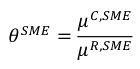
where:
- 𝜇𝐶,𝑆𝑀𝐸 denotes the average compliance cost for SMEs (one-off or recurrent), and
- 𝜇,𝑆𝑀𝐸 denotes the average annual revenue of SMEs, both derived from survey data.
This estimated cost-to-revenue ratio is then applied to the survey-based average annual revenue of large companies to obtain corresponding compliance cost estimates for large companies:
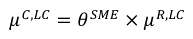
where:
- 𝜇𝐶,𝐿𝐶 is the estimated average compliance cost for large companies, and
- 𝜇𝑅,𝐿𝐶 is the average annual revenue of large companies as reported in the survey.
As a result, the model relies on distinct compliance cost estimates for SMEs and large companies, reflecting differences in company scale while maintaining internal consistency between cost and revenue data. SME costs are anchored directly in Fitness Check evidence, whereas large-company costs are derived through a proportional scaling based on observed revenue levels.
Step 2: Analysis of the business survey
The second step extracts company-level impact information from the business survey in order to estimate the direction and magnitude of expected effects associated with individual measures. Survey data is used exclusively to derive behavioural parameters, such as percentage changes in revenues and average compliance costs, disaggregated by company size and impact direction. No aggregation to the level of the EU economy and no extrapolation to the full business population takes place at this stage.
Survey outputs and statistical metrics
The second step analyses company-level responses collected through a targeted business survey. For each measure, companies report expected impacts on:
- Revenues,
- One-off compliance costs, and
- Recurrent compliance costs.
Survey results are analysed separately by company size class and summarised using the following statistics:
- Mean impact (𝜇),
- Standard deviation (𝜎),
- Number of observations (𝑛).
For revenue impacts, effects are expressed as percentage changes, while compliance costs are expressed in absolute monetary terms per company.
Treatment of heterogeneity and direction of impacts
A key methodological choice is the explicit treatment of heterogeneity. Companies are classified into three groups:
- Companies expecting positive impacts,
- Companies expecting negative impacts,
- Companies unaffected by the measure.
Impacts are analysed separately for these groups. This avoids the methodological pitfall of averaging out fundamentally different effects and provides an analytically robust basis for distributional analysis.
The survey thus does not produce a single “representative company” result but a differentiated set of impact intensities reflecting real behavioural diversity.
Step 3: Extrapolation of impacts
The third step operationalises the extrapolation from company-level information to the level of the EU economy by quantifying, for each measure, (i) the number of affected companies and (ii) the turnover of affected companies. The extrapolation is carried out separately for each measure and by company size class, using a consistent top-down logic grounded in structural business statistics.
Number of affected companies
For each measure, the number of affected companies is derived through a sequential filtering of the total enterprise population. The calculation combines three elements:
- Total number of enterprises,
- Share of enterprises engaged in B2C e-commerce activity, and
- Share of enterprises (or websites) using the specific practice addressed by the measure.
Formally, the number of affected companies in size class 𝑠 is defined as:

where:
- 𝑁𝑠𝐸𝑈 is the total number of enterprises in size class 𝑠, as reported by Eurostat;
- 𝛼𝑠𝐵2𝐶 is the share of enterprises in size class 𝑠 conducting B2C e-commerce sales, based on Eurostat indicators;
- 𝛼𝑚,𝑠𝑝𝑟𝑎𝑐𝑡𝑖𝑐𝑒 is the share of enterprises or websites in size class 𝑠 using the specific practice targeted by measure 𝑚, derived from Eurostat indicators and complementary market evidence.
This definition of affected companies is independent of the presence or magnitude of economic impacts. It reflects exposure to the regulatory measure, not the materialisation of costs or benefits. Consequently, the same affected company count is used as the exposure base for both revenue and compliance-cost calculations in later steps.
Turnover of affected companies
In parallel, the turnover of affected companies is calculated by applying the same exposure filters to aggregate turnover figures. This ensures full consistency between the definition of affected companies and the definition of affected economic activity.
For each measure and size class, affected turnover is defined as:

where:
- 𝑇𝑠𝐸𝑈 is total annual net turnover of enterprises in size class 𝑠, as reported by Eurostat;
- the exposure shares 𝛼𝑠𝐵2𝐶 and 𝛼𝑚,𝑠𝑝𝑟𝑎𝑐𝑡𝑖𝑐𝑒 are identical to those used in Section 3.1.
This approach ensures that revenue impacts are later calculated on the basis of economically relevant activity only, rather than on total sector or economy-wide turnover.
Importantly, turnover is not constructed at company level and aggregated upward. Instead, affected turnover is defined directly at aggregate level, using official statistics. Survey data play no role in determining turnover volumes at this stage.
Upper and lower bound estimates of affected turnover
To reflect uncertainty in the prevalence of affected practices, upper and lower bound estimates are constructed for affected turnover. These bounds capture uncertainty in exposure shares rather than uncertainty in behavioural responses.
Specifically, where survey or statistical evidence provides a distribution around the estimated practice-usage share, a 95 % confidence interval is constructed:
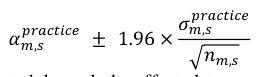
These alternative values are then propagated through the affected-turnover calculation:
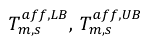
yielding lower- and upper-bound estimates of turnover potentially exposed to each measure.
At this stage, these bounds relate exclusively to exposure. They do not yet incorporate uncertainty in revenue changes or compliance cost levels, which are introduced only in subsequent steps.
Step 4: Aggregation and presentation of measure-level impacts
The fourth step brings together exposure estimates from Step 3 and impact intensities from Step 2 to quantify economic effects at the level of individual measures. At this stage, survey-based revenue changes and compliance cost estimates are applied to the affected populations and turnover identified earlier. The resulting outputs consist of aggregated revenue effects, one-off costs and recurrent costs per measure, as well as associated distributional indicators.
Compilation of economic indicators
In the fourth step, extrapolated impacts are aggregated at the level of individual measures. For each measure, the analysis reports:
- Total revenue effects,
- Total one-off and recurrent costs,
- Average impact per affected company,
- Separate indicators for negatively affected companies.
Average company-level impacts are calculated as:
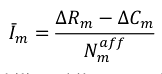
This presentation structure improves interpretability while preserving traceability to underlying data.
Consistency and traceability
No further modelling assumptions are introduced at this stage. Aggregation is purely arithmetic and directly reflects results obtained in Step 3. This ensures a fully auditable link between survey responses, Eurostat statistics and final outputs.
Step 5: Aggregation to policy options
The fifth step aggregates measure-level impacts into policy options and translates static annual effects into dynamic economic indicators. This includes the allocation of impacts across sectors and the aggregation of effects by company size. This step does not alter the underlying impact estimates but reorganises and values them in a form suitable for policy comparison and decision-making.
Mapping measures to policy options
Each policy option is defined as a combination of measures. Impacts are aggregated across measures using consistent population definitions to avoid double counting.
The policy options were defined by the Commission. Across topics, there are up to four policy options to address problematic practices.
Sectoral distribution of impacts
A further step in the aggregation of impacts at policy-option level concerns the allocation of estimated effects across economic sectors. For the purposes of this assessment, impacts are distributed across three sectoral groupings that account for the vast majority of exposure to the measures under consideration: online retail / web sales, social media, and video gaming.
In practical terms, total impacts estimated at policy-option level are split across sectors according to their relative economic footprint and prevalence of the affected practices, rather than being inferred directly from the composition of survey respondents.
This has been done using top-down assumptions based on expert judgment on the share to which a given measure’s impact accrues in the specific sector (e.g. “50% of revenue impact will accrue in online retail”). This choice follows directly from the way the affected population is defined earlier in the methodology and ensures internal consistency across analytical steps.
As established in Step 1, the identification of potentially affected companies is anchored in official structural statistics, using observable characteristics such as B2C activity, digital presence and use of relevant practices. Sectoral exposure is therefore already embedded in the model at the population level, prior to any use of survey evidence. In this framework, sectoral information acts as a structural parameter, determining where in the economy impacts materialise, while the business survey provides behavioural parameters, describing the magnitude of impacts conditional on exposure. Maintaining this separation is analytically important. It ensures that:
- Definition of affected population remains fully aligned with Eurostat-based baselines, and
- Survey evidence is used strictly for estimating impact intensities, not for redefining the economic structure of the population.
Using top-down sectoral shares thus preserves a clear distinction between who is affected and how strongly they are affected. This avoids implicitly re-introducing population assumptions at the survey stage and ensures that all sectoral splits remain coherent with the baseline constructed in Step 1.
Importantly, the sectoral allocation does not alter the aggregate magnitude of impacts at policy-option level. It solely determines how these impacts are distributed across sectors for analytical and reporting purposes. As such, it represents a neutral transformation that enhances interpretability while preserving the integrity of the underlying results.
Step 6: Presentation of estimates and dynamic valuation
For each problematic practice, estimates were calculated of the revenues, one-off costs, and recurrent costs per policy option, split according to company size (SMEs, large companies, total), as well as per sector (online retail, video games, social media, total). In addition, this step also includes the calculation of Net Present Values over the assessment horizon using standard discounting techniques.
Annual net impacts are projected over a ten-year period and discounted using a constant discount rate 𝑟. Net Present Values are calculated as:
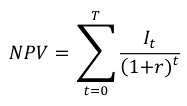
where:
- 𝐼𝑡 = Δ𝑅𝑡 −Δ𝐶𝑡𝑟𝑒𝑐,
- one-off costs are incurred in 𝑡 = 0.
The development of the revenues and costs is dynamic assuming a CAGR of 5.38%.309 A standard discount rate of 3% has been applied in line with the Commission’s Better Regulation Guidelines.
Median estimates are used in the Impact Assessment Report.
309 ‘eCommerce – Europe’, Statista Market Insights. ↑
6 Additionality factor: Rationale and justification
6.1 Conceptual framework for additionality of costs
The estimation of economic impacts for the overall preferred policy option follows a structured, bottom-up modelling approach. Impacts are first quantified at the level of individual measures, then aggregated to thematic topics, and finally consolidated at the level of the preferred policy option.
A key methodological challenge in such aggregation exercises is the risk of double-counting. Many of the measures included in the preferred option are designed to address closely related practices or share a similar operational logic. As a result, the implementation of one measure may partially cover compliance activities required by another measure. For instance, several measures may require companies to conduct the same underlying tasks, such as auditing user interfaces, updating governance systems, or implementing monitoring processes.
Not accounting for these overlaps in essence leads to a systematic overestimation of the total regulatory burden. To mitigate this risk, an “additionality factor” can be introduced, which adjusts raw cost estimates to reflect only the incremental (i.e. non-overlapping) compliance effort.
This approach is fully consistent with the principles set out in the Better Regulation Guidelines and Toolbox, which require impact assessments to ensure methodological robustness, proportionality, and the avoidance of double-counting across policy interventions.
The methodology adheres to key principles of the Better Regulation framework:
Avoidance of double-counting: The explicit modelling of overlaps ensures that aggregated impacts reflect net, rather than gross, compliance costs.
Transparency: All additionality assumptions are documented at the level of individual measures and topics, enabling traceability.
Proportionality and realism: Additionality factors are calibrated to reflect realistic business behaviour, including the reuse of compliance processes.
Consistency: A harmonised framework is applied across all topics and cost categories.
Evidence-based approach: Estimates combine survey evidence, sectoral data, and structured expert judgement.
6.2 Definition of additionality
The concept of additionality refers to the extent to which the estimated costs of a measure represent new and distinct compliance efforts, rather than efforts that would already be undertaken due to other measures within the policy package.
Formally, additionality is defined as the complement of overlap:
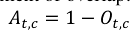
Where:
𝐴𝑡,𝑐 represents the additionality factor for topic 𝑡 and cost category 𝑐,
𝑂𝑡, represents the estimated degree of overlap (i.e. shared compliance effort).
Conceptually, this means that:
If 𝐴 = 1, all estimated costs are fully additional (no overlap).
If 𝐴 = 0, all costs are fully overlapping (no incremental effect).
This formulation ensures a clear and transparent interpretation: the additionality factor directly reflects the share of costs that is attributable exclusively to a given measure or topic.
A distinction is made between:
One-off costs, such as initial investments and system redesigns, and
Recurrent costs, such as ongoing monitoring and compliance maintenance.
This distinction is important, as overlap tends to be more pronounced for one-off activities (e.g. shared system upgrades) than for recurrent activities, which often have a higher degree of measure-specificity.
6.3 Estimation of overlap within topics for costs
Measure-level overlap
Within each topic, overlap is assessed at the level of individual measures. The estimation is grounded in a detailed qualitative analysis of the underlying compliance activities required by each measure.
In practice, measures may overlap because they require similar operational steps, including:
The identification and mapping of relevant practices (e.g. interface audits),
The redesign of digital systems and user interfaces,
The development or updating of internal governance frameworks,
The implementation of monitoring, testing, and enforcement processes.
The degree of overlap between measures is therefore not assessed in abstract terms, but rather based on the extent to which these underlying activities can be reused or shared across measures.
For each measure, the model assigns overlap values separately for one-off and recurrent costs. These estimates are informed by:
The qualitative assessment of regulatory requirements,
The structure and findings of the business survey,
Expert judgement on how companies typically organise compliance processes.
This ensures that the overlap estimates are anchored in realistic implementation pathways rather than purely theoretical considerations.
Aggregation at topic level
To derive a consistent adjustment at the level of thematic topics, measure-level overlaps are aggregated into a topic-level overlap estimate.
Formally:
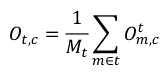
Where:
𝑀𝑡 is the number of measures in topic 𝑡,
𝑂𝑚,𝑐𝑡 represents overlap estimates at measure level.
In practice, this aggregation reflects the average degree of shared compliance effort across all measures within a topic.
The resulting topic-level additionality factors vary across topics, reflecting differences in the nature of measures:
Topics with highly interconnected measures (e.g. interface design rules) tend to exhibit higher overlap and thus lower additionality.
Topics involving distinct regulatory interventions (e.g. targeted prohibitions) tend to show higher additionality.
This differentiation ensures that the model captures the heterogeneity of policy interventions rather than applying a uniform adjustment across all topics.
6.4 Additionality for costs across topics
While the primary source of overlap arises within topics, the model recognises that interactions between topics may also occur.
For example:
Horizontal measures may partially duplicate or reinforce requirements introduced under topic-specific measures,
Governance or monitoring obligations may span several topics simultaneously.
To capture such interactions, the model introduces cross-topic additionality parameters, reflecting the extent to which topics are independent from one another.
These parameters are combined multiplicatively with the intra-topic additionality factors:
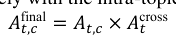
This formulation has two advantages:
Conceptual clarity: It separates within-topic overlap from cross-topic overlap.
Conservatism: It ensures that the overall adjustment errs on the side of avoiding overestimation.
The cross-topic adjustment therefore acts as a second layer of correction, ensuring that aggregation across topics reflects realistic cumulative effects.
The additionality factors across topics have been derived based on the following conceptual overlap-matrix.
Table: Conceptual matrix to estimate the overlaps between topics
| Dark patterns | Addictive design / Engagement Maximising | Problematic personalisation practices | Harmful practices by influencers | Unfair practices related to price | Issues concerning digital contracts | Simplification | Horizontal measures | |
| Dark patterns | ||||||||
| Addictive design / Engagement Maximising | ++ | |||||||
| Problematic personalisation practices | ++ | + | ||||||
| Harmful practices by influencers | 0 | + | + | |||||
| Unfair practices related to price | + | + | +++ | 0 | ||||
| Issues concerning digital contracts | + | + | + | 0 | + | |||
| Simplification | 0 | 0 | 0 | 0 | 0 | + | ||
| Horizontal measures | +++ | ++ | +++ | + | + | + | 0 |
This qualitative overlap matrix was translated into quantitative overlap-percentages. The following table shows:
- I. Measure-related overlap-percentages within topics;
- II. Topic-related overlap-percentages across topics; and
- III. Overall additionality factor (i.e. 1 multiplied with 2).
Table: Summary matrix of additionality factors per topic and across topics (including overall additionality)
| Overlap between measures of the same topic | How strong do the topics overlap with each other? | To what extent are the topics independent from / additional to each other? | Result | |||
| One-off costs | Recurrent costs | One-off costs | Recurrent costs | |||
| Dark patterns | 55% | 48% | 30% | 70% | 39% | 33% |
| Addictive design / Engagement Maximising | 63% | 57% | 35% | 65% | 41% | 37% |
| Problematic personalisation practices | 58% | 52% | 35% | 65% | 38% | 34% |
| Harmful practices by influencers | 74% | 66% | 10% | 90% | 66% | 60% |
| Unfair practices related to price | 63% | 53% | 25% | 75% | 47% | 39% |
| Issues concerning digital contracts | 62% | 52% | 25% | 75% | 47% | 39% |
| Simplification | 85% | 81% | 0% | 100% | 85% | 81% |
| Horizontal measures | 100% | 100% | 10% | 90% | 90% | 90% |
The resulting overlap-percentages have been multiplied with the topic estimates for one-off costs and recurrent costs in order to estimate the respective costs for the preferred policy option.
6.5 Adjustment of cost estimates
Topic-level adjustment
The additionality factors are applied directly to the estimated costs derived from the impact model.
For each topic:
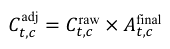
This implies that:
Raw estimates represent gross compliance costs,
Adjusted estimates represent net incremental costs attributable to the policy intervention.
By applying the adjustment at topic level, the methodology preserves the detailed structure of the model while ensuring that each component is corrected for overlap.
Aggregation to policy option level
The total cost of the preferred policy option is obtained by summing the adjusted costs across all topics:
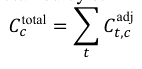
This aggregation step is straightforward due to the prior application of additionality factors, which ensures that the resulting total:
Reflects only non-overlapping cost components,
Avoids inflation due to double-counting.
The same logic is applied separately for:
One-off costs,
Recurrent annual costs.
6.6 Treatment of revenues
Rationale
Revenue impacts estimated in this assessment are inherently subject to a significant degree of uncertainty, as they are primarily driven by behavioural responses of firms and consumers, as well as broader market adjustments. More specifically, revenue effects are derived from survey-based percentage changes applied to affected turnover, which capture expected directional impacts rather than precise forecasts.
In contrast to compliance costs—which are typically anchored in identifiable implementation activities—revenue changes depend on factors such as consumer trust, demand elasticity, adaptation strategies by firms, and competitive dynamics. These effects are difficult to quantify with precision and are therefore more sensitive to modelling assumptions. As such, revenue estimates represent ex-ante expectations, which are particularly uncertain in the context of:
- changes in consumer behaviour (e.g. trust, engagement, willingness to pay),
- firm responses (e.g. pricing strategies, product redesign), and
- market dynamics (e.g. competition, substitution effects).
To reflect this uncertainty in a transparent and structured way, the model introduces scenario-based adjustment factors, which scale revenue estimates to represent more prudent and realistic outcomes.
The methodology applies two alternative adjustment scenarios:
- Scenario 1 (moderate prudence): Adjustment factor between 20% and 30% → corresponding to 70% to 80% of estimated revenues being retained
- Scenario 2 (high prudence / sensitivity scenario): Adjustment factor between 30% and 40% → corresponding to 60% to 70% of estimated revenues being retained
These scenarios are not intended to represent precise forecasts, but rather to define a range of plausible outcomes under different assumptions regarding behavioural response and model uncertainty.
The introduction of two scenarios allows the assessment to explicitly account for uncertainty rather than masking it in a single point estimate.
- Scenario 1 reflects a situation where a relatively larger share of expected effects materialises.
- Scenario 2 reflects a more conservative outcome where behavioural responses are weaker or slower.
This approach provides decision-makers with a range of outcomes, rather than a single estimate, thereby improving the robustness and transparency of the analysis.
Methodological approach
The methodology follows the same logic already applied elsewhere in the model, such as:
- the use of additionality factors to avoid double-counting of costs, and
- the use of scenario ranges (lower/upper bounds) to represent uncertainty.
As such, the adjustment of revenues represents a consistent extension of the overall modelling framework, rather than a standalone assumption.
By applying scenario-based adjustment factors, the model achieves a more realistic representation of impacts in several ways:
- It recognises that survey-based expectations may not fully materialise in practice.
- It accounts for the fact that firms may partially adapt, rather than fully realise projected gains.
- It avoids presenting results that rely on optimistic behavioural assumptions.
Importantly, the approach does not eliminate positive impacts, but rather scales them to levels that are more plausible under real-world conditions.
The adjustments are calculated using the following formulas. Let:
- 𝑅𝑡raw= estimated (unadjusted) revenue impact in year 𝑡
- 𝛼= adjustment factor (between 0.20 and 0.40, depending on scenario)
- 𝑅𝑡adj= adjusted revenue impact
The adjusted revenue is calculated as:
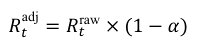
Where:
- In Scenario 1:

- In Scenario 2:

This adjustment is applied consistently across all topics and measures before aggregation and Net Present Value (NPV) calculation.
6. Net Present Value (NPV) calculation
The model computes annual net impacts by combining revenues and costs:

Where:
𝑅𝑡= additional annual revenues,
𝑅𝐶𝑡= recurrent annual costs,
𝑂𝐶= one-off costs,
𝛿𝑡=0 ensures that one-off costs are accounted for in the initial year only.
This formulation distinguishes clearly between:
Immediate adjustment costs, and
Ongoing operational impacts.
The Net Present Value is calculated as:
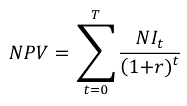
Where:
𝑟= discount rate,
𝑇= time horizon.
Future revenues are projected using a constant compound growth rate derived from external market data, ensuring consistency with expected sector dynamics.
This approach aligns with standard Commission practice for long-term economic evaluation.
Explanation of asymmetric adjustment factors
To reflect uncertainty and ensure a prudent and balanced representation of impacts, revenue estimates are adjusted using conservative discount factors applied to both lower and upper bound estimates. The adjustment is deliberately asymmetric, with a stronger discount applied to lower bound (typically negative) estimates than to upper bound (typically positive) estimates.
This approach recognises that the two estimates capture different types of uncertainty. Lower bound estimates represent downside scenarios and may overstate negative impacts if taken at face value, while upper bound estimates reflect potential benefits that depend on uncertain behavioural and market responses. Applying differentiated adjustment factors helps ensure that neither downside risks are overstated nor potential benefits are presented in an overly optimistic way.
As a result, the methodology produces more realistic and credibility-enhanced impact estimates, in line with the principles of prudence, proportionality and balanced assessment set out in the Commission’s Better Regulation framework.
The model applies different adjustment factors to the lower and upper bound revenue estimates:
- For lower bound estimates, an adjustment factor of e.g. 30% is applied, meaning that 70% of the estimated effect is retained.
- For upper bound estimates, an adjustment factor of e.g. 20% is applied, meaning that 80% of the estimated effect is retained.
The use of different adjustment factors reflects the different roles of the lower and upper bound estimates:
- The lower bound estimates are typically negative or close to zero, representing downside risks or conservative scenarios. These estimates can overstate negative outcomes if interpreted strictly. Applying a stronger adjustment (30%) ensures that potential negative effects are not overstated, while still preserving the signal that such risks exist.
- The upper bound estimates are typically positive, reflecting potential revenue increases driven by behavioural and market responses. While these effects are uncertain, they represent plausible outcomes under favourable conditions. Applying a somewhat smaller adjustment (20%) ensures a cautious treatment of benefits while still allowing the model to capture meaningful upside potential.
The adjustment can be summarised as follows:
- Negative impacts are moderated to avoid overestimating downside risks,
- Positive impacts are retained more fully, but still conservatively adjusted to reflect uncertainty.
This reflects the fact that both types of estimates are subject to uncertainty, but not in the same way.
This asymmetric approach ensures a balanced and credible representation of impacts, in line with the Commission’s Better Regulation principles:
- It avoids overstating negative impacts,
- It prevents over-optimistic benefit estimates, and
- It ensures that both upside and downside scenarios are presented in a realistic and proportionate manner.
The adjusted revenue estimates should therefore be interpreted as cautious, central representations of possible impacts. They reflect both the:
- Uncertainty inherent in behavioural and market responses, and
- Need to avoid systematic over- or underestimation of impacts.
7 Net Present Value (NPV) calculation
The model computes annual net impacts by combining revenues and costs:

Where:
𝑅𝑡= additional annual revenues,
𝑅𝐶𝑡= recurrent annual costs,
𝑂𝐶= one-off costs,
𝛿𝑡=0 ensures that one-off costs are accounted for in the initial year only.
This formulation distinguishes clearly between:
Immediate adjustment costs, and
Ongoing operational impacts.
The Net Present Value is calculated as:
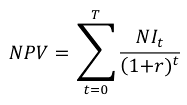
Where:
𝑟= discount rate,
𝑇= time horizon.
Future revenues are projected using a constant compound growth rate derived from external market data, ensuring consistency with expected sector dynamics.
This approach aligns with standard Commission practice for long-term economic evaluation.
8 Methodology and results for the assessment of the impact trends amongst micro, small and medium-sized enterprises
Statistical method
Using the measure by measure “Change in %” estimates (paired observations across size classes for the same measures), the DFA study tested whether the distribution of impacts differs systematically between micro, small and medium enterprises for each impact type (revenues, one off costs, recurrent costs). The results are as follows:
- Revenues: no statistically significant structural differences across micro/small/medium (Friedman test p≈0.47). In other words, the direction and magnitude of revenue impacts are broadly similar across SME size classes in the survey results.
- Recurrent costs: no statistically significant structural differences across micro/small/medium (Friedman test p≈0.41). Recurrent cost changes appear broadly comparable between micro, small and medium companies.
- One off costs: statistically significant structural differences across micro/small/medium (Friedman test p≈0.002). Pairwise comparisons show that micro enterprises report significantly higher one-off cost increases than both small enterprises (Wilcoxon p≈0.0014) and medium enterprises (Wilcoxon p≈0.0011), while small and medium enterprises do not differ significantly from each other (p≈0.78).
Directional pattern (how often impacts are positive/negative)
A structural difference also appears in the? direction for one-off costs:
- For one off costs, the share of measures with a positive “Change in %” is highest for micro enterprises (≈94%), compared with small (≈72%) and medium (≈69%).
- For revenues, all three SME size classes show a broadly similar balance of positive vs negative changes (with negative changes more common overall), and there is no evidence of a consistent directional shift by size.
- For recurrent costs, the pattern is mixed but does not differ significantly by size (micro and medium are similar; small is slightly less positive on average, but not in a statistically robust way).
Magnitude pattern (headline effect sizes)
Interpreting “Change in %” as percentage point changes:
- One off costs (mean change):
- Micro: ~+0.93%
- Small: ~+0.32%
- Medium: ~+0.38%
Micro enterprises therefore show a ~0.55–0.61 percentage point higher one-off cost impact than small/medium on average.
- Revenues (mean change): micro ≈ −0.33%, small ≈ −0.21%, medium ≈ −0.13% — differences are small and not statistically robust.
- Recurrent costs (mean change): micro ≈ +0.13%, small ≈ −0.02%, medium ≈ +0.26% — again, differences are not statistically robust.
The only clear structural difference within SMEs is that micro enterprises face systematically higher one-off adjustment costs (in proportional terms), while revenue and recurrent cost impacts do not exhibit a statistically significant difference between micro, small and medium enterprises in these survey results.
9 Methodology and assumptions for direct enforcement costs and removed administrative burdens (OUTs)
In Annex 3, the direct enforcement costs were estimated to range between 5-8 € million annually and the removed administrative burdens (OUTs) to range between 50–100 € million annually. This section aims at explaining the methodology and underlying assumptions.
9.1 Direct enforcement costs
The estimate of EUR 5–8 million per year at EU-27 level is based on a bottom-up public-sector costing approach, focusing strictly on capacity building, relative to the baseline. It reflects front-loaded capacity-building and moderate increases in case handling, while accounting for efficiency gains from clearer rules and improved evidentiary tools.
Enforcement authorities covered
| Assumption | Value | Rationale |
| Member States included | 27 | EU-27 |
| Main enforcing bodies per MS | 1–2 | Typically consumer protection authorities (central or federal/regional lead) |
| EU-level involvement | Limited | Coordination and guidance only; no new agency |
The estimate assumes enforcement is carried out within existing institutional structures (e.g. CPC authorities), not via new bodies and with existing enforcement capacity.
Unit cost assumptions
| Assumption | Value |
| Average annual cost per public-sector FTE (incl. overheads) | €90,000–120,000 |
| Working assumption (mid-point) | €100,000 per FTE/year |
This range is consistent with Commission IA practice for skilled enforcement and legal staff.
Cost components and calculations
Capacity-building and guidance (front-loaded)
| Element | Assumption | Annualised impact |
| Training & upskilling | ~2–3 FTE equivalents per MS (initial years) | EUR 5–8 million |
These costs are higher in years 1–3, then decline.
9.2 Removed administrative burden
The estimate is derived using a conservative bottom-up approach, focusing on recurrent administrative activities that are reduced—but not eliminated—by the two simplification measures. All assumptions are intentionally cautious and calibrated to ensure consistency with the modelled total recurrent non-adjusted costs of EUR 1 180 million/year.
Population of affected companies (EU-27)
| Assumption | Value | Rationale |
| Companies affected by right of withdrawal clarification (digital content) | ~400,000–500,000 companies | Includes digital content providers, apps, SaaS, gaming, streaming services |
| Companies affected by repeat-contract simplification | ~200,000–300,000 companies | Subset with frequent repeat transactions (e.g. in-app purchases, digital goods) |
| Overlap between the two groups | Significant | To avoid double counting, savings are not simply additive per company |
These figures are consistent with Eurostat Structural Business Statistics coverage of digitally active consumer-facing companies and with the modelling baseline already used in the IA.
Per-company annual administrative savings (steady state)
| Measure | Assumed per-company saving | What is saved |
| Right of withdrawal clarification | €50–100 per company/year | Reduced legal maintenance, template updates, translation and compliance review of redundant disclosures |
| Repeat-contract simplification | €100–200 per company/year | Reduced repetition of disclosures, fewer internal approvals, less frequent legal checks |
| Automated contracts simplification | minor | Reduced repetition of humanly readable disclosures once automated contracting on the consumer side takes off |
| Geographical address simplification for influencers | Not quantified | Reduced repetition of disclosures |
These values deliberately exclude:
- One-off IT or system adaptation costs,
- Transaction-level operational costs,
- Any revenue effects.
They only capture avoided administrative maintenance effort.
Uptake and effectiveness rates
| Assumption | Value | Rationale |
| Share of companies fully realising savings | ~60–70% | Some companies already streamlined practices or face organisational rigidities |
| Share of costs actually eliminated (not just shifted) | ~50–60% | Simplification replaces uniform obligations with conditional rules, so monitoring and classification costs remain |
This reflects the fact—already embedded in your model—that simplification reduces, but does not fully remove, compliance effort.
Aggregation and consistency check
Indicative calculation (rounded):
right of withdrawal clarification: 450,000 companies × €75 × 65% × 55% ≈ €12–15 million;
Repeat-contract simplification: 250,000 companies × €150 × 65% × 55% ≈ €25–35 million;
Spillovers and scale effects in high-transaction companies: €10–30 million;
Total: €50–100 million per year (EU-27)
IV JRC Additional comparative analysis of the expected business impacts across sectors
The results of the business survey break down the expected one-off costs, and recurrent costs associated with the different measures across nine activities that were grouped into four key digital sectors as defined in table 1310. These sectors are distinct from the sectors calculated for the DFA study but applied to the data received from the Business Survey of the DFA study. The sectors are defined on the basis of the activities indicated by respondents.
Table 1. Definition of the configuration of sectors
| Sector | Activities from survey |
| 1. Direct-to-Consumer (D2C) E-Commerce |
|
| 2. Digital Content & Entertainment Services |
|
| 3. Online Platforms & Marketplaces |
|
| 4. Influencer & Content-Driven Monetisation |
|
These categories provide additional information regarding the online or digital activities performed by the respondent companies. The options in the question were not mutually exclusive, meaning that companies could select more than one. Indeed, as shown in the graph below, even if most companies indicate just one activity (63%), 5% indicate to perform 5 or more activities.
Figure 1. Number of activities reported by companies
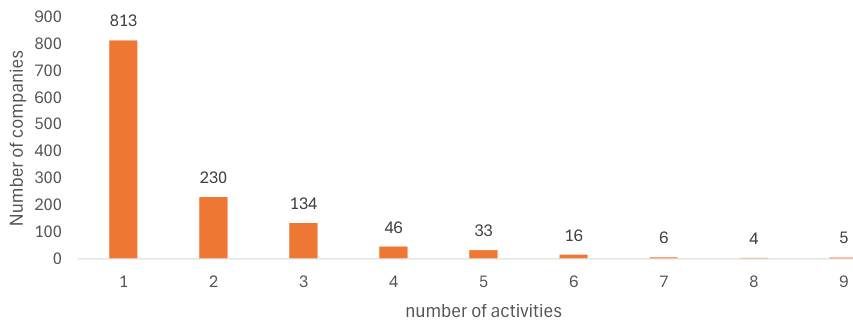
Source: JRC with information from the business survey.
The duplication of activities yields a total of 1,898 observations, though the survey itself covered 1,287 respondents. To ensure sufficient representation of the less common sectors, it was assumed that these activities reflect the primary operations of the companies involved. This adjustment leads to a marginally altered sectoral distribution of companies per sector, as illustrated in Figure 2.
Figure 2. Number of companies per sector
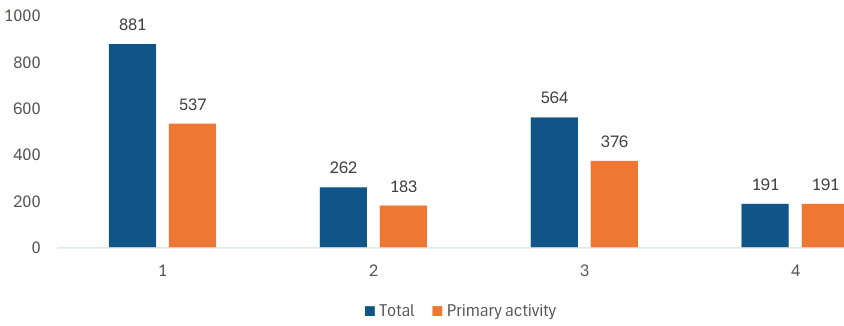
Notes: 1. Direct-to-Consumer (D2C) E-Commerce; 2. Digital Content & Entertainment Services; 3. Online Platforms & Marketplaces; 4. Influencer & Content-Driven Monetisation; Source: JRC with information from the business survey.
Different numbers of companies respond to the different measures included in the survey, as these questions were randomized. To calculate the distribution of the impacts on the costs per sector, first the share of companies responding to each measure is computed and, second, a weighted average of the corresponding variable (one-off costs and recurrent costs) per problematic area and policy option was obtained. The results indicate how the different problematic areas and policy options manifest financially across these sectors, providing a descriptive breakdown of the expected economic impacts.
310 Although the business survey questionnaire required respondent companies to indicate their main sector according to the NACE classification, it also prompted companies to indicate “what kind of products, services or digital content do you provide to consumers?”, offering up to nine alternatives, that were grouped into four different sectors as described in the text. ↑
JRC: Impact per sector (in million EUR)
| Problematic area | Policy option 1 | Policy option 2 | Policy option 3 | Policy option 4 | ||||||||||||||||
| 1 | 2 | 3 | 4 | Total | 1 | 2 | 3 | 4 | Total | 1 | 2 | 3 | 4 | Total | 1 | 2 | 3 | 4 | Total | |
| Dark patterns | ||||||||||||||||||||
| One-off costs (additional) | 73.00 | 22.87 | 50.13 | 20.44 | 166.44 | 130.31 | 28.48 | 94.93 | 33.66 | 287.37 | 130.31 | 28.48 | 94.93 | 33.66 | 287.37 | |||||
| Recurrent costs (additional, annual) | 43.55 | 13.65 | 29.90 | 12.19 | 99.29 | 83.64 | 18.28 | 60.93 | 21.60 | 184.44 | 83.64 | 18.28 | 60.93 | 21.60 | 184.44 | |||||
| Spending and attention maximising features | ||||||||||||||||||||
| One-off costs (additional) | 19.10 | 5.43 | 14.58 | 4.65 | 43.76 | 35.42 | 11.53 | 29.38 | 8.88 | 85.21 | 49.21 | 15.56 | 38.46 | 12.27 | 115.50 | 74.61 | 23.36 | 56.21 | 19.49 | 173.68 |
| Recurrent costs (additional, annual) | 18.58 | 5.22 | 14.17 | 4.48 | 42.45 | 27.74 | 8.35 | 22.49 | 6.66 | 65.25 | 38.26 | 11.47 | 29.39 | 9.17 | 88.30 | 60.58 | 18.10 | 44.96 | 15.34 | 138.98 |
| Problematic personalisation | ||||||||||||||||||||
| One-off costs (additional) | 30.98 | 6.88 | 19.38 | 8.70 | 65.94 | 99.03 | 25.15 | 70.49 | 23.38 | 218.05 | 138.25 | 37.12 | 99.98 | 34.79 | 310.13 | |||||
| Recurrent costs (additional, annual) | 32.01 | 7.11 | 20.03 | 8.98 | 68.13 | 69.48 | 17.90 | 48.63 | 17.56 | 153.57 | 86.42 | 23.07 | 61.37 | 22.49 | 193.35 | |||||
| Harmful practices by influencers | ||||||||||||||||||||
| One-off costs (additional) | 89.06 | 17.62 | 59.92 | 81.92 | 248.52 | 109.78 | 22.75 | 76.70 | 103.49 | 312.73 | 118.57 | 24.71 | 82.95 | 111.63 | 337.86 | |||||
| Recurrent costs (additional, annual) | 46.60 | 9.14 | 31.27 | 42.39 | 129.40 | 58.54 | 12.10 | 40.93 | 54.82 | 166.39 | 62.24 | 12.93 | 43.57 | 58.25 | 176.98 | |||||
| Unfair practices related to price | ||||||||||||||||||||
| One-off costs (additional) | 66.67 | 17.75 | 49.89 | 14.89 | 149.21 | 66.67 | 17.75 | 49.89 | 14.89 | 149.21 | ||||||||||
| Recurrent costs (additional, annual) | 66.99 | 17.18 | 49.54 | 14.38 | 148.09 | 66.99 | 17.18 | 49.54 | 14.38 | 148.09 | ||||||||||
| Issues concerning digital contracts | ||||||||||||||||||||
| One-off costs (additional) | 39.88 | 11.43 | 29.24 | 10.63 | 91.18 | 185.11 | 49.53 | 134.31 | 42.85 | 412 | 185.11 | 49.53 | 134.31 | 42.85 | 412 | 171.99 | 47.77 | 122.85 | 39.77 | 382.37 |
| Recurrent costs (additional, annual) | 35.33 | 10.13 | 25.91 | 9.42 | 80.78 | 118.99 | 31.84 | 86.33 | 27.55 | 265 | 118.99 | 31.84 | 86.33 | 27.55 | 265 | 103.00 | 27.53 | 73.88 | 24.74 | 229.14 |
| Horizontal | ||||||||||||||||||||
| One-off costs (additional) | 128.18 | 35.68 | 95.70 | 34.67 | 294.22 | 128.18 | 35.68 | 95.70 | 34.67 | 294.22 | ||||||||||
| Recurrent costs (additional, annual) | 47.68 | 13.45 | 35.95 | 13.23 | 110.31 | 47.68 | 13.45 | 35.95 | 13.23 | 110.31 | ||||||||||
Sectors: 1-Direct to consumer e-commerce 2-Digital content and entertainment services 3-Online platforms and marketplaces 4-Influencer and content-driven monetisation | ||||||||||||||||||||
JRC: Impact per company (in EUR)
| Policy option 1 | Policy option 2 | Policy option 3 | Policy option 4 | |||||||||||||||||
| Dark patterns | 1 | 2 | 3 | 4 | Total | 1 | 2 | 3 | 4 | Total | 1 | 2 | 3 | 4 | Total | 1 | 2 | 3 | 4 | Total |
| One-off costs (additional) | 30.61 | 36.75 | 29.84 | 32.24 | 31.28 | 54.65 | 45.75 | 56.50 | 53.08 | 54.01 | 54.65 | 45.75 | 56.50 | 53.08 | 54.01 | |||||
| Recurrent costs (additional, annual) | 18.26 | 21.92 | 17.80 | 19.23 | 18.66 | 35.07 | 29.36 | 36.27 | 34.07 | 34.66 | 35.07 | 29.36 | 36.27 | 34.07 | 34.66 | |||||
| Addictive design / Engagement Maximising | ||||||||||||||||||||
| One-off costs (additional) | 32.66 | 31.10 | 34.06 | 31.13 | 32.73 | 60.55 | 65.99 | 68.66 | 59.49 | 63.74 | 49.21 | 15.56 | 38.46 | 12.27 | 115.50 | 74.61 | 23.36 | 56.21 | 19.49 | 173.68 |
| Recurrent costs (additional, annual) | 31.76 | 29.87 | 33.12 | 30.01 | 31.75 | 47.43 | 47.79 | 52.56 | 44.60 | 48.81 | 38.26 | 11.47 | 29.39 | 9.17 | 88.30 | 60.58 | 18.10 | 44.96 | 15.34 | 138.98 |
| Problematic personalisation practices | ||||||||||||||||||||
| One-off costs (additional) | 15.99 | 13.42 | 13.86 | 17.93 | 15.22 | 51.12 | 49.03 | 50.39 | 48.22 | 50.31 | 71.38 | 72.35 | 71.47 | 71.74 | 71.56 | |||||
| Recurrent costs (additional, annual) | 16.52 | 13.86 | 14.32 | 18.53 | 15.72 | 35.87 | 34.90 | 34.77 | 36.21 | 35.44 | 44.62 | 44.97 | 43.87 | 46.38 | 44.61 | |||||
| Harmful practices by influencers | ||||||||||||||||||||
| One-off costs (additional) | 55.79 | 51.52 | 52.43 | 54.19 | 54.11 | 68.76 | 66.54 | 67.11 | 68.46 | 68.09 | 74.27 | 72.28 | 72.58 | 73.84 | 73.56 | |||||
| Recurrent costs (additional, annual) | 29.19 | 26.73 | 27.36 | 28.04 | 28.17 | 36.67 | 35.38 | 35.82 | 36.26 | 36.23 | 38.99 | 37.80 | 38.12 | 38.53 | 38.53 | |||||
| Unfair practices related to price | ||||||||||||||||||||
| One-off costs (additional) | 45.01 | 45.56 | 46.01 | 44.28 | 45.33 | 45.01 | 45.56 | 46.01 | 44.28 | 45.33 | ||||||||||
| Recurrent costs (additional, annual) | 45.23 | 44.09 | 45.69 | 42.75 | 44.99 | 45.23 | 44.09 | 45.69 | 42.75 | 44.99 | ||||||||||
| Issues concerning digital contracts | ||||||||||||||||||||
| One-off costs (additional) | 19.90 | 21.55 | 20.25 | 22.87 | 20.52 | 92.38 | 93.37 | 93.00 | 92.16 | 93 | 92.38 | 93.37 | 93.00 | 92.16 | 93 | 85.84 | 90.06 | 85.06 | 85.52 | 86.05 |
| Recurrent costs (additional, annual) | 17.63 | 19.09 | 17.94 | 20.26 | 18.18 | 59.38 | 60.02 | 59.78 | 59.24 | 60 | 59.38 | 60.02 | 59.78 | 59.24 | 60 | 51.40 | 51.89 | 51.15 | 53.20 | 51.57 |
| Horizontal measures | ||||||||||||||||||||
| One-off costs (additional) | 52.60 | 54.12 | 53.86 | 56.56 | 53.63 | 52.60 | 54.12 | 53.86 | 56.56 | 53.63 | ||||||||||
| Recurrent costs (additional, annual) | 19.57 | 20.41 | 20.24 | 21.59 | 20.11 | 19.57 | 20.41 | 20.24 | 21.59 | 20.11 | ||||||||||
Annex 5: Competitiveness check
Overview of impacts on competitiveness
| Dimensions of Competitiveness | Impact of the initiative (++ / + / 0 / - / -- / n.a.) | Description of expected impacts |
| Cost and price competitiveness | 0 / + | Short term compliance costs increase, but offset over time by efficiency gains and fairer competition conditions |
| International competitiveness | + | Innovation is steered towards transparent, sustainable and quality driven solutions rather than constrained |
| Capacity to innovate | 0 / + | Limited short term flexibility costs, balanced by trust-based differentiation and regulatory preparedness |
| SME competitiveness | ++ | SMEs benefit significantly, and more than larger businesses, from fairer competition and clearer rules; net positive effects |
Synthetic assessment
Overall, the preferred policy option is compatible with EU competitiveness objectives. It does not induce systemic cost or innovation disadvantages and provides clear net gains for SME competitiveness, while steering innovation and competition towards more sustainable and trust-based market dynamics. The competitiveness impacts are therefore best characterised as balanced, forward looking and structurally supportive, rather than restrictive.
By reducing reliance on opaque or manipulative practices and clarifying the rules of engagement, the initiative supports competition on the basis of innovation, service quality and genuine consumer value, which are key drivers of long-term competitiveness in the digital economy. Any short-term adjustment efforts are transitional and are outweighed by structural benefits, such as reduced legal uncertainty, improved enforcement credibility and more predictable market conditions. Overall, the initiative contributes to a more resilient and credible competitive environment rather than generating negative competitiveness effects.
A recent study confirms that national laws and differences in interpretation continue to restrict trade: removing just 20% of existing cross-border obstacles could increase regional GDP by 2% and create over one million jobs in border regions,311 illustrating the scale of lost economic potential. Evidence from the business survey conducted for this study reinforces this picture with nearly half of the respondents (i.e. 48%; 592 out of 1 232) (strongly) agreeing that the absence of harmonised EU rules restricts scalability across Member States312, and over half (i.e. 52%; 645 out of 1 235) confirming that differences in national implementation of EU law hinder cross-border trade313. This demonstrates that regulatory fragmentation is not only a legal challenge but an economic barrier, limiting growth, innovation, and competitiveness.
The preferred policy option has mixed but overall neutral to mildly positive effects on cost and price competitiveness. In the short term, businesses incur compliance and adjustment costs related to redesign, governance and monitoring. These costs can limit the ability to compete purely on price, especially for companies relying on low margin, high volume strategies.
However, the option also reduces inefficient competitive practices that rely on opacity, consumer inertia or behavioural exploitation rather than genuine cost advantages. Over time, this supports competition based on real efficiency and value creation, rather than regulatory arbitrage. Simplification measures further reduce unnecessary compliance effort, partially offsetting adjustment costs. As a result, cost and price competitiveness is not structurally undermined and may improve for compliant companies in the medium term.
The preferred policy option has a positive impact on innovation capacity. It does not restrict innovation per se, but redirects it away from manipulative or exploitative design strategies towards more sustainable forms of innovation, such as:
- User centric and trust enhancing interface design;
- Transparent personalisation and recommendation tools; and
- Improved governance and compliance by design solutions.
By relying on a combination of principles, targeted prohibitions and flexibility, the option preserves room for technological development and avoids locking in specific technical solutions. Innovation incentives remain intact but are aligned with consumer protection and long term viability rather than short term engagement maximisation.
The impact on international competitiveness is largely neutral in the short run and potentially positive in the medium to long run. European companies may face slightly tighter constraints on certain high risk monetisation practices compared to competitors operating in jurisdictions with weaker safeguards. This can reduce short term commercial flexibility in specific global markets.
However, the preferred option does not create a nationality-based disadvantage within the EU market: all companies operating in the EU, regardless of origin, are subject to the same rules. Moreover, early adaptation to trust based, enforceable standards can become a competitive asset if international convergence around digital fairness and consumer protection progresses. Reduced reputational and enforcement risks and greater regulatory predictability can strengthen the global positioning of EU compliant companies over time.
The preferred policy option has a strong positive impact on SME competitiveness. While SMEs face higher proportional adjustment costs, they benefit more strongly than large companies from the rebalancing of competitive conditions. In particular, the option:
- Reduces advantages derived from scale driven, data intensive or manipulative practices that favour large incumbents;
- Strengthens competition based on transparency, reputation and product value, where SMEs are relatively stronger; and
- Provides clearer and more harmonised rules, lowering legal uncertainty and reliance on costly precautionary compliance strategies.
Quantitatively, SMEs’ revenue gains clearly outweigh their direct costs, resulting in a net positive economic effect. Structurally, the preferred option enhances SMEs’ ability to compete on fair terms rather than forcing them to mirror practices that are costly, risky or unsustainable for smaller companies.
311 European Parliament, ‘MEPs Welcome New Mechanism Removing Cross-Border Obstacles’ (2024). ↑
312 Excluding all respondents that answered “don’t know” (i.e. 4.3%; 55), further 30% (i.e. 368) were neutral while 22% disagreed or strongly disagreed (i.e. 272). ↑
313 Excluding all respondents that answered “don’t know” (i.e. 4.0%; 52), further 29% (i.e. 353) were neutral while 19% disagreed or strongly disagreed (i.e. 237). ↑
Competitive position of the most affected sectors
The preferred policy option primarily affects digital intensive consumer facing sectors, notably:
- Online retail and other e-commerce activities, especially where dynamic pricing, promotional techniques and subscription models are used;
- Social media services, where engagement driven design, personalisation and influencer practices are most prevalent; and
- Video games and gaming related digital services, particularly business models relying on in game monetisation, virtual currencies or gambling like mechanics.
The most affected sectors are among the most globally exposed and strategically important segments of the digital economy. The preferred policy option is expected to strengthen the EU’s competitive position in these sectors vis à vis global competitors, rather than weaken it.
In online retail, clearer and fairer pricing and contractual practices support consumer trust and cross border scalability, which are essential for competing with large non-EU platforms. For EU based retailers, especially SMEs, this reduces pressure to compete through aggressive or opaque tactics and enables competition based on reliability, quality and price transparency.
In social media and video gaming, the initiative encourages a shift towards sustainable and responsible business models, especially for non-EU businesses operating in the EU, limiting dependence on practices that may generate short term engagement but carry long term reputational and regulatory risks. Considering that the EU is one of the largest gaming markets in the world, developers cannot ignore it and need to ensure regulatory compliance to operate in the EU. In this respect, the GDPR can be considered as an instructive precedent. Before its entry into force, there were fears that its introduction would cripple the European tech competitiveness, but instead it became a de facto global standard, forcing non-EU companies to adapt. The same dynamic could apply with DFA. This could position EU based companies as early movers in trust based and compliant digital services, which can become a competitive advantage as global scrutiny and regulatory convergence increase. European studios already compete on quality and creativity rather than aggressive monetization and their reputation for ethical game design could become a soft power asset, attracting players and talent who are increasingly sensitive to these issues. Finally, the positive impacts expected on the video games industry from the proposed measures, as expressed in the answers to the business survey for the DFA, will result in positive spill-over effects on driving innovation in other European industries, such as defence, or cloud – and therefore the possible larger impact of regulation on Europe’s innovation capacities. In technological terms, video games are test beds for emerging technologies such as immersive content and cloud. Technologies (game engines, virtual production processes) underpinning games are also adopted in other economic sectors such as health or education. They are also dual-use technologies finding a use in military training and remote drone piloting, making it critical for Europe to secure its existing assets and innovation capacities.
More broadly, by setting a coherent and enforceable framework for fair digital practices, the preferred policy option helps establish the EU as a global reference point for a high trust digital economy. This can enhance the international attractiveness and credibility of EU based companies, supporting their ability to compete globally while operating under clear and predictable rules.
Annex 6: SME check
Overview of impacts on SMEs
| Relevance for SMEs |
| Based on SME filter and the ISG discussion, this initiative is relevant/highly relevant for SMEs314 |
| Question | Answer |
| Are SMEs directly affected? | Yes. |
| In which sectors? | All, but especially online retail / web sales, social media, video gaming. |
| Estimated number of directly affected SMEs | Approx. 2.0 - 5.4 million, depending on problematic practices applied and sector |
| Estimated number of employees in directly affected SMEs | With an average of 3.6 employees per SME across the EU315, the initiative affects between 7.2 and 19.4 million employees. |
| Are SMEs indirectly affected? | No. |
| In which sectors? | Not applicable. |
| What is the estimated number of indirectly affected SMEs and employees? | Not applicable. |
Consultation of SME stakeholders
| Question | Answer |
| How has the input from the SME community been taken into consideration? | Through interviews with representatives of SME-specific business associations, workshops in which SME-representatives were present, as well as a representative survey with businesses that sell goods or services online to consumers (1 275 companies across 13 EU Member States; 90% of the sample consisted of SMEs (micro, small, and medium-sized enterprises) and 10% of large companies. |
| Are SMEs’ views different from those of large businesses? | Yes, as explained below. |
| Explain how. For highly relevant initiatives, include size categories and key takeaways from targeted consultation. | There is a structural difference: In the business survey, SMEs indicated that the expected changes (in %) from a given measure are typically slightly larger in magnitude than for large enterprises. This is a classic structural pattern: for SMEs, the same type of compliance action (new process, redesign, monitoring, reporting, etc.) is a larger share of turnover/cost base, so the measured percentage effect tends to be larger. Directional differences occur in some measures: In the business survey, there are some cases where the sign differs (e.g. SMEs show a positive % change while large companies show a negative % change). However, this is not the dominant pattern in the feedback gathered through the business survey. SME feedback does not consistently point into the opposite direction than the feedback of large companies. |
Assessment of impacts on SMEs
| Question | Answer |
| What are the estimated direct costs for SMEs? | |
| Qualitative assessment | For SMEs, the preferred policy option entails moderate one-off adjustment costs and manageable recurrent compliance costs, mainly linked to interface redesign, internal governance and ongoing monitoring. While proportionally more demanding than for large companies, these costs are predictable, largely front-loaded, and do not require fundamental changes to business models. |
| Quantitative assessment | One-off costs: EUR 1 713 million unadjusted and EUR 1 129 million adjusted for overlaps. Recurrent costs (annual): EUR 1 090 million unadjusted and EUR 625 million adjusted for overlaps |
| What are the estimated direct benefits/cost savings for SMEs? | |
| Qualitative assessment | For SMEs, the preferred policy option delivers significant direct benefits in the form of higher and more stable revenues, complemented by efficiency gains from clearer rules and simplification. These benefits are structural and recurrent and outweigh the direct compliance costs by a wide margin. |
| Quantitative assessment | Annual revenues: EUR 9 908 million adjusted; EUR 7 257 million under the sensitivity analysis |
| What are the indirect impacts of this initiative on SMEs? | |
| Summarise the significant indirect impacts qualitatively and, where possible, quantitatively | Not applicable. |
Minimising negative impacts on SMEs
| Question | Answer |
| Are SMEs disproportionately affected compared to large companies? | SMEs benefit more strongly from the preferred policy option in revenue and competitiveness terms but face higher relative adjustment costs than large companies. Overall, however, SMEs emerge as clear net beneficiaries. |
| If yes, are there any specific subgroups of SMEs more exposed than others? | SMEs as such are not more exposed than large enterprises. However, micro-enterprises seem to have proportionately higher one-off costs as a result of certain measures included in some of the options (described in detail below). The impacts for recurrent costs and revenues follow the same trends as for other sub-categories of SMEs, thus resulting in net benefits. Therefore, no specific mitigation measures (other than for SMEs in general) seem necessary for micro-enterprises. |
| Have mitigating measures been included in the options? | Yes. Simplification measures have been introduced to ease the burden, especially for SMEs. |
| Specify the mitigating measures, including SME-friendly provisions (e.g. phasing ins, guidance, etc.). |
|
| Describe the expected benefits/cost savings qualitatively and, where possible, quantitatively) | The simplification measures deliver recurrent cost savings by eliminating redundant information obligations, streamlining repeat transactions and reducing fragmented or low‑value compliance requirements, without weakening consumer protection. While individually modest, these savings are structural and accumulate over time, particularly for SMEs and high‑volume digital businesses. Additional yearly revenues due to simplification measures: EUR 2 560 million adjusted and EUR 1 999 million under the sensitivity analysis. |
Structural differences between the impacts on micro-, small-, and medium enterprises
The survey evidence indicates a clear structural SME size effect only for one off costs: Micro enterprises face proportionately higher one-off adjustment costs than small and medium enterprises, while revenue and recurrent cost impacts do not differ significantly across SME size classes. The micro specific cost premium is driven primarily by measures requiring front loaded interface, monetisation, and pricing-flow changes, where fixed implementation effort is high and cannot be amortised by very small companies. This pattern is consistent with the fixed-cost nature of digital compliance adjustments and the limited capacity of micro enterprises to absorb one-off redesign and implementation tasks. However, considering that the pattern for revenues and recurrent costs is the same for micro-enterprises as for other categories of SMEs, they are expected to still exhibit net benefits. This is also confirmed by the fact that, in their responses to the business survey, overall more micro-enterprises indicate expecting positive impact of the measures included in the preferred option – including those that could generate proportionately higher one-off costs – than negative impacts.
What is the structural impact and where does it come from (which measures drive it)?
Structural impact identified
There is a statistically difference in one-off costs: micro enterprises exhibit higher one-off cost changes than small and medium enterprises.
Reasoning behind the structural differences (how they can be explained)
Why micro enterprises show higher one-off cost impacts
The observed pattern is consistent with a well-established compliance economics mechanism: one off implementation costs contain a large fixed component, meaning that:
- Micro enterprises cannot spread (“amortise”) the same design, legal and technical adjustment effort across large revenues, user bases, or internal specialist teams.
- Small and medium enterprises are more likely to have (or be able to mobilise) dedicated technical and compliance capacity, reducing marginal adjustment effort per unit of turnover.
In practical terms, where a measure triggers a need for interface redesign, settings dashboards, payment flow reconfiguration, or pricing display changes, the upfront build and verification effort is broadly similar in absolute terms—but is economically more significant for micro companies.
Why the effect is particularly visible in the measures identified above
The measures that most strongly differentiate micro from small/medium enterprises are those that typically require:
- Deep changes to product functionality or purchase mechanics, and/or
- Re-engineering of consumer-facing price information and decision points, and/or
- System-level changes to what counts as a regulated “decision”, which can trigger more extensive interface and process mapping exercises.
These changes tend to be more complex than “simple” textual disclosure updates, and micro companies often rely on external providers, standard plug-ins, or third-party platform tooling – meaning implementation can involve procurement, vendor coordination, and bespoke configuration that increases one off effort.
Why revenues and recurrent costs do not show the same structural difference
The lack of statistically significant differences for revenues and recurrent costs is also explainable:
- Revenue impacts reflect market outcomes (e.g., consumer responses, trust, conversion quality) that do not scale mechanically with company size in the same way as fixed implementation tasks. The survey results suggest that micro, small and medium enterprises anticipate broadly similar directional revenue effects across measures.
- Recurrent costs are typically linked to ongoing monitoring, periodic updates, and routine compliance processes. These activities can sometimes scale more proportionally with ongoing operations (and may be embedded in standard workflows), meaning the size gradient is weaker and not statistically detectable in this dataset.
Overall impact on micro-enterprises
Considering that the pattern for revenues and recurrent costs is the same for micro-enterprises as for other categories of SMEs, they are expected to still exhibit net benefits.
314 https://ec.europa.eu/docsroom/documents/63274. ↑
315 https://www.ifm-bonn.org/en/statistics/mittelstand-themes/sme-in-the-eu-comparison. ↑
Annex 7: Evolving national legal approaches on the problematic practices
Spending- and attention-maximising features
Some Member States are adopting bans of certain spending-maximising features, such as gambling-simulating features. In 2018, the Belgian Gambling Commission reached the conclusion that paid loot boxes fulfil the definition of ‘games of chance’ under Belgian gambling law and that offering them without a permit is illegal.316 A legislative proposal in Spain foresees the restriction of access to paid items with uncertainty-based rewards containing exchangeable items for minors under the age of 18.317 Poland is considering the introduction of similar measures by classifying loot boxes as games of chance.318 In 2021, Germany adopted a Youth Protection Act, that imposes an age rating and labelling requirement on video games that contain gambling-like elements and prohibits their sale below the indicated age.319 Where Member States have already taken action, national responses differ with respect to the type of measures adopted or considered: for example, DE imposes mandatory labelling requirements, whereas the other MS either introduced or are considering the introduction of bans. In addition, diverging interpretations arise from the legal uncertainty due to the technology-neutral definition of ‘transactional decision’ in EU law (UCPD).320 The UCPD Guidance sets out the Commission’s interpretation of the broad scope of the legal concept of a consumer’s ‘transactional decision’, which includes not only purchasing decisions but also decisions to continue using the service, such as scrolling. However, this concept is interpreted differently by Member States, such as IT and DE. Italian authorities follow the same interpretation321 while German courts have taken a narrower view.322
Problematic influencer marketing
Member States such as France,323 Finland and Ireland324 have adopted national legislation or guidelines under consumer law on this topic. The rules under these national instruments are different. For instance, while disclosure of the commercial nature of content shared by influencers is mandatory in every EU country, "how" to do it varies from country to country. For example, some national practices and guidelines show that tags #adv, #advertising, and #sponsored by (even in English language) are considered sufficient, as long as it is at the beginning of the post and clearly visible (e.g. Italy). Finland recommends terms such as "advertisement" while vague terms such as "received" or "PR" alone are deemed insufficient to convey the commercial purpose with enough clarity. France requires terms such as "Publicité" or "Collaboration commerciale"; ambiguous tags such as #ad or #sponso are considered non-compliant. Spain also requires clear disclosure labels in Spanish (e.g. "publicidad," "publi," "en colaboración con," "patrocinado por"), while ambiguous or foreign-language tags such as "Ad," "Sponso," "Colab," or "Gracias a [marca]" are explicitly discouraged.
Unfair pricing practices
Several Member States prohibit or restrict ticket resale. Belgium has banned habitual (professional) resale and occasional (consumer) resale above the face value. Denmark has banned resale above the original price. France has banned regular ticket resale without the authorisation of the event organiser. Ireland has banned the resale above face value. Italy has banned the resale unless the trader is an authorized seller. Occasional private resale is allowed only at or below the face value. A legislative proposal in Spain envisages similar measures.325
Issues with digital contracts
Some Member States have adopted specific rules on automated renewal clauses and subscription termination. In the Netherlands consumers can cancel tacitly renewed subscriptions with a one‑month notice.326 In Belgium, consumers can cancel a tacitly renewed subscription with a maximum two-month notice.327 Belgium328, France329 and Italy330 have introduced rules requiring a reminder before auto-renewal of a contract, with different terms: 15 days, 1-3 months and 30 days, respectively. In the Netherlands there is also an obligation for the trader to send a reminder and to receive a confirmation that the consumer agrees to the conversion of a free trial to a paid subscription.331 Italy requires automatic renewal clauses to be signed or clicked twice, and in France every contract needs to be validated through two clicks.332 France introduced a three-click cancellation process for contracts that can be concluded online, requiring a cancellation facility to be available online.333 Germany introduced a two-click subscription cancellation process requiring a cancellation button.334
316 Gaming Commission, ‘Research Report on Loot Boxes’ (2018). ↑
317 ‘Draft Organic Law for the Protection of Children in Digital Environments’, Better Internet for Kids, 1 August 2025. ↑
318 Derdziak, A., ‘Lootboxy w grach tylko dla dorosłych? Projekt zmian ustawy o grach hazardowych już w Sejmie’, Bankier.pl, 9 December 2025. ↑
319 ‘Youth Protection Act’, Better Internet for Kids, 1 March 2024. ↑
320 As highlighted in the Fitness Check report, p. 154. ↑
321 Autorità garante della concorrenza e del mercato, ‘Italian Competition Authority: TikTok sanctioned for an unfair commercial practice’, 14 March 2024. ↑
322 Federal Supreme Court, decision of 18 December 2014, I ZR 129/13, Schlafzimmer komplettn; and decision of 9 September 2021, I ZR 90/20, Influencer I. ↑
323 LOI n° 2023-451 du 9 juin 2023 visant à encadrer l'influence commerciale et à lutter contre les dérives des influenceurs sur les réseaux sociaux. ↑
324 Competition and Consumer Protection Commission, ‘Guidance on Influencer Advertising and Marketing’ (2024). ↑
325 Notified to the Commission under reference 2026/0086/ES and subsequently withdrawn. ↑
326 Wet van 26 november 2010, houdende wijziging van Boek 2 en Boek 6 van het Burgerlijk Wetboek (stilzwijgende verlenging en opzegtermijn bij lidmaatschappen, abonnementen en overige overeenkomsten), Stb. 2010, 789. ↑
327 FOD Economie, ‘Tacit Renewal of Subscription’. ↑
328 The federal government recently approved a draft law in 2025 mandating that traders notify consumers at least 15 days before a subscription renewal. ‘Bedrijven moeten binnenkort hun klanten waarschuwen als een abonnement stilzwijgend verlengd gaat worden’, VRT NWS Nieuws, 23 July 2025. ↑
329 Under the Châtel law, traders must notify consumers one to three months before automatic renewal and provide cancellation instructions, and if they fail to do so, the consumers may cancel at any time: ECC Net, ‘Advancing Consumer Protection for the New EU Consumer Agenda’ (2025). ↑
330 Traders must provide written notice 30 days before renewal of fixed-term service contracts, and consumers may withdraw without penalty if notice is omitted: De Giorgi, E., ‘The new Italian Annual Market and Competition Law’, A&O Sherman, 15 January 2024. ↑
331 Rijksoverheid, ‘Mag mijn abonnement stilzwijgend verlengd worden?’. ↑
332 ECC Net, ‘Digital Fairness Fitness Check’ (2023). ↑
333 ‘Résiliation « en 3 clics » des contrats : une obligation bénéfique pour les consommateurs… et les entreprises’, francenum.gouv.fr, 31 January 2025. ↑
334 Gesetz für faire Verbraucherverträge (10 August 2021), Bundesgesetzblatt 2021 I 3433. ↑
Annex 8: Description of the individual policy measures and Monetised Impacts of the Options
- 1. Description of individual policy measures considered for the DFA (including discarded measures) indicating in which policy option they would be included
| Included in Policy Option(s) | Description of the measure | |
| Dark patterns | ||
| A1; A2; A3 | Clarify general prohibition of B2C dark patterns as unfair commercial practices | This measure would clarify that the concept of unfair commercial practices in the UCPD applies to online interfaces that materially distort consumers’ economic behaviour. |
| A1; A2; A3 | Remove Article 16e from the CRD | This measure would simplify the legal framework applicable to dark patterns in EU consumer law by removing Article 16e from the CRD, which requires Member States to introduce provisions prohibiting the use of dark patterns by providers of distance financial services. |
| A2 | List of specific dark patterns that are prohibited in all circumstances | This measure would introduce an explicit list of online interface design practices that are prohibited in all circumstances, for example in the Annex I of the UCPD. These could include: displaying false scarcity messages, presenting choices in a leading manner, pressuring the consumer to make a certain choice through repeated requests. |
| A3 | A flexible list of dark patterns that are prohibited in all circumstances | This measure would introduce an explicit list of online interface design practices that are prohibited in all circumstances, including the possibility to update this list periodically. This could be done via delegated acts, enabling the Commission to respond faster when new evidence about dark patterns harming consumer interests emerges. |
| Spending- and attention-maximising features | ||
| B1; B2; B3; B4 | Support self-regulation for video games | Continuous engagement with the industry, promotion of the use of PEGI, possible update (if necessary) to the 2008 Commission Communication on the protection of consumers, in particular minors, in respect of the use of video games335. |
| B1; B2; B3; B4 | Clarify definition of “transactional decision” | This measure would could clarify that consumer protection rules apply to all relevant decisions by consumers, including those going beyond direct purchasing decisions, such as interacting with content (e.g. continuous scrolling, clicking on a website/app, continuing to use the service). Such a measure would amount to a “codification” of existing case law, e.g. in Case C-281/12 Trento Sviluppo srl, Centrale Adriatica, as explained in UCPD Guidelines. |
| B1; B2; B3; B4 | Transparency requirements for purchases with paid-for in-app (in-game) virtual currencies | This measure would clarify that the existing price transparency rules apply also when the provider of the digital service has chosen to offer consumers in-app purchases against payment via intermediate virtual currency used in that service (such as coins or gems). This would imply that prices for in-app (in-game) purchases should be displayed both in the intermediate virtual currency used and in real currency (e.g. Euros). |
| B1; B2; B3; B4 | Transparency requirements on probabilities of winning for paid-for virtual items with uncertainty-based rewards | This measure would require traders proposing or making available to consumers against payment, including via paid-for virtual currencies, virtual items or other products offering random rewards or variable odds (such as loot boxes) to clearly inform consumers about the types of products available in such virtual items or products and display the probabilities of obtaining them. |
| B2; B3; B4 | All consumers can turn off paid- for virtual items with uncertainty-based rewards | This measure would require traders that make available against payment virtual items or other products offering random rewards or variable odds, such as loot boxes, in digital products (such as video games/websites/apps) to give all consumers a clear and easy option to disable or avoid them entirely. |
| B2; B3 | Certain spending- and attention-maximising features turned off by default for minors | This measure would require with respect to minors that:
automatic playing of new content (autoplay), showing new content automatically and continuously (infinite scroll), pull-to-refresh, incentives for continued engagement (e.g. badges, rewards), penalties for disengagement, ephemeral content (e.g. ‘stories’), social-validation metrics (e.g. ‘likes’), ephemeral content, or nudges eliciting further continuous use of the product including by AI systems such as AI chatbots. Traders could still allow these features be turned on upon parental consent. |
| B2; B3; B4 | Obligation of age-appropriate rating for video games | This measure would impose the obligation that any video game released or made available to consumers in the EU should bear an age-appropriateness rating from the competent Member State authority or from a voluntary self-regulatory organisation recognised by the Member State, such as e.g. PEGI, based on thematic descriptors, game features and age categories. |
| B3; B4 | All consumers can turn off attention-maximising features | This measure would require that consumers are always given an easy and clearly visible option to deactivate attention-maximising features in digital services such as infinite scroll, autoplay (of videos), infinite scroll, pull-to-refresh, ephemeral content, engagement streaks, social validation metrics (e.g. likes), or nudges eliciting further continuous use of the product including by AI systems such as AI chatbots. |
| B3 | Some spending- and attention-maximising features prohibited for minors | With respect to minors, this measure would prohibit certain attention-maximising features. In addition, with respect to minors, certain spending- maximising features could also be prohibited, in particular:
|
| B3 | Paid-for virtual currencies turned off by default for minors | With respect to minors, this measure would require that the possibility to acquire for real money virtual currencies is turned off by default. Traders could still allow the acquisition of virtual currency for real money for minors with parental consent. |
| B4 | All spending- and attention-maximising features prohibited for minors | For minors, this measure would prohibit:
|
| B4 | All consumers can adjust parameters of recommender systems | This measure would require traders to provide consumers with the option to modify and influence the main parameters of their recommender systems, i.e., the parameters according to which the trader’s algorithm provides consumers with content which may result in prolonged use or increased spending. |
| discarded | Deactivate attention-maximising features for all consumers by default (opt-in) | This measure would require to deactivate attention-maximising features in digital services, such as infinite scroll, autoplay (of videos), infinite scroll, pull-to-refresh, ephemeral content, engagement streaks, social validation metrics (e.g. likes), or nudges eliciting further continuous use of the product including by AI systems such as AI chatbots, for all consumers by default. Consumers would still have the possibility to activate them if they so wish. |
| discarded | Possibility to turn off pay-to-progress or pay-to-win in all games (opt-out) | This measure would require traders to offer consumers the option to disable pay-to-win or pay-to-progress features — that is, paid advantages such as faster progress, stronger abilities, or exclusive items that affect gameplay outcomes. |
| discarded | Prohibition of paid-for in-game currencies (ban) | This measure would require that traders refrain from the use of in-game or in-app virtual currencies (e.g. coins, gems, tokens) that are available for payment. |
| discarded | Integrate dashboards indicating the duration of use/amount spent | This measure would oblige all traders to provide dashboards displaying the duration of the time spent on an interface or the amount spent. |
| discarded | Offer consumers a facility to self-regulate the use of apps or games | This measure would oblige all traders to provide an in-app facility to set up limitation on duration of the use of their interface and on the spending. |
| Unfair personalisation | ||
| C1 | Support self-regulation | The EU would support self-regulatory initiatives with the aim to promote fair practices, transparency and harmonised simple and persistent consumer choice regarding personalised advertising (ex: EDAA/Youronlinechoices). |
| C1 | Support the creation of technical standards in advertising | The EU would request and/or promote the creation of technical standards that would allow interaction of actors along the value chain to facilitate a simple and persistent consumer choice regarding personalised pricing and advertising. |
| C2; C3; C4 | Prohibition of personalised advertising targeting minors Prohibition of personalised advertising based on sensitive data | This measure would align consumer protection law with Digital Services Act (DSA) prohibitions by requiring that all businesses (and not just online platforms) must not target minors with personalised advertising based on personal data (Article 28(2) of the DSA) and not to target any consumers using sensitive data as defined in Article 9 of the GDPR (Article 26(3) of the DSA). |
| C3, C4 | Prohibition of personalised advertising based on consumers’ vulnerabilities | This measure would require that businesses must not use personalised advertising based on vulnerabilities of users. This would include, but not be limited to, targeting minors, elderly persons, or users in a situation of economic, personal, or cognitive vulnerability. |
| C3, C4 | Prohibition of personalised pricing towards minors or based on consumers’ vulnerabilities, when leading to less favourable results. | This measure would prohibit personalised pricing when it results in less favourable offers or higher prices, exploiting vulnerabilities to the detriment of consumers (e.g. due to age, disability, or financial and personal situation). This may require additional safeguards in pricing systems, data use, and customer segmentation processes. |
| C4 | Interface design obligations for all traders to facilitate GDPR opt-out from personalised advertising | This measure would oblige traders to facilitate the right under the GDPR to opt out from personalisation of advertising. |
| discarded | Opt-out for personalised pricing | This measure would require that consumers have the right to opt out from the personalisation of pricing based on their online behaviour or personal data. Companies using personalisation technologies for pricing would need to provide users with a clear and easily accessible setting to disable this form of personalisation and ensure that non-personalised (generic) prices are displayed when the opt-out is activated. |
| discarded | Meaningful and easy opt-in feature for personalised marketing/pricing (opt-in) | This measure would require traders to provide consumers with non-personalised advertising / pricing as default. Consumers would still have the possibility to activate them if they so wish. |
| discarded | No price personalisation to the detriment of minors | This measure would prohibit personalised pricing when it results in less favourable offers or higher prices for consumers who are minors. |
| Problematic influencer marketing | ||
| D1;D2;D3 | Definition of influencer marketing as commercial practice | This measure would provide a definition of influencer marketing- as a type of business-to-consumer commercial practice as defined in Article 2(d) UCPD performed by a natural person or virtual entity that builds trust and authenticity-based relationship with their audience and engages online with commercial actors for against remuneration. It would also clarify that a remuneration can take both a monetary and non-monetary form. |
| D1;D2;D3 | Clarification of influencers’ obligation to saliently disclose commercial content | This measure would codify the UCPD Guidelines that explain that influencers when acting as traders have to disclose prominently and in a clear manner when they receive any type of remuneration in exchange for any type of endorsement. It could also clarify when such a disclosure is considered salient e.g. prominent #advertising in the language of the post. |
| D1;D2;D3 | Remove obligation to disclose geographical address when not directly selling to consumers | This measure would exempt influencers and other traders from requirements to disclose their geographical location when they do not engage in direct selling of the product to consumers, i.e., when they are merely promoting goods/services. |
| D1 | Support self-regulation | Such a measure would consist of the Commission’s support to self-regulatory measures ensuring compliance by influencers with the rules pertaining to salient disclosure of commercial content and promotion of harmful products to minors. |
| D2;D3 | Obligation for other actors in the influencer marketing chain (e.g. brands or advertising agencies) to (contractually) ensure that influencer marketing complies with EU law | This measure would specify that the brands and any other actors in the influencer marketing chain such as the advertising agencies shall ensure, including contractually, that influencer marketing complies with applicable EU law. It would aim at providing additional safeguards to the traditional B2C focus of EU consumer protection legislation. |
| D3 | Prohibition of influencer marketing of harmful or otherwise unsuitable products towards minors | This measure would prohibit influencers marketing of certain harmful products towards minors, such as high-risk financial products, sports betting, gambling or unhealthy foods and dinks. Such provisions would be introduced in full alignment with the Audio-visual media Services Directive (AVMSD), considering its ongoing review, which regulates advertising of certain products such as tobacco (total advertising ban), or alcohol (when aimed specifically at minors). The DFA could potentially entail a cross reference to AVMSD relevant provision to ensure that minors are protected also towards influencers that are not AVMS providers. |
| Unfair pricing practices | ||
| E2; E3 | Prohibition of "drip pricing” | This measure would prohibit drip pricing in all circumstances (i.e. without the need for case-by-case assessment of its fairness), clarifying that businesses have to display the full price of a product or service upfront including all mandatory and unavoidable fees, such as taxes or service and administrative charges. |
| E2; E3 | In dynamic pricing, requirement to specify how many items are made available at the advertised price | This measure would introduce stricter requirements for businesses that use dynamic pricing systems which adjust prices based on market conditions, demand and supply and want to advertise their prices as “starting from” prices. Traders would be required to disclose how many items are made available at the advertised price. |
| E1; E2; E3 | Requirement to display the real-time evolution of the price and the maximum price when consumers are waiting in a virtual queue for their chance to buy. | This measure would introduce stricter requirements for businesses that use dynamic pricing systems requiring consumers to wait in a virtual queue before they can buy, e.g. highly sought after event tickets. In these cases, the businesses would be required to display the current price in real time and the maximum price whilst the consumers are waiting in the virtual queue for their chance to buy. |
| E2; E3 | Prohibition of specific misleading techniques in price comparisons | This measure would strengthen consumer transparency and protection regarding price comparisons that suggest specific price advantage but are based on mere estimated or recommended prices (such as the Recommended Retail Price). Specifically, it could specify that price advantage in price comparisons can be advertised as a specific percentage discount (e.g. 30% off) or an absolute amount discount (e.g. €30 off), with a crossed-out reference price or using similar techniques only if the product is sold at the provided reference price by a specified competing trader, i.e. in the context of comparative advertising as defined in Directive 2006/114/EC (and not if the indicated reference price is a mere recommendation or estimate). |
| E3 | Prohibition of event ticket resale by businesses for profit. | To prevent price inflation on the secondary market, this measure would prohibit business resale of event tickets by businesses to consumers for profit (above face value of the tickets). |
| Issues with digital contracts | ||
| F2; F3; F4 | Traders have to provide an easy cancellation facility | This measure would require businesses offering online subscriptions or recurring contracts to provide a clear and simple cancellation facility, for example, a prominently displayed “cancel subscription” button in the user account area. |
| F2; F3; F4 | Possibility to terminate an automatically extended subscription any time with short notice | This measure would require businesses offering automatically renewed subscription-based contracts to allow consumers to terminate the renewed contract at any time - i.e. not only at the (e.g. yearly) renewal date - with a short notice period of e.g. one month. This measure would also apply to renewed contracts with an indefinite duration. |
| F1 | Consumers to receive a reminder before a conversion of free trial into paid subscription
| This measure would require traders to notify consumers in advance that after a free trial period, a paid contract period will start. The reminder would need to clearly indicate the renewal date, price, duration, and cancellation procedure. |
| F2; F3; F4 | This measure would require that, once a consumer has received a reminder about the end of a free trial period and the start of a paid contract period, the consumer would need to actively confirm their agreement to continuing the contract on a paid basis. | |
| F1; F2; F3 | Consumers to receive a reminder before an automatic renewal of a subscription | This measure would require traders to notify consumers in advance that a paid subscription or contract (covering both digital services and non-digital goods/services such as utilities, telecoms, insurance, magazines, gyms) will soon renew. The reminder would need to clearly indicate the renewal date, price, duration, and cancellation procedure. |
| F4 | This measure would require that, once a consumer has received a reminder about an upcoming renewal, the renewal would only take effect if the consumer actively confirms it. Automatic renewals without explicit confirmation would no longer be permitted. | |
| F2; F3; F4 | Right of access to a human interlocutor in customer services | This measure would require that consumers have the right to request, after a distance contract has been concluded, access to a human interlocutor in customer services, e.g. for the purpose of complaint handling or obtaining additional information related to the concluded contract. |
| F3; F4 | Possibility for consumers to set parameters of automated systems used in contracting | This measure would allow consumers using automated contracting systems to set their parameters, i.e. to specify whether the automated contracting system must obtain their confirmation every time before completing a transaction. Such parameters should encompass, but not be limited to, the setting whether the consumer should confirm every transaction proposed by the automated contracting system before it is executed. For this, the automated contracting system should provide to the consumer certain minimum information, including the description of the object of the contract, the price and the details of the contracting party. |
| discarded | Right to object to actions of automated systems before conclusion of contract | This measure would allow consumers using automated contracting tools to reverse the actions of the automated system or object to them before they become legally bound to a transaction. |
| F3; F4 | Reduced information requirements for contracts fully automated on the trader and consumer side | This measure would simplify information obligations in the machine-to-machine contracting context for traders that will choose to design their online interfaces to be only accessible by automated contracting tools deployed by consumers (e.g. AI chatbots or smart devices that will conclude contracts on behalf of consumers in highly autonomous manner). For example, such traders would be allowed to provide information on their products only in machine-readable form tailored for the automated contracting tools deployed by consumers. However, the obligation for such traders to provide the consumer with a contract confirmation on a durable medium (in distance contracts) should remain applicable, as the consumer should be able to keep record of the concluded automated contracts. |
| Horizontal measures (no options) | ||
| H3 | General fairness-by-design obligation | This measure would introduce a ‘fairness by design’ obligation in digital environments. Traders would be required to take steps to ensure that the design of their digital systems does not contain practices that may distort the transactional decisions of consumers. |
| H2a | Easing of the burden of proof | This measure would ease the burden of proof. For example, based on a plausible claim, traders could be required to explain how their digital commercial practices operate. A rebuttable presumption of unfairness could be implemented when traders do not provide (sufficient) explanations. |
| H2b | Reversal of the burden of proof | This measure would shift the burden of proof to businesses, requiring businesses to demonstrate that their digital commercial practices comply with consumer protection law. This would be limited to technologically complex cases, when consumers, interested parties or authorities have disproportionate difficulty in obtaining information to prove a trader’s wrongdoing. |
| H1 | Adapted definition of “average consumer” and/or “vulnerable consumer” | This measure would review the concept of ‘average consumer’ and/or ‘vulnerable consumer’ to recognise that all consumers may be vulnerable in digital environments and that certain characteristics such as age, physical or mental infirmity or credulity or other socio-economic characteristics, such as over-indebtedness, or behavioural characteristics, such as addictions, or personal circumstances, such as grieving, can make consumers particularly susceptible to a commercial practice. |
| H4 | Introduction of mandatory age assurance requirements, including age verification | This measure would require businesses to implement effective age assurance mechanisms to identify whether consumers are minors. This would refer to situations where further specific measures are put in place to protect minors. Such a measure could be designed also in consideration of the recommendations of the Special Panel on child safety online. |
| discarded | General fairness-by-design obligation with testing, documentation and/or reporting duties | This measure would introduce a ‘fairness by design’ obligation in digital environments. Traders would be required to test how the design of their digital systems impacts consumer behaviour, and document and/or report to competent authorities results of tests, design decisions and/or measures taken to minimise negative impacts. |
| Simplification measures (assessed individually, no options) | ||
| S1 | Clarify that traders no longer need to provide consumers with the mandatory pre-contractual information about the right of withdrawal, when they offer immediate access to online digital content (e.g. downloads, streaming, in-app purchases), which consumers explicitly request, acknowledging the loss of their right of withdrawal | This measure would clarify in the CRD that where traders offer immediate access to online digital content (e.g. downloads, streaming, in-app purchases) which consumers explicitly request acknowledging the loss of their right of withdrawal from the contract according to CRD Art 16(1)(m), traders would no longer need to provide them the mandatory pre-contractual information about the right of withdrawal. |
| S2 | Reduce the information requirements for repeat contracts with the same trader relating to the service already provided to the consumer by that trader (notably, in-app purchases) | This measure would simplify information obligations in the CRD for repetitive transactions with the same trader that are functionally related to the consumer’s use of their main digital content or service provided by that trader (e.g. in-app purchases within a video game). Traders would be allowed to provide lighter information that is specific to the concrete in-app purchase (such as main characteristics and price) but will not be required to repeat the full set of pre-contractual information that is of static nature (such as trader’s contact details and consumer’s legal rights related to the contract) |
| S3 | Replace the consumer’s current 14-day right of withdrawal for digital media subscriptions by a consumer’s right to cancel the contract during the first month, subject to paying the full subscription fee for that full month | This measure would replace the current 14-day right of withdrawal for digital media subscription services, such as audio or video streaming (which allows the user to withdraw during 14 days subject to paying compensation to the provider for the services consumed), with a right to cancel the contract during the first month, subject to paying the average subscription fee for the whole contract duration calculated proportionately for that full month. |
| S4 - discarded | Exempt all food (including drink) products from the current provisions on price reduction announcements to indicate the 30-day lowest price | This measure would replace, in respect of food, the current regulatory option under Article 6a of Directive 98/6/EC (‘PID’), which enables Member States to exempt or regulate differently price reductions for goods liable to deteriorate or expire rapidly (‘perishable’ goods), with a full exception of all food (i.e. including drink) from the scope of Article 6a PID, regardless of their characteristics (whether perishable or not). For sellers, this would mean that the different specific national rules implementing the current option under Article 6a will no longer apply to food, and the fairness of price reduction announcements regarding food would be only subject to the general rules of the Unfair Commercial Practices Directive, applied subject to case-by-case assessment. |
335 European Commission, Communication on the protection of consumers, in particular minors, in respect of the use of video games COM(2008) 207 final. ↑
Annex 9. Interplay with key instruments in the Digital Rulebook (DSA/AI Act/AVMSD)
1 Digital Services Act
| Digital Services Act | |
| Scope | |
Article 1(2) DSA: This Regulation lays down harmonised rules on the provision of intermediary services in the internal market. In particular, it establishes: (a) a framework for the conditional exemption from liability of providers of intermediary services; (b) rules on specific due diligence obligations tailored to certain specific categories of providers of intermediary services; (c) rules on the implementation and enforcement of this Regulation, including as regards the cooperation of and coordination between the competent authorities. Article 2(1) DSA: This Regulation shall apply to intermediary services offered to recipients of the service that have their place of establishment or are located in the Union, irrespective of where the providers of those intermediary services have their place of establishment. Article 2(2) DSA: This Regulation shall not apply to any service that is not an intermediary service or to any requirements imposed in respect of such a service, irrespective of whether the service is provided through the use of an intermediary service. The provisions of Sections 3 and 5 DSA are the most relevant for the interplay between the potential measures under the preferred option and the DSA. Section 3 applies to providers of online platforms, while Section 5 applies to providers of very large online platforms and very large online search engines. Article 19(1) DSA: This Section, with the exception of Article 24(3) thereof, shall not apply to providers of online platforms that qualify as micro or small enterprises as defined in Recommendation 2003/361/EC. This Section, with the exception of Article 24(3) thereof, shall not apply to providers of online platforms that previously qualified for the status of a micro or small enterprise as defined in Recommendation 2003/361/EC during the 12 months following their loss of that status pursuant to Article 4(2) thereof, except when they are very large online platforms in accordance with Article 33. Article 19(2) DSA: By derogation from paragraph 1 of this Article, this Section shall apply to providers of online platforms that have been designated as very large online platforms in accordance with Article 33, irrespective of whether they qualify as micro or small enterprises. Article 29(1) DSA: This Section shall not apply to providers of online platforms allowing consumers to conclude distance contracts with traders that qualify as micro or small enterprises as defined in Recommendation 2003/361/EC. This Section shall not apply to providers of online platforms allowing consumers to conclude distance contracts with traders that previously qualified for the status of a micro or small enterprise as defined in Recommendation 2003/361/EC during the 12 months following their loss of that status pursuant to Article 4(2) thereof, except when they are very large online platforms in accordance with Article 33. Article 29(2) DSA; By derogation from paragraph 1 of this Article, this Section shall apply to providers of online platforms allowing consumers to conclude distance contracts with traders that have been designated as very large online platforms in accordance with Article 33, irrespective of whether they qualify as micro or small enterprises. Article 33(1) DSA: This Section shall apply to online platforms and online search engines which have a number of average monthly active recipients of the service in the Union equal to or higher than 45 million, and which are designated as very large online platforms or very large online search engines pursuant to paragraph 4. Coherence assessment: Providers of online platforms that do not qualify as micro or small enterprises are currently regulated by the DSA and horizontal consumer law instruments in a complementary manner. Providers of online platforms and providers of online platforms allowing consumers to conclude distance contracts with traders that qualify as micro or small enterprises are currently regulated only by horizontal consumer law instruments, unless they have been designated as VLOPs, in which event they will be subject to the provisions of both the DSA and horizontal consumer law instruments in a complementary manner. | |
| Relationship with horizontal consumer law | |
Article 2(4)(f) DSA: This Regulation is without prejudice to the rules laid down by other Union legal acts regulating other aspects of the provision of intermediary services in the internal market or specifying and complementing this Regulation, in particular, the following: (f) Union law on consumer protection and product safety, including Regulations (EU) 2017/2394 and (EU) 2019/1020 and Directives 2001/95/EC and 2013/11/EU. The DSA clarifies that consumers are considered to be ‘recipients of the service’ for the purpose of the DSA (Recital 2). Consequently, both UCPD and DSA may apply to the same B2C relationships, provided that the recipient of the service is a consumer and that the intermediary service provider is a trader under Article 2(b) UCPD. An online platform is a trader within the meaning of the UCPD when the online platform acts either for purposes relating to its business or in the name or on behalf of another trader. If an online platform qualifies as a trader, it must comply with the provisions of the UCPD concerning commercial practices, defined as any act, omission, course of conduct or representation, commercial communication including advertising and marketing by a trader directly connected to the promotion, sale, or supply of products to consumers (Article 2(d) UCPD). Recital 10 DSA: This Regulation should be without prejudice to Union law on consumer protection, in particular Regulations (EU) 2017/2394 and (EU) 2019/1020 of the European Parliament and of the Council, Directives 2001/95/EC, 2005/29/EC, 2011/83/EU and 2013/11/EU of the European Parliament and of the Council, and Council Directive 93/13/EEC. Article 3(4) UCPD: In the case of conflict between the provisions of this Directive and other Community rules regulating specific aspects of unfair commercial practices, the latter shall prevail and apply to those specific aspects. Coherence assessment: The Court of Justice has clarified that “conflict” exists where the specific EU law imposes on undertakings obligations which are incompatible with those laid down in the UCPD. Accordingly, only in that case the application of the UCPD is excluded, whereas in other cases, where the obligations laid down by lex specialis and those laid down in the UCPD are “compatible”, the UCPD applies. The DSA is without prejudice to the rules laid down in the UCPD. With respect to B2C dark patterns, the DSA specifically provides in Article 25(2) that only UCPD applies to dark patterns within its scope (discussed below). | |
| Interplay with respect to problematic practices | |
| Dark patterns | Article 25(1) DSA prohibits providers of online platforms from using dark patterns (as defined in Recital 67 DSA) in the design, organisation and operation of their online interfaces. According to Article 25(2) DSA, the prohibition in Article 25(1) DSA does not apply to practices covered by the UCPD or the GDPR. Therefore, only UCPD is applicable to dark patterns which constitute B2C commercial practices, i.e. which are directly connected with the promotion, sale or supply of a product to consumers. Coherence assessment: the preferred option will not change or extend the scope of application of the UCPD to dark patterns, as the UCPD will remain limited to B2C commercial practices. It will contribute to greater legal certainty regarding the interplay between the DSA and consumer law in as much as it will list certain types of dark patterns in relation to which their nature as such will be put beyond doubt and they will fall clearly within the scope of the UCPD (and thus clearly excluded from the scope of application of the DSA). While the effect on the material scope is neutral, the ease of proper enforcement will be increased. |
| Spending-maximising features | Article 28 DSA requires providers of online platforms accessible to minors to put in place appropriate and proportionate measures to ensure a high level of privacy, safety, and security of minors, on their service. According to the Commission interpretation of this provision in the Protection of Minors Guidelines, which set the enforcement benchmark for Article 28(1) DSA, this provision requires providers of online platforms to ensure that minors:
Coherence assessment: The provisions of the DSA and the UCPD can currently be applied in parallel to assess the lawfulness of spending-maximising features accessible to minors by providers of online platforms, with the exception of those that qualify as small and micro enterprises and have not been designated as VLOPs. This is highlighted also in the Protection of Minors Guidelines (Article 28 DSA), which state that Section 6.6 on commercial practices is “in line with, and without prejudice to, the existing horizontal legal framework, in particular the Unfair Commercial Practices Directive 2005/29/EC that is fully applicable to all commercial practices also towards minors”. Article 28 DSA applies to providers of online platforms and cannot be applied for assessing the lawfulness of such features deployed by other types of actors beyond its scope, such as other traders. Many traders that deploy virtual currencies and loot boxes are not providers of online platforms. The preferred option will introduce measures increasing the protection of all consumers, and, for minors, in a manner coherent with the obligations of providers of online platforms as intermediaries under the DSA. |
| Attention-maximising features | Article 27(1) DSA requires providers of online platforms that use recommender systems to set out in their terms and conditions, in plain and intelligible language, the main parameters used in their recommender systems, as well as any options for the recipients of the service to modify or influence those main parameters. Article 27(3) DSA provides that, where several options are available pursuant to paragraph 1 for recommender systems that determine the relative order of information presented to recipients of the service, providers of online platforms shall also make available a functionality that allows the recipient of the service to select and to modify at any time their preferred option. That functionality shall be directly and easily accessible from the specific section of the online platform’s online interface where the information is being prioritised. Article 28(1) DSA requires providers of online platforms accessible to minors to put in place appropriate and proportionate measures to ensure a high level of privacy, safety, and security of minors, on their service. According to the Commission interpretation of this provision in the Protection of Minors Guidelines, which set the enforcement benchmark for Article 28(1) of the DSA, this provision requires providers of online platforms to ensure that:
Article 34 DSA requires VLOPs and VLOSEs, at least once a year, to identify, analyse and assess any systemic risks stemming from the design or functioning of their service and its related systems or from the use made of their services. The systemic risks include any actual or foreseeable negative effects on the high level of consumer protection, the rights of the child, and the person’s physical and mental well-being. According to Recital 81, risks to the rights of the child may arise, i.a., from the design of online interfaces which may cause addictive behaviour. According to Recital 83, risks to recipients’ physical and mental well-being may arise from, i.a., “online interface design that may stimulate behavioural addictions of recipients of the service”. Article 35 DSA requires VLOPs and VLOSEs to put in place reasonable, proportionate and effective mitigation measures, tailored to those identified risks. Article 38 DSA requires VLOPs and VLOSEs that use recommender systems to provide at least one option for each of their recommender systems which is not based on profiling as defined in Article 4(4) GDPR. Coherence assessment: The provisions of the DSA and the UCPD can currently be applied in parallel to assess the lawfulness of attention-maximising features where these are used by providers of online platforms, with the exception of those that qualify as small and micro enterprises and have not been designated as VLOPs. The Article 28 Guidelines acknowledge that, with respect to commercial practices, the Guidelines are “in line with, and without prejudice to, the existing horizontal legal framework, in particular the Unfair Commercial Practices Directive 2005/29/EC that is fully applicable to all commercial practices also towards minors”. Regarding the preferred option:
|
| Unfair personalisation | Article 26(3) DSA prohibits providers of online platforms from presenting advertisements to recipients of the service based on profiling as defined in Article 4(4) GDPR using special categories of personal data referred to in Article 9(1) GDPR. Article 28(2) DSA prohibits providers of online platforms from presenting advertisements on their interface based on profiling as defined in Article 4(4) GDPR using personal data of the recipient of the service when they are aware with reasonable certainty that the recipient of the service is a minor. Coherence assessment: The relevant provisions of the DSA apply to providers of online platforms, with the exception of those that qualify as small and micro enterprises and are not designated as VLOPs. The preferred option would extend these obligations to traders that are not covered by the DSA but would not affect the existing obligations under the DSA. It will also additionally prohibit personalisation practices (advertising and pricing) exploiting consumer vulnerabilities, independently of the use of special categories of personal data as defined under the GDPR. The formulation of legislative measures on unfair personalisation under the preferred option would need to ensure clear articulation with the DSA, in particular as regards the applicable enforcement framework. |
| Problematic influencer marketing | Article 26(2) DSA requires providers of online platforms to provide recipients of the service with a functionality to declare whether the content they provide is or contains commercial communications. When the recipient of the service submits a declaration pursuant to this paragraph, the providers of online platforms shall ensure that other recipients of the service can identify in a clear and unambiguous manner and in real time, including through prominent markings, which might follow standards pursuant to Article 44, that the content provided by the recipient of the service is or contains commercial communications, as described in that declaration. Article 28(1) DSA requires providers of online platforms accessible to minors to put in place appropriate and proportionate measures to ensure a high level of privacy, safety, and security of minors, on their service. According to the Commission interpretation of this provision in the Article 28 DSA Guidelines, this entails that providers of online platforms should ensure that “minors are not exposed to harmful, unethical and unlawful advertising”. Coherence assessment: While Article 26(2) DSA requires online platform providers to enable the recipients of their services, such as influencers, to disclose commercial communications, it does not place obligations on such recipients to disclose commercial communications. Such obligations stem from, i.a., the UCPD (Article 7(2) and Point 11 Annex I). The preferred option will clarify that influencers, as traders, are subject to the existing obligations under the UCPD, i.e. are required to disclose the commercial nature of their content. The DSA does not define “harmful, unethical and unlawful advertising”, as acknowledged by the Protection of Minors Guidelines (Article 28 DSA), which refer to the UCPD in this respect. Article 28(1) DSA is directed to providers of online platforms and therefore does not impose obligations on influencers concerning the promotion of harmful products. |
| Unfair pricing practices | N/A |
| Issues with digital contracts | N/A |
2 Audiovisual Media Services Directive
| Audiovisual Media Services Directive (AVMSD) | |
| Scope | |
| The AVMSD regulates audio-visual media services providers (traditional TV broadcasts, and on-demand services) and video-sharing platforms (VSPs)). | |
| Relationship with horizontal consumer law | |
Article 3(4) UCPD: In the case of conflict between the provisions of this Directive and other Community rules regulating specific aspects of unfair commercial practices, the latter shall prevail and apply to those specific aspects. Recital 46 AVMSD: Commercial communications on video-sharing platform services are already regulated by Directive 2005/29/EC of the European Parliament and of the Council, which prohibits unfair business-to-consumer commercial practices, including misleading and aggressive practices occurring in information society service. | |
| Interplay with respect to problematic practices | |
| Dark patterns | N/A |
| Spending- and attention maximising features | Article 6a(1) AVMSD: Member States shall take appropriate measures to ensure that audiovisual media services provided by media service providers under their jurisdiction which may impair the physical, mental or moral development of minors are only made available in such a way as to ensure that minors will not normally hear or see them. Such measures may include selecting the time of the broadcast, age verification tools or other technical measures. They shall be proportionate to the potential harm of the programme. The most harmful content, such as gratuitous violence and pornography, shall be subject to the strictest measures. Article 28b(1)(a) AVMSD: Without prejudice to Articles 12 to 15 of Directive 2000/31/EC, Member States shall ensure that video-sharing platform providers under their jurisdiction take appropriate measures to protect:
Article 7a AVMSD: Member States may take measures to ensure the appropriate prominence of audiovisual media services of general interest. Article 13(1) AVMSD: Member States shall ensure that media service providers of on-demand audiovisual media services under their jurisdiction secure at least a 30 % share of European works in their catalogues and ensure prominence of those works. Coherence assessment: The DFA will remain coherent with AVMSD on these points. Notably, while the AVMSD entails measures focused on the content’s potential harm for minors, with the strictest measures reserved for the most harmful material such as gratuitous violence and pornography, the AVMSD rather governs content and access, not design features. |
| Unfair personalisation | Article 6a(2) AVMSD: Personal data of minors collected or otherwise generated by media service providers pursuant to paragraph 1 shall not be processed for commercial purposes, such as direct marketing, profiling and behaviourally targeted advertising. Article 28b(3) AVMSD: […] Personal data of minors collected or otherwise generated by video-sharing platform providers pursuant to points (f) and (h) of the third subparagraph shall not be processed for commercial purposes, such as direct marketing, profiling and behaviourally targeted advertising. Art. 28(3)(f) AVMSD: establishing and operating age verification systems for users of video-sharing platforms with respect to content which may impair the physical, mental or moral development of minors. Art. 28(3)(h) AVMSD: providing for parental control systems that are under the control of the end-user with respect to content which may impair the physical, mental or moral development of minors. Coherence assessment: On unfair personalisation, the DFA remains coherent with the AVMSD: the AVMSD bans processing minors' personal data collected or otherwise generated by media service providers or video-sharing platform providers for commercial purposes. The DFA will apply as safety net for all traders. |
| Problematic influencer marketing | Article 6a(3) AVMSD: Member States shall ensure that media service providers provide sufficient information to viewers about content which may impair the physical, mental or moral development of minors. For this purpose, media service providers shall use a system describing the potentially harmful nature of the content of an audiovisual media service Article 9 AVMSD: [...] (a) audiovisual commercial communications shall be readily recognisable as such; surreptitious audiovisual commercial communication shall be prohibited; [...] (c) audiovisual commercial communications shall not: (i) prejudice respect for human dignity; (ii) include or promote any discrimination based on sex, racial or ethnic origin, nationality, religion or belief, disability, age or sexual orientation; (iii) encourage behaviour prejudicial to health or safety; (iv) encourage behaviour grossly prejudicial to the protection of the environment; (d) all forms of audiovisual commercial communications for cigarettes and other tobacco products, as well as for electronic cigarettes and refill containers shall be prohibited; (e) audiovisual commercial communications for alcoholic beverages shall not be aimed specifically at minors and shall not encourage immoderate consumption of such beverages; (f) audiovisual commercial communications for medicinal products and medical treatment available only on prescription in the Member State within whose jurisdiction the media service provider falls shall be prohibited; (g) audiovisual commercial communications shall not cause physical, mental or moral detriment to minors; therefore, they shall not directly exhort minors to buy or hire a product or service by exploiting their inexperience or credulity, directly encourage them to persuade their parents or others to purchase the goods or services being advertised, exploit the special trust minors place in parents, teachers or other persons, or unreasonably show minors in dangerous situations. [...] 4. Member States shall encourage the use of co-regulation and the fostering of self-regulation through codes of conduct [...] as provided for in Article 4a(1) regarding inappropriate audiovisual commercial communications, accompanying or included in children's programmes, for foods and beverages containing nutrients and substances with a nutritional or physiological effect, in particular fat, trans-fatty acids, salt or sodium and sugars, of which excessive intakes in the overall diet are not recommended. Those codes shall aim to effectively reduce the exposure of children to audiovisual commercial communications for such foods and beverages. They shall aim to provide that such audiovisual commercial communications do not emphasise the positive quality of the nutritional aspects of such foods and beverages. 5. Member States and the Commission may foster self-regulation, for the purposes of this Article, through Union codes of conduct as referred to in Article 4a(2). Article 10(1)(b) AVMSD: Audiovisual media services or programmes that are sponsored shall meet the following requirements: (b) they shall not directly encourage the purchase or rental of goods or services, in particular by making special promotional references to those goods or services. Article 10(1)(c) AVMSD: viewers shall be clearly informed of the existence of a sponsorship agreement. Sponsored programmes shall be clearly identified as such by the name, logo and/or any other symbol of the sponsor such as a reference to its product(s) or service(s) or a distinctive sign thereof in an appropriate way for programmes at the beginning, during and/or at the end of the programmes. Article 11(2) AVMSD: Product placement shall be allowed in all audiovisual media services, except in news and current affairs programmes, consumer affairs programmes, religious programmes and children's programmes. Article 11(3)(b) AVMSD: Programmes that contain product placement shall meet the following requirements: (b) they shall not directly encourage the purchase or rental of goods or services, in particular by making special promotional references to those goods or services. Coherence Assessment: The AVMSD provides rules on influencers as audio-visual media providers. Consumer law provides a safety net complementing the more specific EU law, such as the AVMSD. This has ensured effective enforcement and consumer protection over time. In view of simplification, the upcoming AVMSD revision aims at removing several provisions that would also fall within the scope of consumer law/DFA (i.e. the prohibition on surreptitious and subliminal commercial communications, as well as commercial communications directly exhorting minors to buy products or services). The DFA will continue to be the primary instrument regulating misleading and aggressive commercial practices by influencers as traders, including the salient disclosure of commercial communications. The AVMSD will continue to regulate the advertising of products or services which are harmful to the well-being of viewers. Existing requirements relating to tobacco products and electronic cigarettes, alcohol, medicinal products and medical treatments, co- and self-regulation on unhealthy foods and drinks, and commercial communications that may cause physical, mental or moral detriment to minors will continue to be regulated in the AVMSD and apply to audiovisual media service providers, including influencers that qualify as such. Cross-references in the DFA to these AVMSD provisions would ensure alignment, also with regard to influencers that do not fall within the AVMSD scope. The DFA could include provisions restricting the promotion by influencers of goods or services harmful to the economic interests of minors as consumers, e.g. high-risk financial products, sport betting tips, and gambling. |
| Unfair pricing practices | N/A |
| Issues with digital contracts | N/A |
3 AI Act
| AI Act | |
| Scope | |
Article 2(1) AI Act: This Regulation applies to:
| |
| Relationship with horizontal consumer law | |
Article 2(9) AI Act – This Regulation is without prejudice to the rules laid down by other Union legal acts related to consumer protection and product safety. Recital 29 AI Act - The prohibitions for such AI practices [referring to Article 5(1)(a)-(b)] are complementary to the provisions contained in Directive 2005/29/EC of the European Parliament and of the Council, in particular unfair commercial practices leading to economic or financial harms to consumers are prohibited under all circumstances, irrespective of whether they are put in place through AI systems or otherwise. Article 3(4) UCPD - In the case of conflict between the provisions of this Directive and other Community rules regulating specific aspects of unfair commercial practices, the latter shall prevail and apply to those specific aspects. Coherence assessment: Insofar as there is no conflict, i.e. incompatibility as per CJEU interpretation, the obligations stemming from the AI Act and the UCPD currently apply in a complementary manner. | |
| Interplay with respect to problematic practices | |
| Dark patterns | Article 5(1)(a) AI Act prohibits ‘[...] the use of an AI system that deploys [...], purposefully manipulative or deceptive techniques, with the objective, or the effect of materially distorting the behaviour of a person or a group of persons by appreciably impairing their ability to make an informed decision, thereby causing them to take a decision that they would not have otherwise taken in a manner that causes or is reasonably likely to cause that person, another person or group of persons significant harm’ According to the Commission guidelines on prohibited AI practices under Article 5 AI Act, dark patterns “should be understood to constitute an example of manipulative or deceptive techniques within the meaning of Article 5(1)(a) AI Act, when they are likely to cause significant harms”. The Guidelines also note that: “the prohibitions in Article 5(1)(a) and (b) AI Act are without prejudice to and complement other Union law. The same practice that falls within the prohibition of Article 5(1)(a) or (b) AI Act may also constitute an infringement of other Union law legislation and be subject to enforcement under both the AI Act and those other acts”. Coherence assessment: The UCPD and the AI Act can currently be applied in parallel to dark patterns, but the scope of protection under consumer law is broader with respect to economic interests as there is no threshold of significant harm, nor do the provisions of the UCPD require the use of AI systems to manipulate consumers. The preferred option will not affect this complementary relationship. |
| Spending- and attention maximising features | According to the Commission Guidelines on prohibited AI practices under Article 5 AI Act, “an AI companionship application designed to emulate human speech patterns, behaviours and emotions uses anthropomorphic features and emotional cues to influence users’ feelings, dispositions, and opinions, making those users emotionally dependent on the service incentivising addiction-like behaviour and potentially causing significant harms, such as suicidal behaviours and risks of harming other persons” could breach Article 5(1)(a) AI Act. Article 5(1)(b) AI Act prohibits ‘[…] the use of an AI system that exploits any of the vulnerabilities of a natural person or a specific group of persons due to their age, disability or a specific social or economic situation, with the objective, or the effect, of materially distorting the behaviour of that person or a person belonging to that group in a manner that causes or is reasonably likely to cause that person or another person significant harm’. According to the Commission Guidelines on prohibited AI practices under Article 5 AI Act, ‘children, due to their cognitive and socio-emotional immaturity, are also particularly vulnerable to forming attachments to AI agents and applications, and are therefore more susceptible to manipulation, exploitation, and addictive behaviour’. For example, this could cover situations in which “A game uses AI to analyse children’s individual behaviour and preferences on the basis of which it creates personalised and unpredictable rewards through addictive reinforcement schedules and dopamine-like loops to encourage excessive play and compulsive usage”. According to the Guidelines, the prohibition in Article 5(1)(b) AI Act targets only such exploitation and addiction-like practices that seriously harm children and not AI-enabled toys, games, learning applications or other digital applications in general that can bring benefits and are not affected if they do not fulfil all conditions for that prohibition. Coherence assessment: The UCPD and the AI Act currently apply in parallel to attention-maximising features, but the scope of protection under consumer law is broader with respect to economic interests as there is no threshold of significant harm, nor do the provisions of the UCPD require the use of AI systems to exploit the vulnerabilities of minors or any other vulnerable consumer. The preferred option will not affect this complementary relationship. |
| Unfair personalisation | According to the Commission Guidelines on prohibited AI practices under Article 5 AI Act, AI-enabled targeted commercial advertising and AI-enabled differential pricing could be prohibited by Article 5(1)(b) insofar as these practices exploit relevant vulnerabilities with the objective or the effect of materially distorting the behaviour of a person or a group of persons and the distorted behaviour is reasonably likely to cause significant harm to that person, another person or a group of persons. The Guidelines clarify that the exploitation of vulnerabilities of persons and groups of persons belonging to vulnerable groups other than those defined by age, disability or specific social or-economic situation are outside the scope of Article 5(1)(b) AI Act. Coherence assessment: The UCPD and the AI Act currently apply in parallel to the exploitation of vulnerabilities through the use of personalised commercial practices insofar as the relevant vulnerabilities under the AI Act are concerned. The UCPD protects consumers also where the distortion of their behaviour through personalised commercial practices does not result in significant harm. Further, in contrast to the AI Act, the list of vulnerabilities in Article 5(3) UCPD is not exhaustive. The preferred option will not affect the complementary relationship between the AI Act and horizontal consumer law. The measures would ensure that consumers are protected also in cases where personalised commercial practices are not likely to cause significant harm, as well as where additional vulnerabilities are exploited. |
| Problematic influencer marketing | N/A |
| Unfair pricing practices | N/A |
| Issues with digital contracts | Under the AI Act, automated contracting agents are likely to be considered limited-risk AI and therefore only subject to transparency obligations. Article 50(1) AI Act requires providers to ensure that “AI systems intended to interact directly with natural persons are designed and developed in such a way that the natural persons concerned are informed that they are interacting with an AI system, unless this is obvious from the point of view of a natural person who is reasonably well-informed, observant and circumspect, taking into account the circumstances and the context of use”. Coherence assessment The measures in the preferred option will complement the AI Act by ensuring that consumers have control over the actions of automated contracting agents. |
Annex 10. Intervention logic
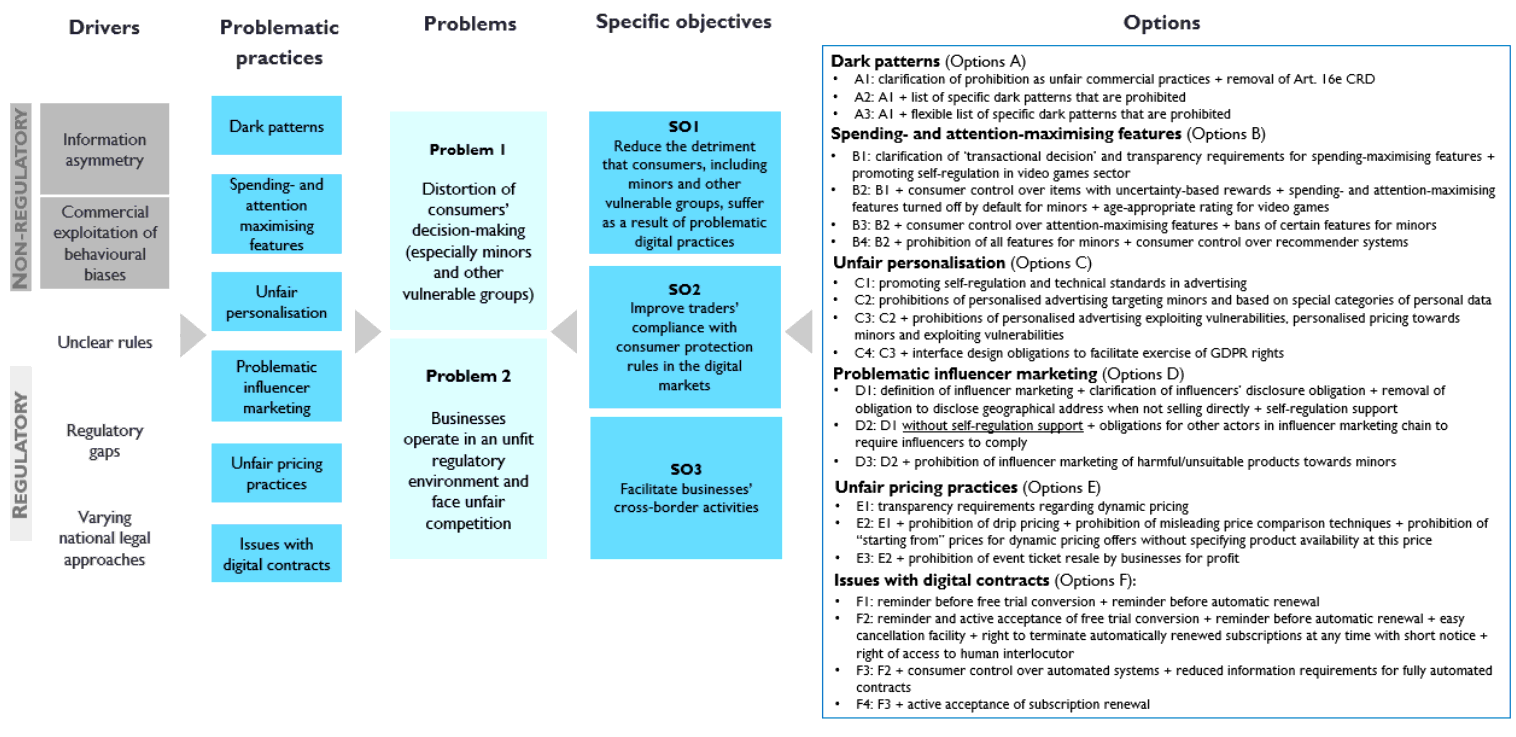
Annex 11. Link between problematic practices and non-regulatory drivers
| Problematic practice | Non-regulatory driver | Driver’s action |
| Dark patterns | Information asymmetry | Dark patterns can exacerbate information asymmetries by obscuring relevant information or facilitating the provision untruthful information, thereby preventing consumers from making well-informed decisions. For example, vague or false scarcity messages (e.g. “Only 5 left!”) mislead consumers by providing incomplete or inaccurate information about product availability.336 |
| Commercial exploitation of behavioural biases | Dark patterns exploit consumers’ behavioural biases. For example, scarcity messages rely on the scarcity bias, which is the tendency for individuals to perceive scarce items as more valuable.337 Confirmshaming statements such as ‘are you sure you want to miss out on this offer?’ leverage loss aversion,338 regret aversion (or anticipated regret),339 and, more generally, the framing effect, which is the tendency for individuals to take different decisions based on the same information depending on how it is framed.340 | |
| Spending- and attention-maximising features | Information asymmetry | Spending-maximising features such as items with variable rewards capitalise on information asymmetries by not disclosing the odds of winning particular items.341 Not disclosing the price of items in real money leverages information asymmetries by obscuring the real value of transactions.342 |
| Commercial exploitation of behavioural biases | Spending-maximising features such as items with uncertainty-based rewards (e.g. loot boxes) rely on variable schedules of reinforcement (reward), which may trigger compulsive behaviour.343 Pay-to-win/pay-to-progress mechanisms exploit susceptibility to competitive pressure and frustration that may be induced through artificial progression barriers.344 The use of in-app/in-game currencies may reinforce overspending due to the smaller levels of “pain of paying” associated with less tangible payments.345 Attention-maximising features rely on a variety of behavioural mechanisms:346 variable schedules of reinforcement, the fear of missing out,347 present bias (which makes people favour choices that offer immediate gratification),348 loss aversion (e.g. not wanting to lose accumulated ‘streaks’), the default effect,349 and inducing flow states.350 | |
| Unfair personalisation | Information asymmetry | Unfair personalisation practices can exploit the information asymmetry that arises due to consumers not being able to fully observe, comprehend and control how advertisements and prices are personalised.351 |
| Commercial exploitation of behavioural biases | Unfair personalised advertising and pricing relies on knowledge about individual consumers provided by vast amounts of personal data collected by online businesses, which can also be used to identify individual vulnerabilities, such as impulsiveness, addiction, insecurities, indebtedness and health conditions.352 Behavioural biases (such as present bias or the default effect) can be exploited when asking consumers whether they consent to the processing of their personal data for the purposes of personalised advertising and/or pricing.353 | |
| Problematic influencer marketing | Information asymmetry | The non-disclosure of the commercial nature of content shared by influencers exploits information asymmetries between influencers (and the brands they represent) and consumers, as influencers are often perceived as ordinary people rather than commercial actors.354 |
| Commercial exploitation of behavioural biases | Consumers have a tendency to form parasocial relationships, i.e. one-sided relationships where a person becomes attached to and invested in a media character or public figure, with influencers.355 These parasocial relationships lead consumers to perceive influencers as more reliable, trustworthy, and authentic than traditional advertisers.356 | |
| Unfair pricing practices | Information asymmetry | Drip pricing exploits information asymmetry by withholding information about mandatory elements of the price from consumers in the early stages of the transaction.357 Misleading price comparisons capitalise on information asymmetry through the use of fictitious or not easily verifiable reference prices.358 Dynamic pricing relies on information asymmetry through the withholding of information about product availability at an advertised price.359 |
| Commercial exploitation of behavioural biases | Drip pricing may lead consumers to spend more than intended due to behavioural mechanisms such as the anchoring effect, i.e. the tendency to “anchor” an initial item of information and to adjust insufficiently in response to new information.360 By withholding key pieces of information until last minute, when it is more costly for the consumer to restart their search than to continue with the ongoing transaction, they capitalise on the hassle factor,361 the principle of consistency,362 and the sunk cost fallacy.363 Misleading price comparisons rely on the anchoring effect – a reference price can create an ‘anchor’ that is used as a starting point to estimate the value of a product.364 Dynamic pricing can make consumers act quickly on concerns about the product selling out quickly, leveraging scarcity bias.365 The advertising of low ‘starting from’ prices without disclosing availability may lead consumers to purchase the product at a higher price due to the principle of consistency.366 | |
| Issues with digital contracts | Commercial exploitation of behavioural biases | Automatic subscription renewals and conversions of free trials into paid subscriptions rely on several behavioural mechanisms, such as present bias, which may make consumers overestimate the likelihood of them cancelling an unwanted subscription in the future, and on behavioural inertia, i.e. the tendency to stick with the status quo and defaults due to the cognitive ease of doing so.367 The hassle factor may also lead consumers to procrastinate or abandon attempts to cancel when faced with hard-to-cancel subscriptions. Attentional bias suggests that consumers will focus on certain stimuli or tasks and neglect others. Businesses capitalise on this with automatic renewals and conversions because consumers will not always be focused on their subscriptions, but rather on other events in their day-to-day life.368 |
336 Mathur, A. et al., ‘Dark Patterns at Scale: Findings from a Crawl of 11K Shopping Websites’ (2019). ↑
337 OECD, ‘Dark Commercial Patterns’ (2022). ↑
338 “Loss aversion” is the tendency for people to give greater psychological weight to avoiding a loss than to obtaining an equivalent gain. See e.g. Novemsky, N. et al., 'The boundaries of loss aversion' (2005). ↑
339 “Regret avoidance” is the tendency to fear post-decisional regret. See e.g. Zeelenberg, M., ‘Anticipated regret, expected feedback and behavioral decision making’ (1999). ↑
340 Zac, A. et al., ‘Dark patterns and consumer vulnerability’ (2025). ↑
341 Jayemanne, D. et al., ‘Loot Boxes and Digital Gaming: A Rapid Evidence Assessment’ (2021). ↑
342 Gray, C. et al., ‘An Ontology of Dark Patterns Knowledge: Foundations, Definitions, and a Pathway for Shared Knowledge-Building’ (2024). ↑
343 Flayelle, M. et al., ‘A taxonomy of technology design features that promote potentially addictive online behaviours’ (2023); Clark, L. et al., ‘Engineered highs: Reward variability and frequency as potential prerequisites of behavioural addiction’ (2023). ↑
344 Ivern, J. et al., ‘Psychological mechanisms in video game monetization: A typology of contemporary strategies beyond loot boxes’ (2026); Arnedo-Moreno, J. et al., ‘The impact of video game use of dark patterns and random reward mechanisms on the youth: A systematic literature review’ (2026). ↑
345 Toccafondi, N. et al., ‘Virtual Currencies in Online Gaming Increase the Willingness to Pay for Loot Boxes: An Experimental Analysis’ (2026); European Parliament, ‘Loot boxes in online games and their effect on consumers, in particular young consumers’ (2020). ↑
346 See e.g. Flayelle, M. et al., ‘A taxonomy of technology design features that promote potentially addictive online behaviours’ (2023); Monge Roffarello, A. et al., ‘Defining and Identifying Attention Capture Deceptive Designs in Digital Interfaces’ (2023). ↑
347 “Fear of missing out” refers to a sense of missing out on something beneficial, interesting or fun. See e.g. Przybylski, A. K. et al., ‘Motivational, emotional, and behavioural correlates of fear of missing out’ (2013). ↑
348 See e.g. O’Donoghue, T. et al., ‘Present Bias: Lessons Learned and to Be Learned’ (2015). ↑
349 “Default effect” refers to individuals’ tendency to accept default options. See e.g. Jachimowicz, J. M. et al., ‘When and why defaults influence decisions: a meta-analysis of default effects’ (2019). ↑
350 A “flow state” refers to the feeling of being in the present moment, and is associated with intense and focused concentration. See e.g. Csikszentmihalyi, M., ‘The flow experience and its significance for human psychology’ (1988). ↑
351 See e.g. OECD, ‘Consumer vulnerability in the digital age’ (2023). ↑
352 Ibid. ↑
353 European Parliament, ‘Online advertising: the impact of targeted advertising on advertisers, market access and consumer choice’ (2021). ↑
354 European Parliament, ‘Regulating influencer marketing in the European Union’ (2025). ↑
355 European Parliament, ‘The impact of influencers on advertising and consumer protection in the Single Market’ (2022). ↑
356 European Parliament, ‘Regulating influencer marketing in the European Union’ (2025). ↑
357 Santos, C. et al., ‘No harm no foul: how harms caused by dark patterns are conceptualised and tackled under EU data protection, consumer and competition laws’ (2025). ↑
358 Competition and Markets Authority, ‘Evidence review of Online Choice Architecture and consumer and competition harm’ (2022). ↑
359 Competition and Markets Authority, ‘Policy paper – Update: dynamic pricing’ (2025). ↑
360 Ahmetoglu, G. et al., ‘Pricing practices: A critical review of their effects on consumer perceptions and behaviour’ (2014). ↑
361 “Hassle factor” refers to the introduction of friction that may decrease the likelihood of a particular action. This practice relies on effort-avoidance bias, which is individuals’ tendency to avoid or postpone actions that are anticipated to involve inconvenient effort, stress or procedural difficulty, even when the expected benefits outweigh the costs. See e.g. Thaler, R. H., ‘Nudge, not sludge’ (2018); Kool, W. et al., ‘Decision making and the avoidance of cognitive demand’ (2010). ↑
362 The principle of consistency is a psychological tendency for individuals to behave and make decisions in ways that are congruent with their previous actions and commitments. See e.g. Cialdini, R. B., The psychology of persuasion, 1993. ↑
363 The sunk-cost fallacy is a cognitive bias in which people persist with a decision, project or course of action because they have already invested resources into it. See e.g. Mathur, A. et al., ‘Dark Patterns at Scale: Findings from a Crawl of 11K Shopping Websites’ (2019). ↑
364 Ahmetoglu, G. et al., ‘Pricing practices: A critical review of their effects on consumer perceptions and behaviour’ (2014); Office of Fair Trading, ‘Advertising of Prices’ (2010). ↑
365 Mittone, L. et al., ‘The scarcity bias’ (2009). ↑
366 Office of Fair Trading, ‘Advertising of Prices’ (2010). ↑
367 Ericson, K. M. et al., ‘Intertemporal choice’ (2019); O’Donoghue, T. et al., ‘Present Bias: Lessons Learned and to Be Learned’ (2015). ↑
368 Grubb, M. D., ‘Consumer inattention and bill-shock regulation’ (2015). ↑
Annex 12. Summary of cited evidence on the prevalence and negative consequences of dark patterns, attention- and spending-maximising features and unfair personalisation practices
| Problematic practice | Prevalence | Negative consequences |
| Dark patterns |
|
|
| Attention- maximising features |
|
|
| Spending-maximising features |
|
|
| Unfair personalisation |
|
|